
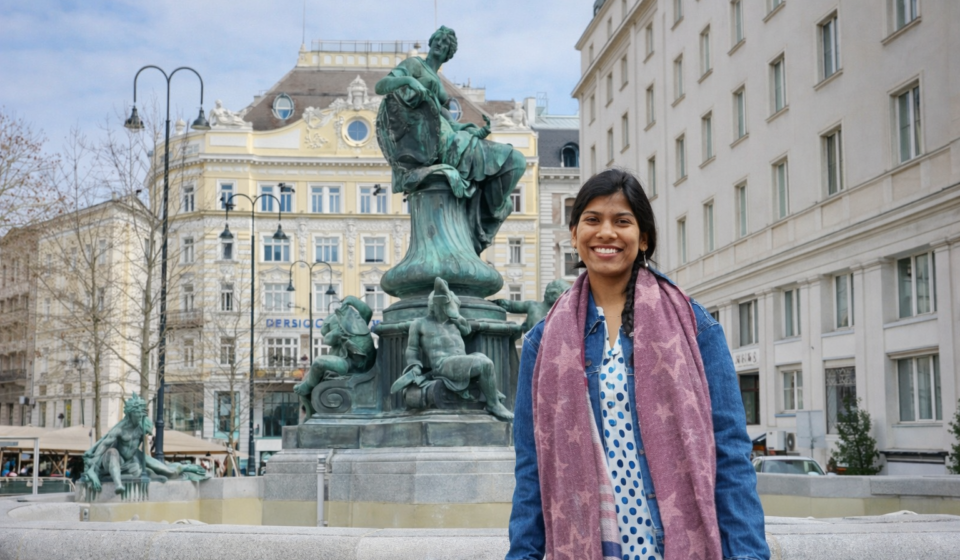
Ranchi’s Dr Sambhabi Chatterjee part of major breakthrough behind Lung Disease Research in Germany
Dr. Sambhabi Chatterjee, a scientist who grew up in Ranchi and currently Junior Group Leader at Hannover Medical School, Germany, is a part of an international research team that developed a promising experimental approach to treating pulmonary fibrosis, a progressive lung disease for which effective therapies remain limited.
The disease that does not leave much room for hope once it sets in. The lungs scar, the tissue stiffens, and every year makes breathing that much harder. Most patients do not live for more than a few years after diagnosis. Doctors can slow it down with the treatments available today, but nobody can reverse it.
What Chatterjee, working alongside Professor Christian Bar and Phd researcher Dr Jia Li Ye, has been chasing is something different: a way to reach into the cell’s own ageing process and interrupt it.
That process comes down to telomeres, tiny protective caps sitting at the ends of our DNA strands. Patients with pulmonary fibrosis tend to have telomeres that are shorter than they should be, and when that happens, lung cells slide into a kind of dormant, worn-out state that doctors call senescence. A cell stuck there basically stops doing its job, and healthy tissue needs cells that are still doing theirs.
So the team tried something fairly clever: switch telomerase, the enzyme that rebuilds those telomeres, back on, but only for a while. No permanent gene editing involved. They used a modified messenger RNA approach instead, which let the cells produce telomerase for a short stretch of time and then stop, rather than rewriting their DNA for good.
In lab-grown lung cells, that was enough to cut DNA damage and restore the cells’ ability to grow and divide normally, and because the effect wore off rather than lingering, it sidesteps a lot of the safety concerns that have followed telomerase research for years.
They didn’t stop at cell cultures. Testing moved to living slices of lung tissue taken from patients with advanced pulmonary fibrosis, and even a single treatment brought down markers of cellular ageing along with signals tied to inflammation and scarring. That’s the part that matters most: it points toward a therapy that doesn’t just slow the disease down but might actually help repair tissue that’s already damaged. A newer, more stable circular RNA version of the treatment extended those effects further and improved telomere length even more.
For Ranchi, there’s a personal thread running through all this. Dr. Chatterjee completed her schooling from DPS and JVM Shyamali before earning her Bsc in Biotechnology at St Xavier’s in 2011, later went on to pursue a Master’s in Gene Technology at Madurai Kamaraj University, and left for Germany in 2015 to earn her PhD at Hannover Medical School, where this research has now taken shape.
While further studies and clinical trials will be required before the therapy can be used in patients but for a disease with as few real treatment options as pulmonary fibrosis, this counts as genuine, hard-won progress, and a Ranchi name is attached to it.
Shambhabi alias Kuhu is daughter of BM Chatterjee, a resident of Burdwan Compound who was earlier GM HT Media Ltd, the publishers of The Hindustan Times and Dainik Hindustan.
EoM