
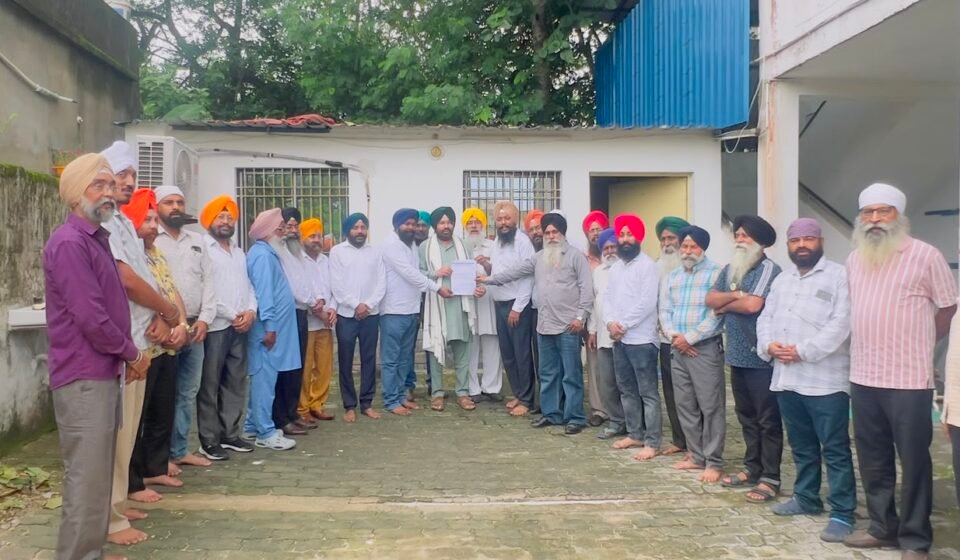
Mazhabi Singh Rangreta community demands SC status
Pioneer News Service
Jamshedpur
Members of the Mazhabi Singh Rangreta community accorded a grand welcome to Jyoti Singh Matharu, Vice-Chairperson of the Jharkhand State Minority Commission (Minister of State rank), during a felicitation programme held at Dashmesh Prakash Birsanagar Gurudwara on Sunday. On the occasion, community representatives submitted a memorandum seeking Scheduled Caste (SC) status and related constitutional benefits for the Mazhabi Rangreta community in Jharkhand.
The programme was organised jointly by the Dashmesh Prakash Birsanagar Gurudwara Management Committee and representatives of the Mazhabi Singh Rangreta community, with a large number of devotees and community members in attendance.
The memorandum urged the state government to issue Scheduled Caste certificates to members of the Mazhabi Rangreta community and extend reservation benefits in government jobs, educational institutions and welfare schemes.
Community representatives stated that although the Mazhabi Rangreta community receives Scheduled Caste benefits in several states, including Punjab, Haryana, Delhi, Rajasthan and Uttarakhand, similar recognition has not yet been granted in Jharkhand.
They also highlighted the difficulties faced by community members in obtaining caste certificates, which they said has deprived many eligible youths of reservation benefits in education and public employment.
Addressing the gathering, Jyoti Singh Matharu acknowledged that the community had been pursuing the demand for several years. She said the present state government is committed to the welfare of Dalit, backward and marginalised communities and assured the gathering that the issue would receive due attention.
Her assurance was welcomed by the congregation, with attendees expressing hope that the long-pending demands would be addressed.
Representatives of the community stated that despite constituting a significant section of Jharkhand’s Sikh population, the Mazhabi Rangreta community continues to face socio-economic and educational challenges. They alleged that successive governments had failed to take concrete steps towards resolving their longstanding demands.