
The Balance of Spiritual Practice and Service in Gurbani Is the Essence of Discipleship: Paramahamsa Swami Niranjanananda Saraswati
Kumar Krishnan
Munger
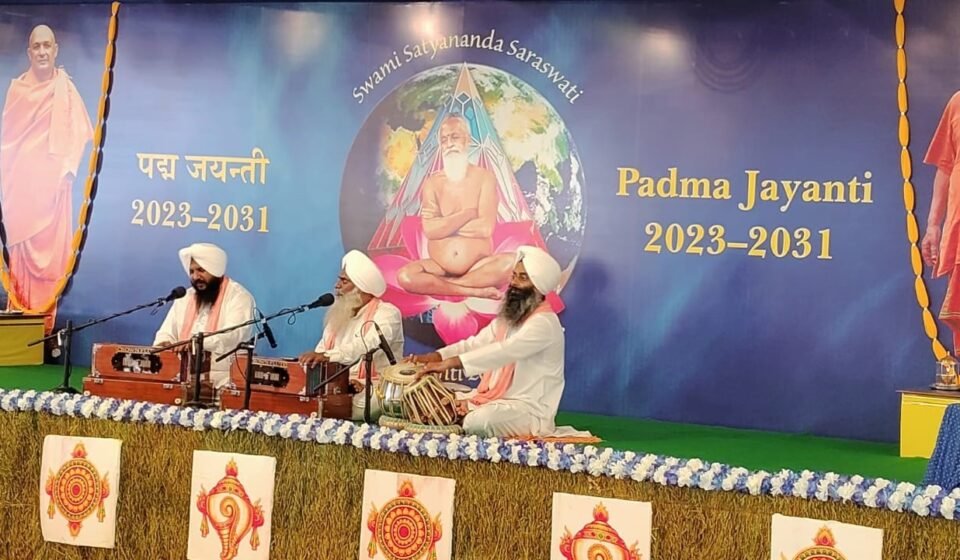
The two-day Chaturmas programme held at the Paduka Darshan premises of Sannyas Peeth concluded on Saturday in an atmosphere suffused with spirituality and the melodious strains of Gurbani. A Sikh Ragi Jatha from Rajnandgaon in Chhattisgarh presented Shabad Kirtan over the two days, drawing devotees into the profound spiritual traditions of the Guru’s Word, Simran, and Seva. Throughout the programme, the premises reverberated with the chanting of ‘Waheguru’ and the mellifluous strains of Gurbani.
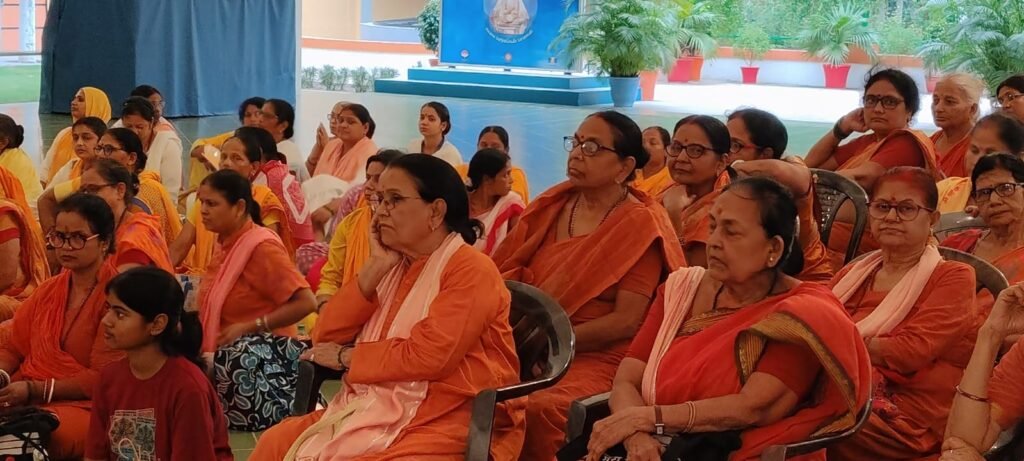
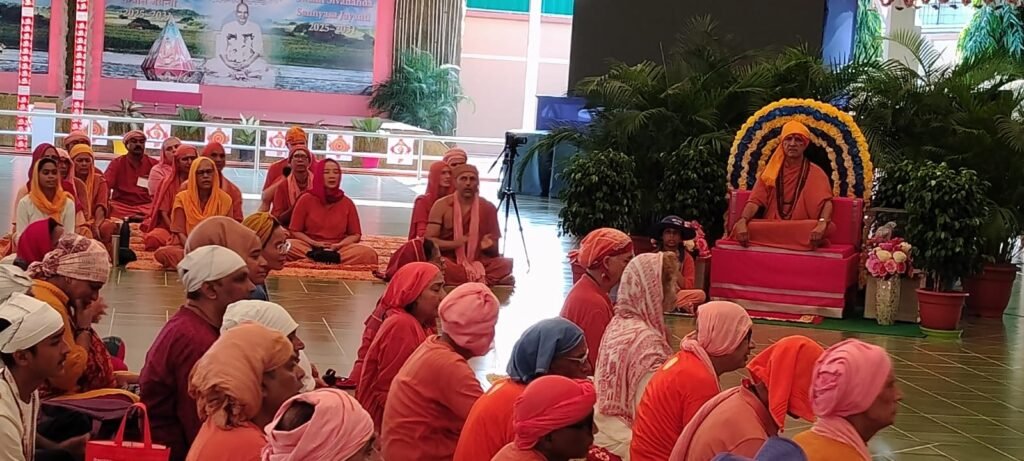
On the occasion, Paramahamsa Swami Niranjanananda Saraswati said that Gurbani is a living tradition and an enduring spiritual heritage of Indian culture. In Indian civilisation, principles acquire their true significance only when they are translated into the lived disciplines of spiritual practice and service. He observed that, through the centuries, the Gurus have inspired humanity to walk the path of Dharma and self-realisation. To follow the path shown by the Guru is to discover peace and harmony in life; to turn away from the Guru’s Word, by contrast, is to invite imbalance within both the individual and society.
He emphasised that discipleship does not merely signify receiving initiation from a Guru. True discipleship lies in imbibing the Guru’s teachings and embodying them in one’s own life. The essence of the disciple’s path is to establish a harmonious balance between spiritual practice and selfless service.
Paramahamsa Swami Niranjanananda Saraswati further observed that India’s spiritual heritage has been shaped by a multitude of traditions, communities, and streams of thought. Punjab is one such sacred land that has deeply assimilated the message of the Guru tradition into its social and cultural life. From Guru Nanak Dev to Guru Gobind Singh, this illustrious lineage enriched Indian spiritual thought with the profound ideals of service, equality, courage, compassion, and human fellowship.
He said that the Guru’s Word enshrined in the Guru Granth Sahib does not merely lead the seeker towards external observances and ritual; rather, it directs the mind towards an inward journey of self-discovery and spiritual awakening. Simran and Seva constitute the principal pillars of this spiritual tradition. One who sincerely embraces both paths draws closer to inner tranquillity and to the true spirit of Dharma.
The Ragi Jatha from Rajnandgaon, comprising Sardar Bhupendra Singh, Sardar Jaspal Singh, and Sardar Satbir Singh, presented Shabad Kirtan during the programme. As the sacred verses of Gurbani resounded through melody and devotional music, the devotees remained immersed in an atmosphere of contemplation and spiritual absorption. The Shabad Kirtan transformed the religious gathering into a vibrant expression of cultural and spiritual communion, carrying the message of the Guru’s Word to the wider community through music.
Swami Shivdhyanam, while elucidating the spiritual significance of Gurbani, said that Shabad Kirtan occupies a place of profound importance in the Sikh spiritual tradition. The musical rendering of the sacred utterances of the Sri Guru Granth Sahib is not merely an expression of devotion; it is also a means of awakening consciousness, compassion, and self-awareness within the human being. The remembrance of ‘Waheguru’ connects the seeker with an experience of the Divine that leads the soul from darkness towards light.
The gathering also reverberated with Gurbani verses expressing surrender to the Guru and remembrance of the Divine Name: “Guru mere praan, kanthe mala, kripa Ram, sahas jihva naam le Ram Ram.” The recitation of these verses underscored the profound spiritual bond between the Guru and the disciple and the transformative power of remembrance and devotion.
Devotees from Munger participated in the two-day gathering with great enthusiasm and devotion. The Paduka Darshan premises of Sannyas Peeth were transformed by Gurbani, Shabad Kirtan, and the chanting of ‘Waheguru’ into a sacred confluence in which, transcending the boundaries of religious identity, the ideals of service, spiritual discipline, and human unity remained paramount.
The Chaturmas programme offered a profound reminder that the enduring strength of India’s spiritual heritage lies in its diversity and its capacity for synthesis. When the streams of diverse traditions converge in a common message of humanity, religion ceases to be merely a system of worship and becomes a discipline for the ennoblement of life itself. The programme concluded with the timeless message that spiritual practice transforms the human being from within, while service carries that inner transformation into the wider world.