More Than a Case Number
By Anita Shekhar
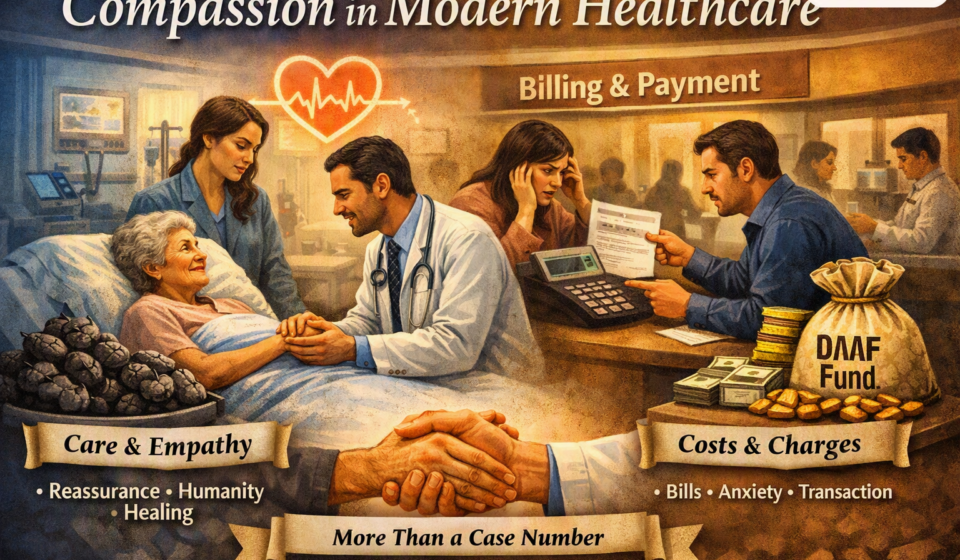
There was a time when visiting a doctor was largely about trust. A patient went to a hospital with pain, fear and hope, believing that the doctor would not only understand the illness but also the anxiety that came with it. Hospitals were places where people expected healing, reassurance and compassion. Today, however, many families feel that something in this relationship is slowly changing. Modern healthcare has undoubtedly advanced in remarkable ways. Better technology, specialised doctors, advanced medicines and improved facilities have made it possible to treat illnesses that were once considered impossible to manage. Doctors, nurses and other healthcare professionals work under immense pressure and often spend long hours caring for patients. Their contribution cannot be questioned. Yet, for many patients and their families, the experience of healthcare has increasingly begun to feel like a transaction. Along with concern about recovery comes anxiety about tests, procedures, admission charges and growing bills. At times, families feel that before they can fully understand what is happening to their loved one, they are asked to understand the financial implications of the treatment.
Perhaps the most vulnerable people in a hospital are the relatives waiting outside. The person lying on the hospital bed is surrounded by doctors and nurses, but the family outside is often left alone with fear and uncertainty. A son waits for news about his mother. A wife anxiously looks towards the ICU door. Parents pray for their child. For them, every passing minute feels longer than usual. They do not always expect miracles. What they need is clarity, patience and a little reassurance. They want to know why a particular test is being conducted, whether a procedure is necessary and what they should expect in the coming days. A doctor may be busy, but even a few moments spent explaining the situation can make an enormous difference to an anxious family.
The same sensitivity is required from hospital administration. For an employee at the reception or billing counter, it may simply be another working day. But for the person standing across the counter, it could be one of the most difficult moments of their life. The way they are spoken to matters. A harsh response can add to their distress, while a kind and patient approach can make them feel supported. Healthcare certainly requires money. Hospitals need equipment, infrastructure, medicines and trained professionals. Doctors deserve to be fairly compensated for their knowledge and demanding work. The issue is not the cost of healthcare itself. The concern begins when a patient starts feeling like a customer and treatment begins to resemble a commercial transaction. A patient is not merely a case number, a medical file or a source of revenue. Behind every report is a human being with dreams, relationships and responsibilities. Behind every patient is a family struggling to remain hopeful.
Medicine is a science, but healing has always required something morehumanity. As healthcare continues to grow and modernise, we must ensure that compassion does not get lost along the way. After all, patients may pay for treatment, but kindness, empathy and dignity should never come with a price tag.
Anita Shekhar is a dedicated academician with over 18 years of experience in higher education, communication and student mentoring.