
Roshan Kumar
Ranchi
Heavy rains and persistent waterlogging across Ranchi have triggered serious public health concerns as a private facility, Rani Hospital, reported over 130 cases of Leptospirosis—commonly known as ‘Rat Fever’—during July and August. While hospital director Dr. Soni Sinha confirmed that all patients recovered successfully following treatment, local health authorities have not yet officially verified these figures.
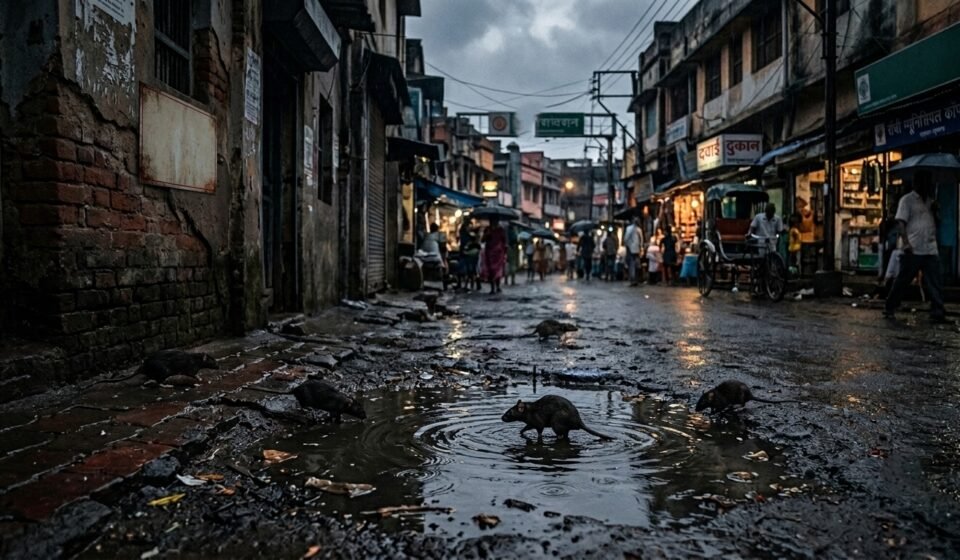
Leptospirosis spreads when water or soil contaminated with the urine of infected rats or other animals comes into contact with humans. The bacteria easily enter the bloodstream through open cuts, wounds, or mucous membranes.
Rat Fever is a bacterial infection caused by the Leptospira bacteria. It is transmitted through the urine of infected rodents (such as rats) and other animals. During heavy rains, floodwater or stagnant puddle water gets contaminated with animal urine.
Pediatric specialists at the Rajendra Institute of Medical Sciences (RIMS) warn that initial symptoms often mimic standard viral fevers, making early detection challenging. Key symptoms include: High fever and chills, Severe headache and body pain, Persistent vomiting and extreme weakness, Redness in the eyes.
If left untreated or improperly managed, the infection can escalate, leading to severe liver and kidney damage. Children face heightened risk due to barefoot walking or playing in stagnant rainwater. Local health officials at Sadar Hospital have urged residents not to dismiss persistent fever or body aches as typical seasonal ailments.
With dengue and malaria cases already on the rise, city health experts advise strict precautionary measures: avoid flooded areas, use rubber boots when navigating waterlogged streets, keep open wounds covered with waterproof bandages, and seek immediate medical evaluation for lingering fevers.
Keep children away from mud, puddles, and waterlogged streets. If walking through waterlogged areas is unavoidable, wear high rubber boots (gumboots) and keep all skin cuts or wounds covered with waterproof bandages. Wash feet and hands thoroughly with soap and clean water after returning indoors. Ensure drinking water is boiled and keep food covered to prevent rodent contamination.