From Bihar Farms to the National Stage: The Story of Ashutosh Kumar
By Pratham Raj
Ashutosh Kumar’s story does not begin anywhere near where he stands today. He was born in Nepal on October 2, 1992, but grew up in Gurhanwa, a village in Bihar, in a farming family. His father worked the land, his mother ran the house, and nobody before him had left the village to study elsewhere. He was the first. People still bring that up when they talk about him, the boy who left and made something of it.
School took him to Sainik School Tilaiya in Jharkhand, and whatever discipline that place is known for seems to have stuck. From there he studied Electronics and Communication Engineering in Bangalore, then went on to a Master’s in Physics from Singhania University in Rajasthan. A technical degree, on paper. It did not end up being where he stayed.
At some point he became a motivational speaker, the kind Coal India or CPWD or the Army calls in when they want someone to talk to their people about leadership. But something shifted when he turned that same energy elsewhere, toward women, girls who never got near a classroom, special children, acid attack survivors, war widows, the LGBTQ+ community. He built Magadh Production and the Sakman Bhagya Foundation around that shift, and used them to give these people something more than sympathy. A platform, actually.
There is a kind of pain that never makes it into a headline. A war widow rebuilding a household alone after her husband is gone. A child with a disability who gets looked past more often than looked at. A woman quietly working through an illness, or something worse, with nobody outside her own four walls ever really asking how she is holding up. What Kumar has built is, more than anything, a way of putting exactly these people on a stage. Real applause, a real audience, a moment where their story gets told instead of just carried around in silence.
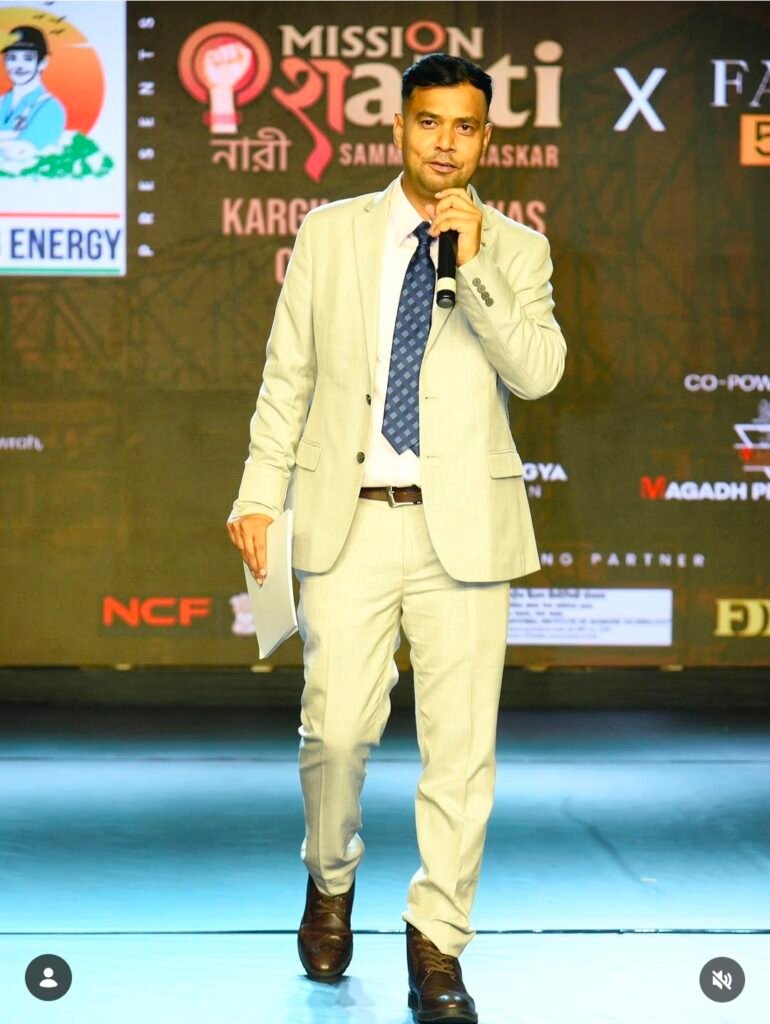
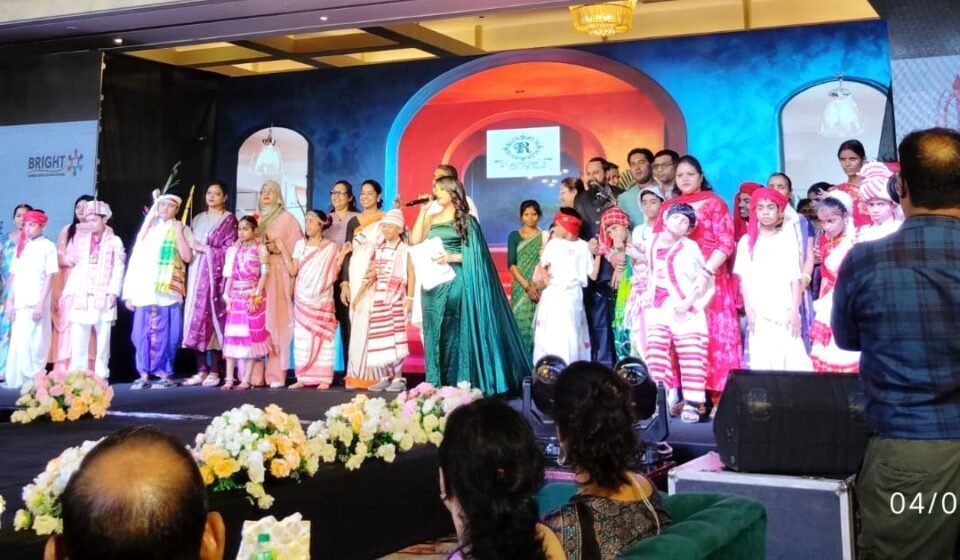
That’s the whole point, really, not some side detail. War widows walk the ramp at his shows. Cancer survivors get up and talk about what they went through. Special children perform for a crowd instead of being kept out of sight of one. None of that happens by chance. He built the format, fashion and music and felicitation, specifically because people will actually turn up to watch it, and once they’re watching, someone who never got a spotlight finally has one.
This is where events like the National Fashion Show and Nari Shakti Samman Puraskar come from, along with Mission Shakti and the Special Children’s Walk. His first big show, in Delhi, was an inclusive LGBTQ+ pageant, which was not exactly common ground back then. The format kept moving after that, four editions in Delhi, two in Kolkata, one so far in Ranchi, and each one pulls in designers, corporates, social leaders, whoever the city has to offer.
The names attached to his work run long. Pantaloons, Adidas, VLCC, Lakmé, Coal India, PNB, HCG Cancer Care, and others besides. National channels have shown up to cover it more than once.
What he keeps saying, when asked what drives him, comes down to this: success is not what you build for yourself, it’s who you manage to pull up along the way. For a farmer’s son from a village most people would need a map to find, that idea has carried surprisingly far.