
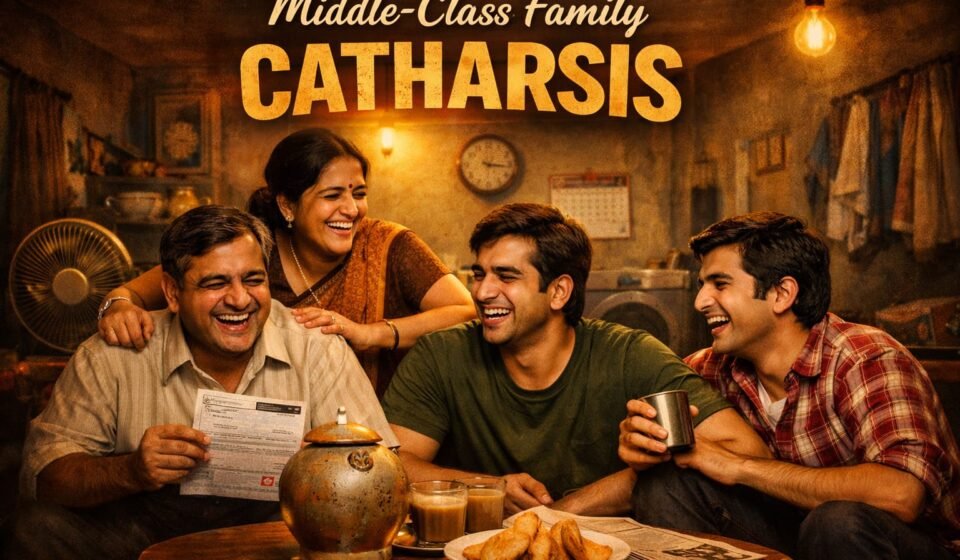
Middle-Class Catharsis: Romanticizing the Ordinary
By Anita Shekhar
In an era dominated by high-stakes thrillers and dark political dramas, SonyLIV’s Gullak has emerged as a much-needed, refreshing breath of fresh air on modern Indian television screens. Bypassing the extraordinary, the series zooms in closely on the utterly ordinary Mishra family. Through a narrative structure that feels as intimate and honest as a cherished memoir, viewers are invited into a North Indian home where the daily battles are fought over noisy washing machines, neighborhood gossip, and the looming, ever-dreaded electricity bill.
Beneath this deceptively simple premise lies a profound exploration of deep-rooted family values and a cathartic reflection of our middle class. Gullak does not rely on earth-shattering events to move its audience. Instead, it finds deep emotional release in the resolution of everyday anxieties. Whether it is Santosh Mishra worrying about his finances or his elder son Annu grappling with the crushing weight of unemployment, the crises are intensely relatable. When the family puts aside their massive egos to solve a problem, the viewer experiences a collective sigh of relief. The show beautifully argues that survival in a middle-class home is never about grand victories; it is about small, shared triumphs, like laughing over an inside joke after a truly grueling day.
At its core, Gullak is a masterclass in depicting unconditional love disguised as constant annoyance. In many Indian households, affection is rarely expressed through deep conversations. Here, love looks like loud bickering. Shanti, the mother, rules the roost with heavy sarcasm, yet remains the undeniable glue holding the family together. Santosh represents the stoic employee absorbing financial pressures silently, while the brothers fluctuate between bitter rivalry and fierce loyalty.
The series also acts as a perfect, unflinching mirror to modern society and our daily struggles. It captures a terrifying reality where one unexpected medical bill can completely derail an entire month’s budget. The narrative gently tackles the transition from traditional societal expectations to modern realities. This is perfectly encapsulated by the looming presence of nosy neighbors who represent the classic pressure of what people will say.
We are witnessing a beautiful renaissance of wholesome, character-driven Indian storytelling that focuses on the reality of the common man. When compared to Panchayat, which masterfully portrays the sociopolitical quirks of rural life, Gullak feels significantly more intimate, rooted tightly within an urban living room. While Yeh Meri Family heavily relies on childhood nostalgia, Gullak thrives in the present day, tackling contemporary anxieties head-on. Unlike the academic pressure-cooker of Kota Factory, Gullak proves that the most dramatic moments usually unfold right at the family dinner table.
In a rapidly modernizing and isolating world, Gullak serves as a comforting anchor. With an autobiographical honesty that captures the essence of everyday survival, it reminds us that while the outside world may be incredibly unkind, the family unit remains a resilient, beautiful, and absolutely necessary sanctuary for us all.
(Anita is a Dedicated academician with over 18 years of experience in higher education, communication and student mentoring.)