
Guru Purnima Festival: A celebration of the Guru–Disciple
Tradition, inner awakening and spiritual transformation
At Munger’s Sannyasa Peeth, an ancient tradition reaffirms its relevance in the modern world
By Kumar Krishnan
The ancient yoga city of Munger once again became a vibrant centre of devotion, Vedic learning and spiritual reflection as the Guru Purnima Festival concluded at the Sannyasa Peeth, Paduka Darshan, associated with the Bihar School of Yoga. Held from July 26, the week-long celebration attracted thousands of devotees, monks and seekers from across India and overseas, transforming the ashram into a living expression of India’s enduring guru–disciple tradition.
More than a religious observance, the festival reaffirmed one of India’s oldest civilisational ideals—that knowledge is not merely transmitted through texts but through the living relationship between the Guru and the disciple. The ashram reverberated with Vedic chanting, yajnas, meditation, devotional music and collective worship, creating an atmosphere where faith, discipline and introspection blended into a profound spiritual experience.
Addressing the gathering, Paramahamsa Swami Niranjanananda Saraswati described the Sannyasa Peeth as more than a monastic institution. It is, he said, a centre of dedication, self-discipline and complete surrender to the Guru principle. The devotion expressed by thousands of participants created an environment in which the Guru’s presence was not merely remembered but inwardly experienced.
Swamiji observed that this year’s Guru Purnima assumed special significance because of several spiritually meaningful events, including the recent arrival of Lord Tirupati Balaji in Munger and the symbolic convergence of the sacred traditions associated with Lord Vishwanath and Lord Jagannath. Together, he said, these represented a rare confluence of divine grace, strengthening the spiritual heritage of the region.
He emphasised that Guru Purnima should not be reduced to ceremonial worship. Its true purpose lies in internalising the Guru’s teachings and allowing them to shape one’s daily conduct. Even the sincere practice of a single teaching, he observed, can profoundly transform an individual’s character. The Guru is not merely a person but an eternal principle that leads humanity from ignorance to wisdom, from limitation to inner freedom, and from darkness to illumination.
Reflecting on the ongoing Padma Jayanti celebrations of Swami Satyananda Saraswati, being observed from 2023 to 2031, Swamiji explained that the lotus symbolises awakened consciousness rather than simply a flower. The commemorative programme celebrates the spiritual legacy of Swami Satyananda, whose vision helped introduce authentic yogic philosophy and practice to a global audience. He also recalled the historic arrival of Lord Tirupati Balaji in Munger on May 6, 2026, describing it as a moment of spiritual renewal and collective blessing.
Announcing “Transformation of Consciousness” as the central theme of this year’s festival, Swamiji observed that humanity’s greatest challenge lies not in the external world but within the mind itself. Anger, ego, greed, jealousy and negativity obscure higher awareness and prevent individuals from recognising the divine Guru principle within. The purpose of yoga and spiritual discipline, he said, is to purify these tendencies and awaken one’s innate potential for wisdom and compassion.
He urged devotees to cultivate relationships, ideas and environments that foster creativity, positivity, service and spiritual growth, describing these qualities as the true foundations of yogic living and the enduring message of Guru Purnima.
The religious ceremonies were conducted by eminent Vedic scholars from Kashi and included Guru Puja, Rudrabhisheka, sacred fire rituals and traditional Vedic observances. Continuous recitations of the Mahamrityunjaya Mantra, Guru Stotras and Vedic hymns filled the ashram with an atmosphere of contemplative serenity.
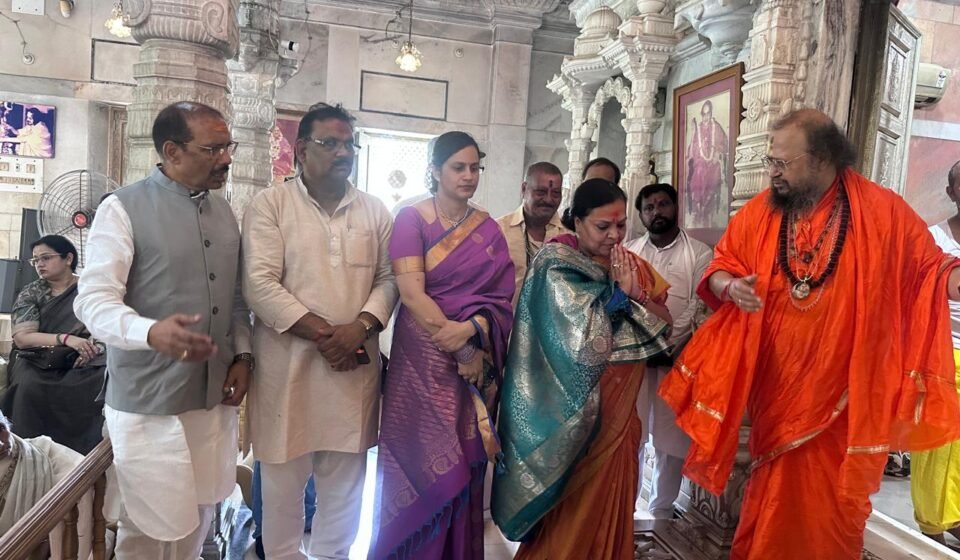
A particularly moving moment came during the ceremonial worship of the Guru Padukas. Devotees offered flowers and prayers before the Padukas and the statue of Swami Satyananda Saraswati, reaffirming their commitment to humility, service and spiritual discipline. In the Indian tradition, the Padukas symbolise not merely reverence for the Guru but the continuity of an unbroken lineage of wisdom and inner awakening.
The celebrations were enriched by devotional music and collective chanting. Hymns such as “Guru Brahma, Guru Vishnu, Guru Devo Maheshwara” echoed across the prayer halls, while the evening arati and ceremonial illumination inspired moments of deep emotional and spiritual communion among participants.
The festival also highlighted the global influence of the Bihar School of Yoga. Alongside devotees from different parts of India, spiritual practitioners from Europe, the Americas, Australia and several Asian countries participated in the celebrations, reflecting the worldwide reach of the yogic tradition established by Swami Sivananda, Swami Satyananda Saraswati and Swami Niranjanananda Saraswati.
At a time when material aspirations often overshadow ethical reflection and inner balance, the Guru Purnima celebrations at Munger offered a compelling reminder that the Guru is far more than an instructor. The Guru awakens dormant potential, offers moral clarity and guides the seeker towards self-realisation. The festival reaffirmed that lasting transformation begins not through external achievement but through the disciplined cultivation of inner awareness.
As the celebrations concluded, the Sannyasa Peeth once again affirmed the timeless relevance of India’s guru–disciple tradition. Rooted in devotion, self-discipline and selfless service, Guru Purnima remains a celebration of the eternal quest for wisdom—a reminder that the highest journey is ultimately the journey within.