Pioneer News Service
Ranchi
The Jharkhand Health, Medical Education and Family Welfare Department on Thursday stressed the need for a coordinated, multi-departmental approach to tackle malaria, lymphatic filariasis and other vector-borne diseases, directing all concerned departments to work together to strengthen prevention and control measures across the state.
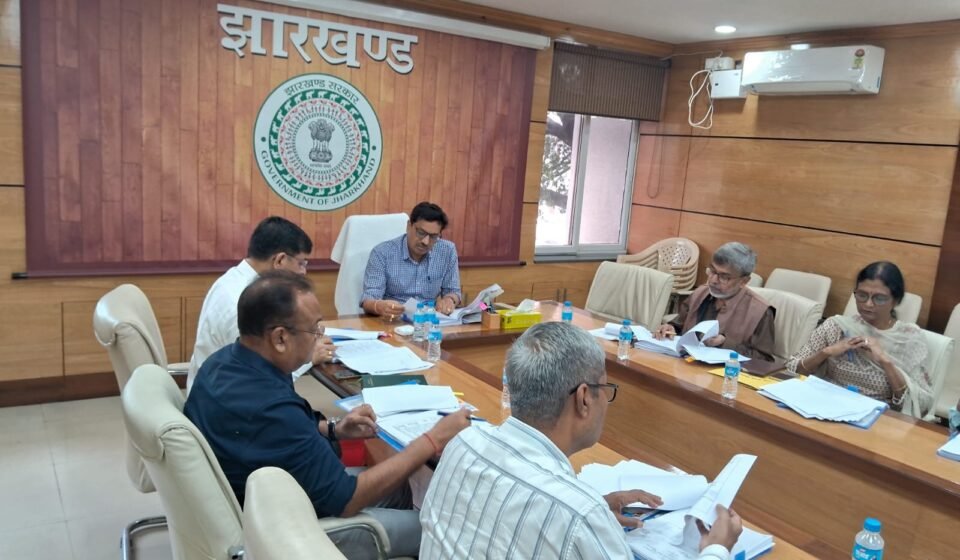
The decision was taken at a meeting of the State-Level Task Force held at the Planning and Development Department conference hall in Nepal House, Doranda, under the chairmanship of the Additional Chief Secretary (ACS) of the Health, Medical Education and Family Welfare Department.
The meeting reviewed the current disease situation, ongoing control measures, inter-departmental coordination and the action plan for the coming months. The ACS said diseases such as malaria, dengue, chikungunya, kala-azar, Japanese encephalitis and lymphatic filariasis cannot be controlled by the Health Department alone. He called for active participation from the Rural Development, Panchayati Raj, Urban Development, School Education, Higher and Technical Education, Labour, Drinking Water and Sanitation, and other departments.
Officials were instructed to clearly define the responsibilities of each department through formal communication and ensure implementation at the district, block and panchayat levels. The ACS emphasised that preventing vector-borne diseases should become a mass movement supported by sustained public awareness campaigns.
According to official data presented at the meeting, Jharkhand reported 16,728 malaria cases up to June 2026. East Singhbhum recorded 6,527 cases and West Singhbhum 6,172, together accounting for nearly 76 per cent of the state’s total malaria burden. The state also registered 77 dengue cases in June, with Ranchi reporting the highest number at 27.
The meeting directed officials to strengthen surveillance, ensure timely diagnosis and treatment, maintain adequate medicine supplies and intensify mosquito-control measures in vulnerable areas. It also stressed supervised drug consumption under the Mass Drug Administration campaign for lymphatic filariasis, along with improved care, hydrocele treatment and disability management for affected patients.
Participants agreed to expand awareness campaigns through gram sabhas, schools, colleges, urban local bodies, self-help groups, industrial areas and workplaces to encourage greater community participation in disease prevention.