BY KUMAR PRABHAT, DUMKA
MYTHOLOGICAL IMPORTANCE
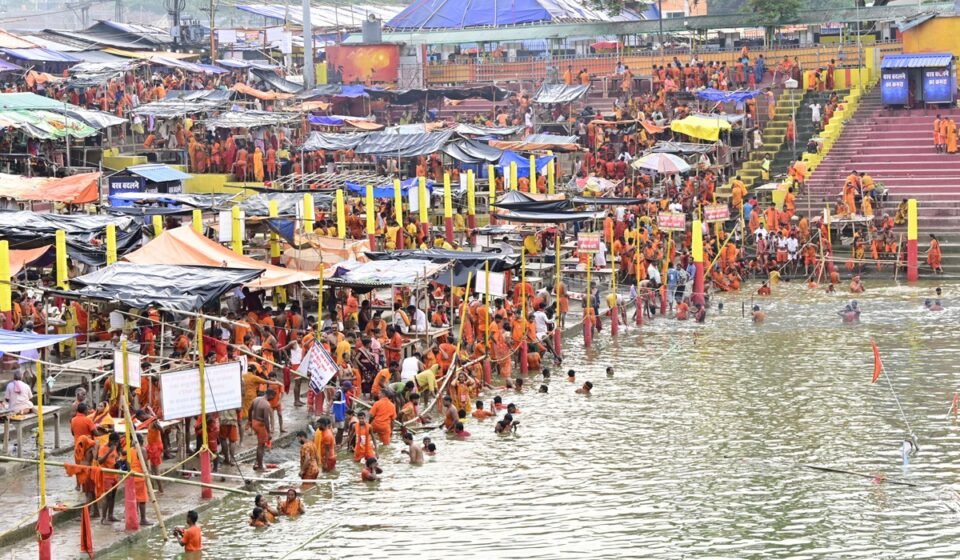
Nestled in the heart of Dumka district, Jharkhand, Basukinath Dham holds a legendary position in Hindu mythology as one of the most sacred abodes of Supreme Lord Shiva. Mythologically associated with the primordial Samudra Manthan (churning of the cosmic ocean), ancient tradition holds that the serpent king Vasuki served as the churning rope wrapped around Mount Mandara. Upon the completion of the divine task, King Vasuki worshipped Lord Shiva at this very location to seek relief and divine grace, giving the holy pilgrimage site its immortal name— Basukinath.
In popular spiritual lexicon, while Baba Baidyanath in nearby Deoghar is revered as the ‘Manokamna Linga’ (the site of petitioning), Lord Basukinath is worshipped as Fauzdari Baba—the Supreme Judicial Authority or Spiritual Commander. Sacred tradition dictates that a devotee’s pilgrimage to Baidyanath Dham remains incomplete until they present their petition at the court of Fauzdari Baba Basukinath, where swift divine justice and spiritual rulings are granted. At the structural heart of the temple sits the revered Nageshwar Jyotirlinga. Elevated atop the sanctum sanctorum is a uniquely consecrated crescent-adorned trident (Ardha-Chandra Jadit Trishul). This emblem signifies the seamless, eternal confluence of Lord Shiva and Divine Shakti, making Basukinath an unparalleled sanctuary where devotion to the Father instantly unlocks the grace of the Mother.
Pilgrimage to Baidyanath Dham is incomplete without presenting one’s spiritual appeal at the court of Fauzdari Baba Basukinath, the supreme dispenser of divine justice. Enhancing its mythic sanctity, the temple complex is surrounded in all four directions by sacred cremation grounds (smashans), the most spiritually awakened (jagrat) being the famous Lathiyajor Smashan. Flanked by ancient idols of Anand Bhairav and Kala Bhairav, Basukinath has served since time immemorial as an active spiritual nucleus for ascetics during Sharadiya Navratri and Deepawali.
SANCTUM OF DASA MAHAVIDYA
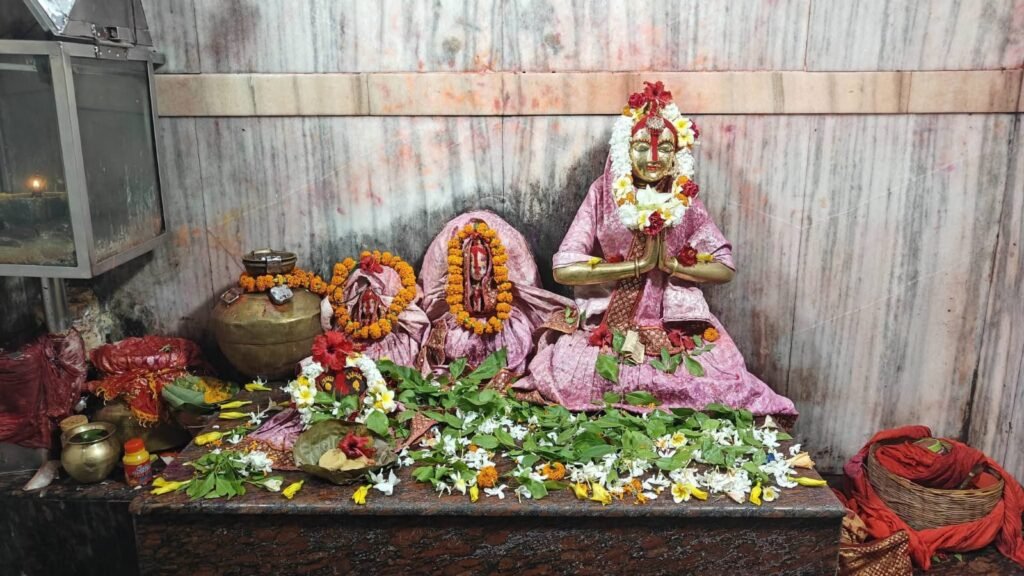
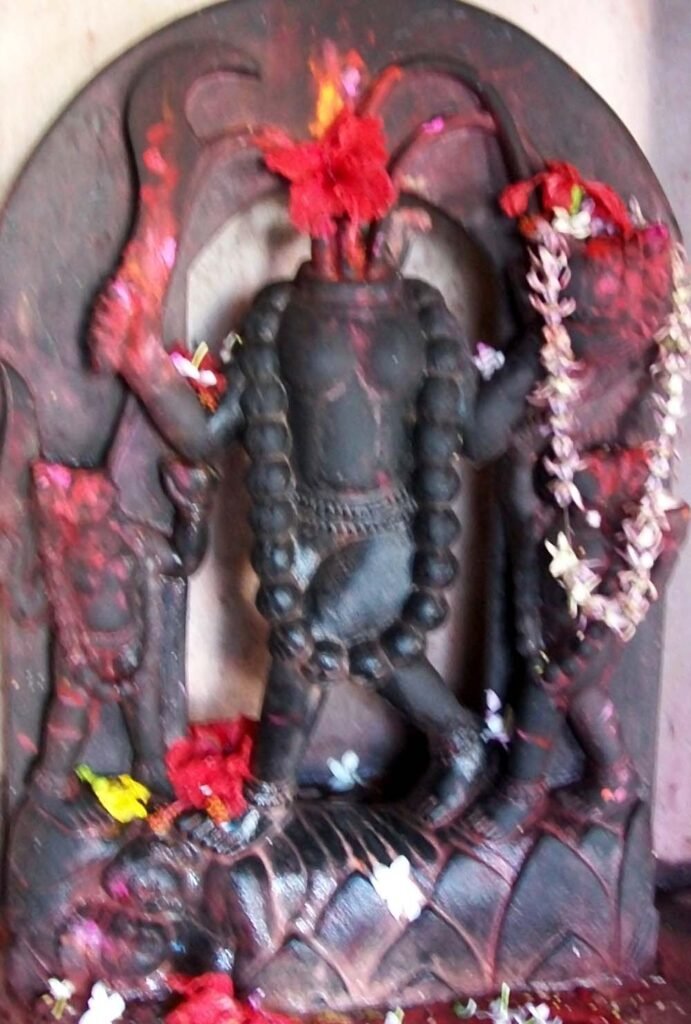
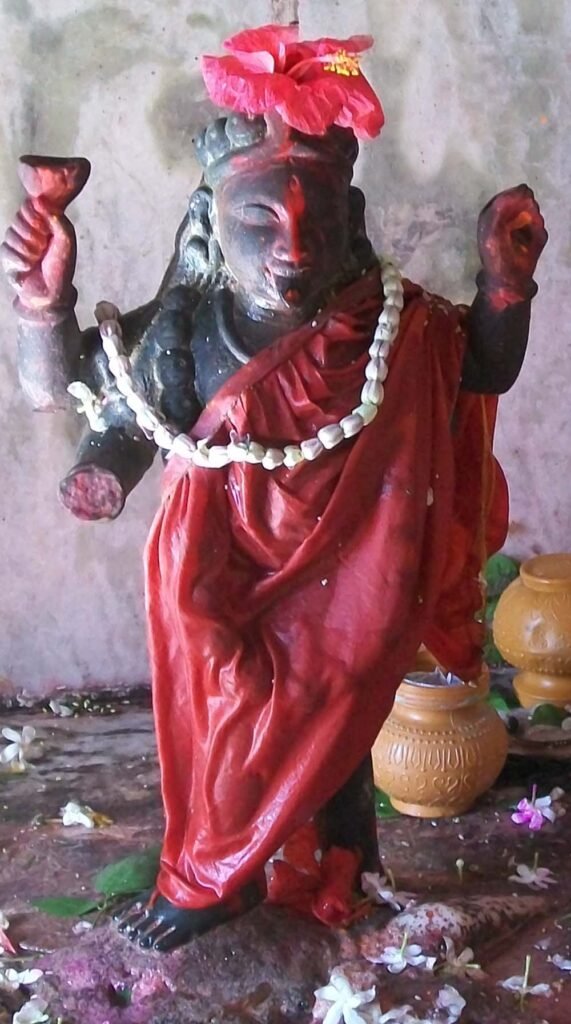
Beyond its primary Shivite identity, Basukinath stands as an extraordinary esoteric citadel because it houses the complete, rare shrines of the Ten Mahavidyas (Dasa Mahavidya). Positioned behind the main sanctum and flanking the exit portals, these ten divine forms were consecrated by realized Siddha Purushas using rare, sacred stones. The ten cosmic goddesses residing within the complex are: Maa Kali (destroyer of time and ego), Maa Tara (savior across the ocean of worldly existence), Bhuvaneshwari (ruler of the cosmos), Bhairavi (fearsome protector), Chhinnamasta (self-decapitated grantor of supreme power), Dhumavati (the cosmic widow removing fear), Bagalamukhi (vanquisher of enemies and negative forces), Matangi (grantor of speech and artistic mastery), Kamala (goddess of prosperity), and Tripura Sundari (ultimate beauty leading from worldly attachment to liberation).
DASA MAHAVIDYA & ASHTALAKSHMI Kali & Tara : Spiritual liberation & salvation.
Bagalamukhi: Protection & victory over foes. Chhinnamasta: Poetic spark & literary grace. Ashtalakshmi Forms: Dhana, Santana, Saubhagya, Gaja, Adi, Dhira, and Dhairya Lakshmi. Unified Grace: Material wealth combined with spiritual transcendence. While ordinary pilgrims often perform rituals for Goddess Bagalamukhi to overcome disputes, Tantra Shastra emphasizes that worshipping all ten Mahavidyas grants absolute deliverance from the three categories of suffering: Daivik (cosmic/divine), Daihik (physical), and Bhautik (material). The immediate efficacy of these deities is testified by scholars like Pt. Kanhaiya Lal Pandey, who regularly worships Goddess Chhinnamasta at Basukinath. He attributes his poetic inspiration and creative genius in composing both audible (Shravya) and visual (Drishya) literature directly to her divine grace.
COMPLETE ASHTALAKSHMI BLESSING
In contemporary times, while most devotees restrict their prayers to a single aspect of wealth, complete worldly and spiritual fulfillment requires the blessings of all eight forms of Goddess Lakshmi (Ashtalakshmi): Dhana (monetary wealth), Santana (progeny), Saubhagya (good fortune), Gaja (royal prosperity), Adi (primordial power), Dhira & Dhairya (patience and valor). Noted scholar Pt. Anoop Kumar Vajpayei points out that separate physical temples for all eight individual forms of Lakshmi in a single complex are exceedingly rare in India—found almost exclusively at the coastal Ashtalakshmi temple in Chennai. However, Tantric scriptures declare that worshipping the Dasa Mahavidyas at Basukinath inherently encapsulates the full spectrum of Ashtalakshmi blessings. By offering authentic devotion at Basukinath Dham—where Fauzdari Baba presides amidst the Ten Mahavidyas— devotees in Eastern India attain both mundane prosperity (Laukik) and ultimate spiritual liberation (Parlaukik) in a single unified pilgrimage.