World breastfeeding week starts in MMCH Daltonganj
Daltonganj
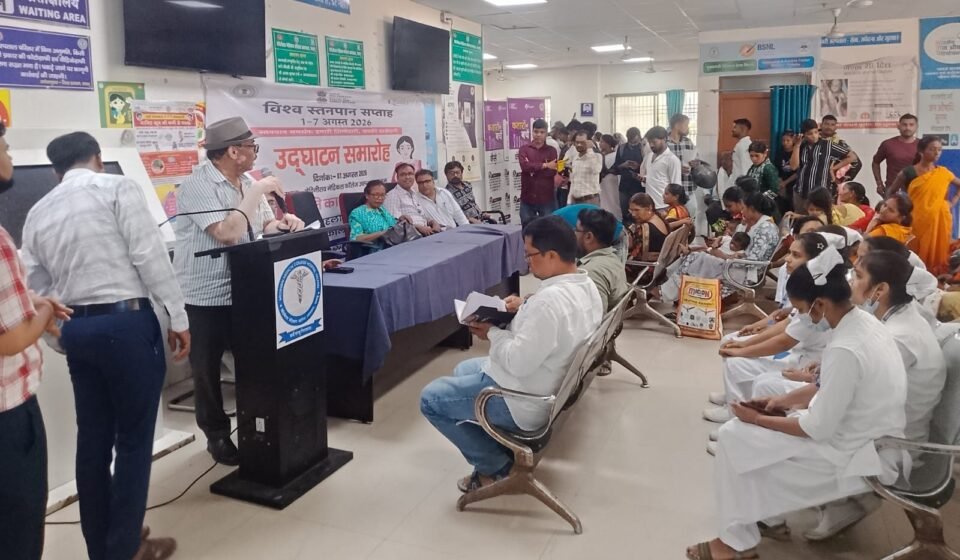
World Breastfeeding Week began at a modest function held at the Child and Maternity Building of Medinirai Medical College and Hospital (MMCH), Daltonganj, on Saturday.
Civil Surgeon Dr Anil Kumar Srivastava, Medical Superintendent Dr Ajay Kumar, District Reproductive and Child Health Officer Dr S.K. Ravi, Dr Abhay Kumar, Dr Horo and other health officials jointly inaugurated the week-long breastfeeding awareness campaign.
The World Alliance for Breastfeeding Action (WABA) has announced the 2026 theme, “Sustainable Start in Life: Strengthening What Works.” The campaign seeks to promote breastfeeding practices and strengthen support systems for mothers and newborns.
Health officials highlighted two critical aspects of breastfeeding—initiating breastfeeding within one hour of childbirth and exclusive breastfeeding for infants from birth to six months.
Speaking to The Pioneer, Civil Surgeon Dr Anil Kumar Srivastava said mothers who undergo Caesarean-section deliveries often face difficulties or reservations about initiating breastfeeding within the first hour. “This is not correct. A woman who has undergone a C-section can also initiate breastfeeding within one hour,” he said.
He added that breastfeeding, irrespective of whether the delivery is normal or through C-section, is an important part of motherhood.
According to NFHS-5 data, Jharkhand’s breastfeeding rate stands at 76.1 per cent, while the rate of breastfeeding initiated within one hour of birth remains significantly lower, ranging between 21.5 and 32.7 per cent.
Sources said Jamtara and Khunti are among the better-performing districts in breastfeeding practices.
However, a local market assessment found that demand for packaged infant milk formula continues in both urban and rural areas. Health advocates said the continued dependence on formula milk highlights the need for greater awareness about the benefits of breastfeeding and stronger support for new mothers.
Women’s activist Sharmilla Verma, when contacted for her views on the changing attitudes towards breastfeeding among younger mothers, said social perceptions and concerns about maintaining body shape may influence some women’s decisions.
She also stressed the importance of appropriate clothing and social support that enables mothers to breastfeed comfortably in public and at home.
Verma further said that while domestic caregivers can assist with childcare, they cannot replace breast milk, which remains the natural source of nutrition for infants during the early months of life.