
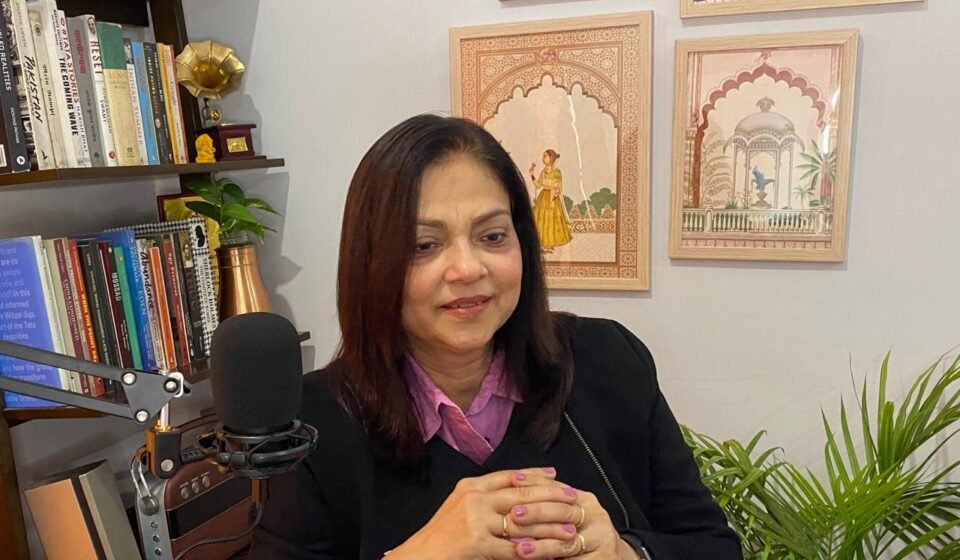
The Freedom to Think: Whose Thought Is It Anyway?
By Anjali Singh
Recently, I found myself in conversation with a mother and her son. She was lamenting his screen time. He was mounting a spirited defence: “But I’m using it for my assignments!”
As the conversation drifted to a recent disagreement, the boy mentioned an Independence Day task he had been given: “Write five lines about what you would like to change to make your country a better place.” When I asked what he had written, he picked up his phone and said, quite matter-of-factly, “I took help from my phone and AI. I asked, ‘What should I write?’”
I smiled. There was something wonderfully innocent but slightly alarming about the confidence with which he said it. A child had been invited to imagine, question and offer his own idea. Yet his first instinct was to look outside himself for the answer.
That small moment made me pause. Because the assignment was about Independence Day, it raised a larger question: when answers arrive within seconds, are we slowly losing the habit of thinking before we look for them?
As Independence Day approaches, our thoughts naturally turn to freedom – a freedom won through struggle, sacrifice and courage. We remember those who fought so that we could hold our heads high and determine our own future. There is another dimension of freedom that deserves our attention today: the freedom to form our own thoughts, make our own choices and question what is placed before us.
The influences on our thinking are often invisible. They arrive as notifications, recommendations, trending opinions and neatly packaged answers. An algorithm learns what holds our attention and serves us more of it. A search engine answers before we have fully framed the question. Social media can make a repeated opinion feel like established truth.
Technology is one of humanity’s greatest achievements. We invented machines to save time, reduce effort and free ourselves to create, imagine, connect and pursue what matters. Our capacity to think, reason, question and create is precisely what made those inventions possible.
So the question is not whether we should use technology. Of course we should. The question is whether, in making life easier, we are also making thinking optional.
We see this pattern in children and adults alike. A child asks, “What should I choose?” before asking, “What do I want?” An adult reads a headline, scans a few comments, forms an opinion and shares it, only to discover later that the headline told only half the story.
Information may be at our fingertips, but information is not automatically truth, and exposure is not understanding. Knowledge becomes meaningful only when we pause, examine it and make sense of it for ourselves.
That is where critical and independent thinking become essential. They invite us to ask: Who is saying this? What is the evidence? Is there another perspective? Have I verified it? Why do I agree? Independent thinking does not mean disagreeing with everyone. It means knowing why we believe something and having the courage to change our minds when better evidence arrives.
This is a skill we can nurture at home and in schools. Instead of immediately solving a child’s dilemma, ask: “What are your options? What do you think? Why?” Let children make small choices, make mistakes and experience consequences. A slightly wrong decision made independently can teach more than a perfectly correct decision made for them.
The same pause matters emotionally. When anger rises, being able to say, “I am angry, but I don’t have to react immediately,” is also an act of independence. The pause gives us the chance to choose our response rather than be carried away by our reaction.
This Independence Day, alongside asking our children what they know about India’s freedom struggle, let us ask: “What do you think? And how did you arrive at that thought?” Then let us give them time to answer.
A free society needs more than informed citizens. It needs people who question without fear, verify before believing, analyse before deciding, listen without surrendering their judgement and disagree without losing respect.
We inherited the freedom to determine our country’s future. Our responsibility is to raise people who can think for themselves.
In a world increasingly designed to tell us what to watch, what to believe and what to choose next, perhaps one of the quietest forms of freedom is also one of the most valuable: the freedom to pause, think, question and arrive at our own answer.
(Anjali Singh is the founder of Paramarsh by AS, an alumna of the Delhi School of Economics, former HR manager and educator, and now a coach who works with students, parents, educators and corporates on emotional well-being, career clarity and holistic growth.)