Selfless Service as a Means to Dissolve the Ego: Surrender as the First Step of Devotion
Third Day of the Śrīmad Bhāgavata Kathā at the Sannyāsa Pīṭha, Paduka Darshan, during the Chāturmāsya Anuṣṭhāna commemorating the Birth Centenary of Paramahaṃsa Swami Satyananda Saraswati
By Kumar Krishnan
MUNGER
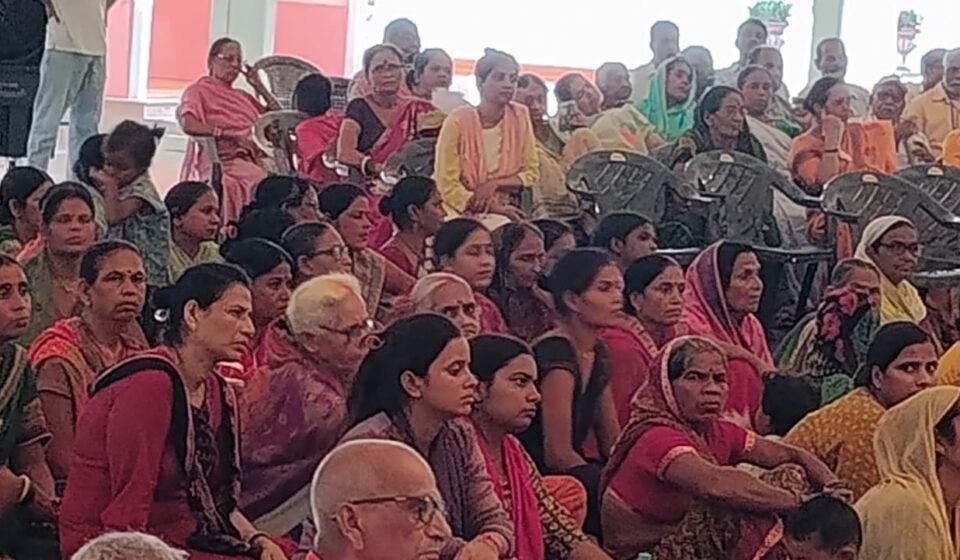
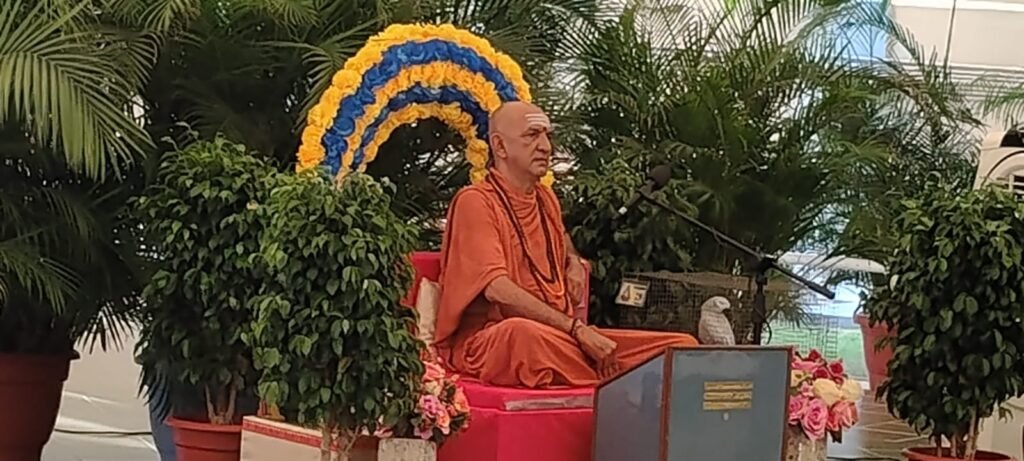
The third day of the ongoing Śrīmad Bhāgavata Kathā at the Sannyāsa Pīṭha in Paduka Darshan, organised as part of the Chāturmāsya Anuṣṭhāna commemorating the birth centenary of Paramahaṃsa Swami Satyananda Saraswati, was marked by a profound exposition on jñāna, bhakti, vairāgya, tyāga and selfless service. Swami Niranjanananda Saraswati emphasised that devotion is not confined to ritual worship; it is a discipline of surrender, accompanied by vigilant self-observation. Surrender, he said, is the first step on the path of devotion. When service is rendered without expectation of reward, the ego and the sense of self-interest gradually begin to diminish.
Swami Niranjanananda explained that service is not merely an act of helping another person; it is also a means of transforming oneself from within. Selfless action dispels narrowness and negativity of mind while cultivating humility, gratitude and inner clarity. He stressed that self-purification is not an achievement accomplished in a single day, but a continuous spiritual discipline. One should therefore make a small resolve each day and fulfil it with sincerity and steadfastness. It is this sustained practice that gradually transforms one’s thoughts, conduct and way of life. In true selfless service there is action, but no pride in action; there is assistance, but no sense of personal superiority.
Bhajans and Saṅkīrtana Create an Atmosphere of Devotion
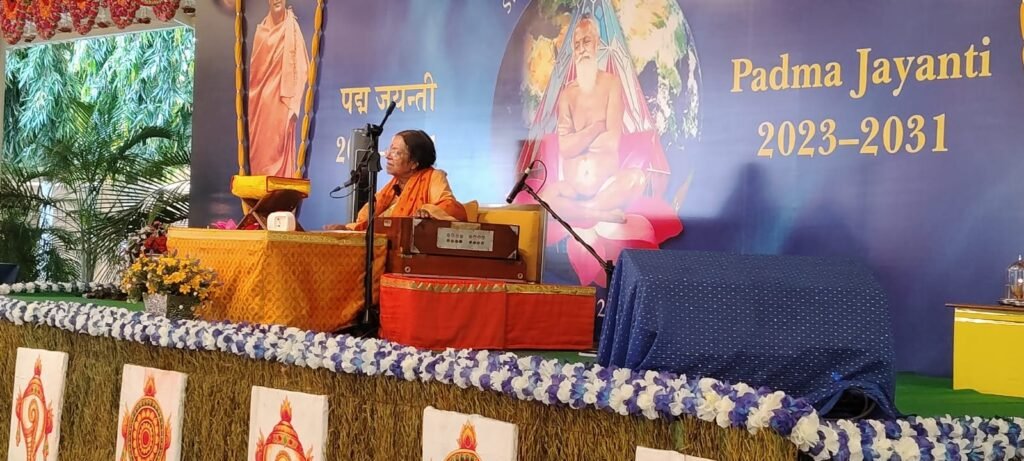
Mānasa Kokilā Krishna Mishra deepened the devotional atmosphere through bhajans and congregational saṅkīrtana. The collective chanting of the sacred invocation,
“Om Kṛṣṇāya Vāsudevāya Haraye Paramātmane,
Praṇataḥ Kleśanāśāya Govindāya Namo Namaḥ,”
was followed by the devotional refrain, “Bhajo Rādhe Kṛṣṇa, Gopāla Kṛṣṇa, Śrī Rādheśyāma.”
Devotees joined the saṅkīrtana with deep faith and absorption. The devotional singing underlined the idea that remembrance of the Divine is not merely an individual practice but can also elevate and purify the collective consciousness.
The symbolic expressions of “maikdā” and “jām” were interpreted in the spiritual context of intense divine love and complete surrender to the Supreme. The underlying message was that true devotion is determined not by external ritual but by the inner disposition of the seeker. When the individual relinquishes ego and surrenders to the Divine, devotion becomes a lived experience.
From the Fragmentation of the Mind to Inner Absorption
The episode of King Parīkṣit and Śukadeva was narrated as a profound lesson in mortality, renunciation and spiritual knowledge. According to the traditional account, when King Parīkṣit learned that his life was drawing to an end, he went to the banks of the Ganga, where Śukadeva imparted the wisdom of the Bhāgavata. The episode conveys the message that, in the face of life’s uncertainties, lasting stability is found not in fear but in introspection, devotion and detachment.
The discourse also highlighted seven noble qualities traditionally associated with the ideal feminine principle—fame, sweetness of speech, remembrance, intelligence, fortitude, forgiveness and compassion. Through the story of Mother Devahūti, the discussion turned towards self-knowledge and the wisdom of Sāṃkhya philosophy.
The Bhāgavata was presented as showing the way to inner peace through remembrance of the Divine Name, satsanga, listening to sacred narratives, selfless action, detachment and righteous conduct. The grace of the Sadguru, it was observed, enables a seeker to comprehend the deeper meaning of spiritual discipline. The true Guru teaches not merely the pursuit of worldly wealth, but the discovery of the wealth within.
A central message of the discourse was that the ultimate purpose of life is not merely the pursuit of liberation, but the flowering of devotion. The assurance that the Lord protects those who surrender themselves to Him was illustrated through the narratives of the Varāha incarnation, Prahlāda and Dhruva.
At the beginning of the programme, Swami Shivadhyanam welcomed the devotees and connected the day’s discourse with the spiritual themes explored on the preceding day.
The central message of the third day’s Bhāgavata Kathā was clear: devotion is not merely an outward religious practice but an inward transformation. Selfless service is one of the disciplines through which that transformation takes place, and every sincere resolve undertaken and fulfilled each day becomes another step towards the purification of the self.