Tribal groups announce Statewide campaign to defend Adivasi Identity
PNS
Ranchi
Representatives of several tribal and Jharkhand-based organisations on Monday announced a long-term statewide campaign to safeguard Adivasi identity, culture and traditional institutions, alleging that the Rashtriya Swayamsevak Sangh (RSS) and its affiliated organisations are attempting to undermine the distinct identity of indigenous communities.
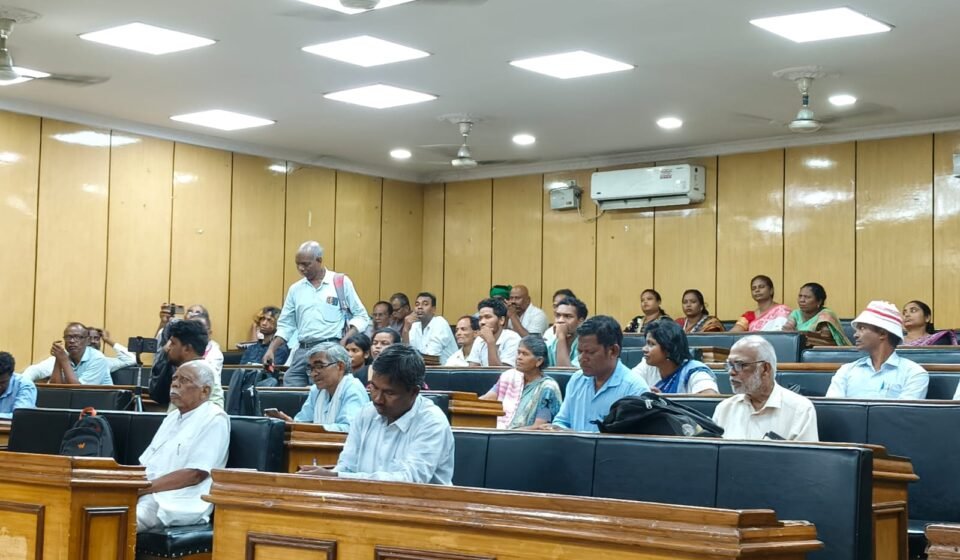
The announcement was made at the conclusion of the “Adivasiyat Sanrakshan Samvad” (Dialogue on the Protection of Adivasi Identity), held at the Old Assembly Hall in Ranchi. The programme was jointly organised by organisations including Jharkhand Janadhikar Mahasabha, Adivasi Adhikar Manch, Gaon Ganrajya Parishad, Adivasi Sangharsh Morcha, Adivasi Samanvay Samiti, Sanyukt Gram Sabha, Visthapit Mukti Vahini, Johar, Jharkhand Kshetriya Parha Samiti and Adivasi Bachao Morcha.
Participants alleged that attempts to describe Adivasis as “Vanvasis” and opposition to a separate religious code for tribal communities were part of a broader effort to dilute their independent cultural and religious identity. Speakers claimed that the greatest challenge to “Adivasiyat” comes from the ideology of Hindutva and accused the RSS and its affiliated organisations of promoting assimilation into the Hindu social order.
The gathering reiterated the long-standing demand for official recognition of the Sarna faith and a separate religious code in the national Census. It also criticised campaigns seeking the delisting of Christian Adivasis from the Scheduled Tribe category, alleging that such efforts would weaken tribal unity.
Speakers emphasised that Adivasi philosophy is rooted in collective living, equality, freedom and a harmonious relationship with nature, particularly water, forests and land.
The organisations resolved to launch a sustained campaign across Jharkhand through divisional and district-level conventions, culminating in a large “Adivasiyat Bachao Maharally” in Ranchi during October-November this year. Several tribal leaders, activists and representatives from across the state participated in the dialogue.