
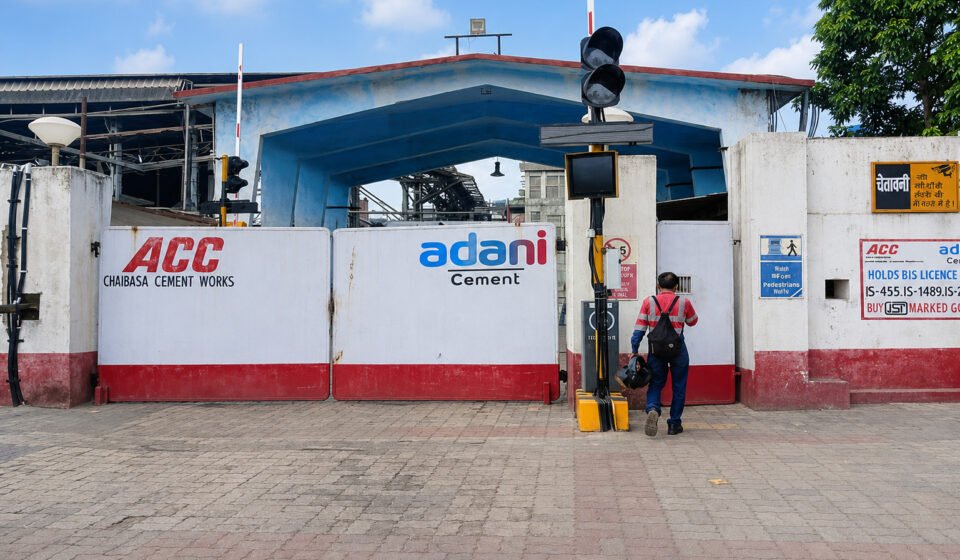
Historic Jhinkpani cement plant to close after 80 years, 1,600 jobs at risk
Pioneer News Service
Jamshedpur
In a major blow to the industrial economy of West Singhbhum, ACC Limited has announced the permanent closure of its historic Chaibasa Cement Works at Jhinkpani, bringing an end to nearly eight decades of operations. The company has pasted a formal closure notice at the plant premises, stating that all manufacturing activities will cease from August 16, 2026.
The decision is expected to directly impact around 1,600 workers, including 74 permanent employees and nearly 1,500 contractual labourers. The closure is also likely to have far-reaching consequences for thousands of families in the surrounding villages that have depended on the plant for employment and economic activity for generations.
According to a notice submitted to the Ministry of Labour and Employment under the Industrial Relations Code, 2020, the company cited the exhaustion of limestone reserves, rising production and transportation costs, and obsolete technology as the primary reasons for shutting down the unit.
Company officials stated that limestone deposits in the mines supplying raw materials to the plant have been completely depleted, making it impossible to continue production economically. The lack of local raw materials has significantly increased clinker and transportation expenses, while the ageing machinery installed at the plant has become inefficient and unable to meet modern industrial and environmental standards.
Established in 1946, a year before India’s Independence, the Jhinkpani cement plant is regarded as one of the oldest industrial units in the region and played a significant role in shaping the industrial growth of West Singhbhum.
Plant Head Raj Gurung said the decision was taken after extensive technical and economic assessments. He described the closure as a difficult but unavoidable step, adding that the company would ensure compliance with all legal obligations towards affected employees.
The management has assured that retrenched workers will receive one month’s salary in lieu of the notice period along with compensation and other benefits as prescribed under applicable labour laws.
The announcement has triggered anxiety across Jhinkpani and nearby villages, where local businesses, transport operators, suppliers and service providers have long relied on the plant’s operations. Residents fear that the closure could trigger large-scale migration in search of employment, particularly among contractual workers who may not receive the same level of financial protection as permanent employees.
Labour representatives and local residents have urged the government and company management to explore alternative employment opportunities and rehabilitation measures to mitigate the social and economic impact of the shutdown. As one of the region’s oldest industrial landmarks prepares to close its gates, uncertainty looms over the future of thousands of families whose livelihoods have been tied to the plant for decades.