
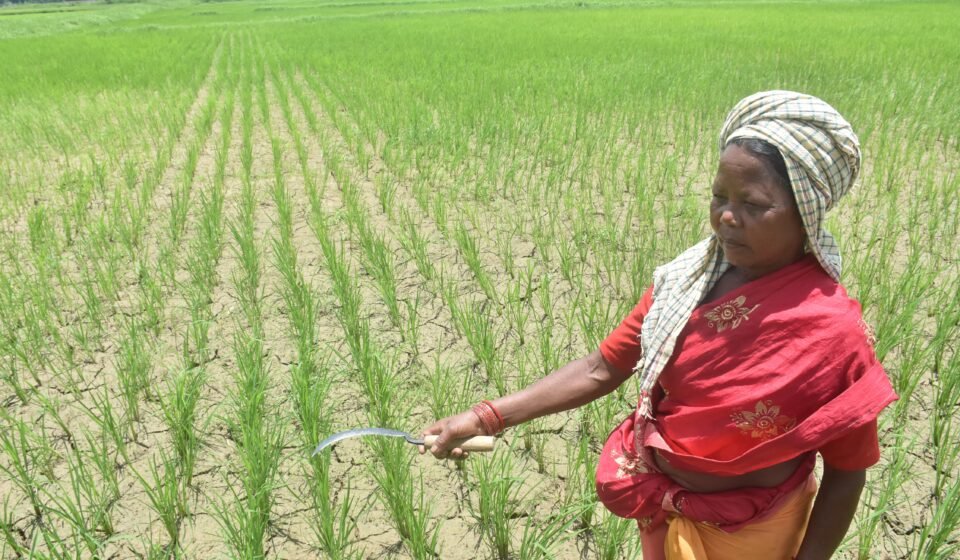
Drought threat looms over E. Singhbhum; June rainfall plummets to 55.2 mm
Pioneer News Service
Jamshedpur
East Singhbhum district is facing the spectre of a drought as an alarming shortfall in monsoon rainfall threatens agriculture and rural livelihoods across the region. According to official meteorological records available up to June 20, the district has received only 55.2 mm of rainfall against the normal average of 247.8 mm for the period, marking a deficit of nearly 78 percent.
The poor monsoon performance has triggered anxiety among thousands of farmers who depend on timely rains for Kharif cultivation. Paddy, the district’s principal crop, is expected to be the worst affected if rainfall does not improve significantly in the coming weeks. Agricultural fields in several parts of the district remain dry, delaying sowing activities and raising concerns about reduced crop yields.
The situation is particularly worrying in the agriculturally important Chakulia and Ghatshila subdivisions. Although Chakulia has received 143.6 mm of rainfall and Baharagora recorded 63 mm, most other blocks have witnessed precipitation levels hovering around just 50 mm. Experts warn that if the rainfall deficit persists through the remainder of June, farmers may face severe challenges in completing transplantation of paddy seedlings during the crucial cultivation window.
Recognising the seriousness of the situation, the district administration has activated drought preparedness measures and intensified efforts to protect the upcoming agricultural season. The District Agriculture Department has prepared a comprehensive contingency plan and submitted it to the state government. As part of the strategy, officials have sought an urgent supply of 19,077 quintals of seeds suitable for cultivation under low-rainfall conditions.
The proposed seed distribution programme aims to encourage farmers to shift towards crops that require less water and are better suited to adverse weather conditions. Agriculture officials are also conducting awareness campaigns across villages, promoting water conservation techniques, scientific farming methods and climate-resilient agricultural practices.
“We have placed an urgent requisition for seeds with the state government to tackle the looming drought. Once distributed, these seeds will provide farmers with reliable alternative cropping options. Alongside this, we are actively encouraging local communities to adopt advanced, climate-resilient agricultural practices,” said Geeta Kumari, In-charge Agriculture Officer of East Singhbhum.
Meanwhile, farmers across the district are anxiously awaiting a revival of monsoon activity. With the agricultural economy heavily dependent on rainfall, timely showers over the next few weeks will be critical in determining whether East Singhbhum can avert a drought and protect its Kharif harvest. Until then, both the administration and farming community remain on high alert.