
Bharat Kesari Dr. Syama Prasad Mookerjee: A Nation’s Tribute on His 125th Birth Anniversary
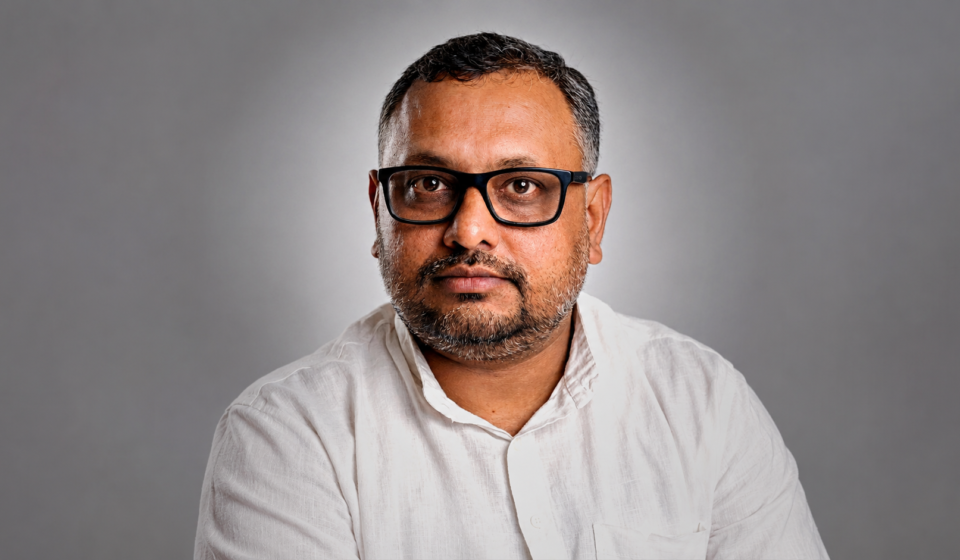
By Pradeep Verma
On July 6, 2026, India commemorates the 125th birth anniversary of Dr. Syama Prasad Mookerjee — a visionary leader, educationist, parliamentarian, and martyr whose life continues to shape the nation’s destiny. Though his journey spanned only 51 years (1901–1953), his contributions to education, industry, national integration, and political thought remain foundational to modern India.
Born into an illustrious family in Calcutta, Dr. Mookerjee inherited intellectual brilliance and a spirit of public service from his father, Sir Ashutosh Mookerjee. His decision to pursue a master’s degree in Bengali, at a time when English was the language of prestige, was a bold assertion of cultural self‑respect. In 1934, at just 33, he became the youngest Vice‑Chancellor of Calcutta University, introducing reforms that elevated Indian languages, women’s education, and indigenous knowledge traditions. His vision resonates today in the National Education Policy’s emphasis on mother‑tongue instruction.
Dr. Mookerjee’s political career was marked by principle and courage. He resigned as Bengal’s Finance Minister in 1942, opposing repression during the Quit India movement. Most decisively, in 1947, he thwarted the “United Bengal” plan that threatened to detach Calcutta and large parts of Bengal from India. His leadership ensured the creation of West Bengal, securing millions of lives and preserving India’s cultural capital.
As independent India’s first Industry and Supply Minister, he laid the foundations of self‑reliance. The Chittaranjan Locomotive Works, Hindustan Aircraft Factory (HAL), Sindri Fertilizer Plant, Damodar Valley Corporation, and Hirakud Dam were all products of his brief but transformative tenure. Today’s “Make in India” and “Atmanirbhar Bharat” echo his 1948 industrial policy.
In 1951, he founded the Bharatiya Jana Sangh, articulating the principles of cultural nationalism, economic self‑sufficiency, and equal citizenship. His opposition to Article 370 culminated in his historic declaration: “One nation cannot have two constitutions, two prime ministers, and two flags.” Arrested in Jammu in 1953, he died under mysterious circumstances, a sacrifice that galvanized national sentiment and eventually led to the abrogation of Article 370 in 2019.
Dr. Mookerjee’s legacy is not merely to be remembered but to be lived. His life teaches that true public service lies in aligning intellect with integrity, and power with principle. On his 125th birth anniversary, the nation bows in gratitude and renews its pledge to build a strong, self‑reliant, and united India — the India of his dreams.
(Dr Pradip Verma is a BJP Rajya Sabha MP from Jharkhand)