
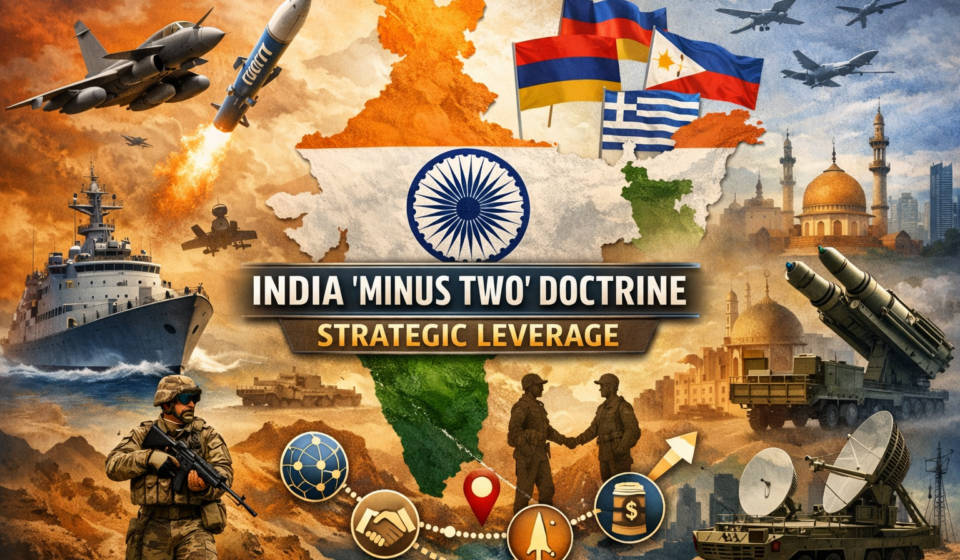
How New Delhi is Building Strategic Leverage
By Abhinav Shankar
PART-2
India’s defence diplomacy has undergone a profound transformation. Arms exports that were once negligible now reach dozens of countries. Indigenous missile systems, artillery, patrol vessels, radar networks and aerospace platforms are steadily entering foreign inventories. Defence production is no longer viewed merely as import substitution but as geopolitical capital. Every military platform exported creates decades of maintenance relationships, training partnerships and strategic influence.
Unlike traditional arms exporters that pursue commercial markets, India is increasingly building security ecosystems. Defence exports are becoming instruments of long-term strategic relationships rather than merely balance-sheet successes. Every missile battery, patrol vessel or surveillance system exported creates years of operational interoperability, training, maintenance and political trust. But New Delhi is equally signalling that strategic partnerships now carry consequences.
The era when India absorbed geopolitical provocations without response is visibly fading. Turkey’s sustained diplomatic and military backing of Pakistan has been met not through rhetorical protests but by India’s deepening defence engagement with Armenia and Greece, subtly reshaping the strategic geometry of the eastern Mediterranean.
Likewise, China’s expanding naval footprint in the Indian Ocean and its growing attempts to challenge Indian interests have prompted New Delhi to strengthen maritime partnerships with the Philippines, Indonesia and Thailand while rapidly expanding military infrastructure across the Andaman and Nicobar Islands, overlooking one of the world’s most consequential maritime chokepoints Strait of Malacca.
In West Asia too, India has broadened its military, energy, trade and diplomatic engagement with the United Arab Emirates & Israel as part of a wider strategy to ensure that shifting regional alignments like Saudi-Pakistan defence pact do not diminish its strategic space in the region. These are not isolated diplomatic gestures. They reflect an emerging doctrine in which India no longer confines itself to defending its borders; it actively shapes the wider strategic environment around them. Friends are strengthened, partners are empowered, and those who consistently work against Indian interests increasingly find that New Delhi possesses both the means and the willingness to impose geopolitical costs.
The same realism increasingly shapes diplomatic behavior. India is no longer hesitant about taking positions rooted in national interest even when they discomfort powerful capitals. It purchases energy where prices serve domestic priorities. It participates in the Quad without becoming a military ally. It remains active in BRICS without endorsing Chinese leadership. It engages Russia despite Western pressure. It deepens ties with Europe without accepting regulatory dependence. It expands cooperation with Gulf powers while maintaining relations with Israel.
It finalizes its trade deal with UK, EU, New Zealand, Oman while prolongs its trade deal with the US despite being Trump’s one of the top priorities to sell in his midterm. It diversifies its new energy routes through different poles of world viz UAE, US, Russia, Venezuela, Gulf and even Iran. Rather than choosing camps, India is constructing overlapping circles of influence where every major power requires engagement with New Delhi irrespective of disagreements elsewhere. That is not hedging. That is creating leverage.

(Abhinav shankar is an amazon best selling Author, Technocrat & a Commentator on geopolity, economy & public policy matters.)