
Naari Shakti — A Bowl of Soup
By Nupur Sheshank
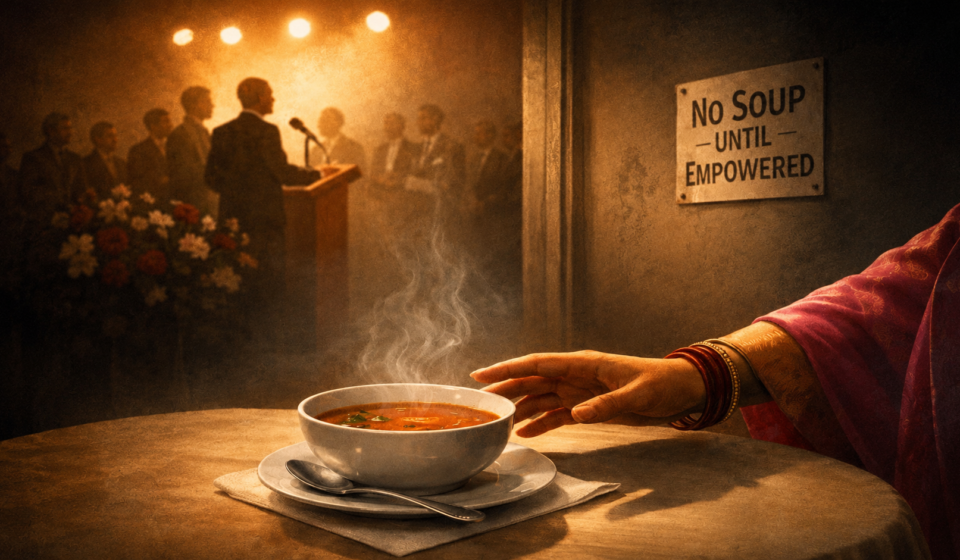
Inside the glittering banquet hall of a five‑star hotel, the stage was set for a grand celebration. Men in crisp suits and polished shoes spoke eloquently of Naari Shakti — women’s strength, wisdom, and grace. Their words soared high, praising women as nation builders, nurturers of families, and architects of society. Applause rang out after every sentence, echoing through the hall like a chorus of affirmation.
But outside, away from the spotlight, reality unfolded differently. Around 9 p.m., in the corridor where the aroma of food drifted softly, a woman reached for a bowl of soup. She was no ordinary guest; she was the mother of a special child who had been part of the fashion show and ramp walk earlier that evening. She had arrived at the venue at 3 p.m., patiently waiting through hours of speeches and ceremonies. Ironically, her husband was seated inside as a guest of honour, listening to paeans about women’s empowerment.
As she extended her hand toward the soup bowl, a waiter stopped her mid‑motion. “Not yet, ma’am,” he said curtly, his eyes avoiding hers. The words, simple yet sharp, cut deeper than any insult. In that instant, the grandeur of empowerment collapsed into hollow rhetoric. The woman, who had spent years empowering others, was denied the simplest act of self‑service.
She stood frozen, the muffled applause from inside contrasting with the silence of the corridor. The irony was unbearable: while speeches glorified women’s dignity, one woman’s dignity was casually stripped away. She smiled faintly, not out of politeness but defiance — the quiet resistance that rises when dignity is bruised. The soup remained untouched, but her silence spoke louder than the speeches inside.
This moment is more than a personal humiliation; it is a metaphor for the contradictions of our society. We celebrate women with awards, ceremonies, and slogans, yet fail to extend basic respect in everyday interactions. Empowerment is not about glittering stages or eloquent speeches; it is about dignity, opportunity, and equality in the smallest of acts.
The woman’s experience reminds us that Naari Shakti cannot be confined to rhetoric. It must live in practice — in the way we treat women at dining tables, workplaces, and homes. Until then, every bowl of soup denied will remain a symbol of the gap between words and reality.
(Nupur is a former teacher of Sarala Birla Public School, Ranchi and a proud home maker)


The Hollow Man…. talking of Michael Angelo.