
By Pratul Shah Deo
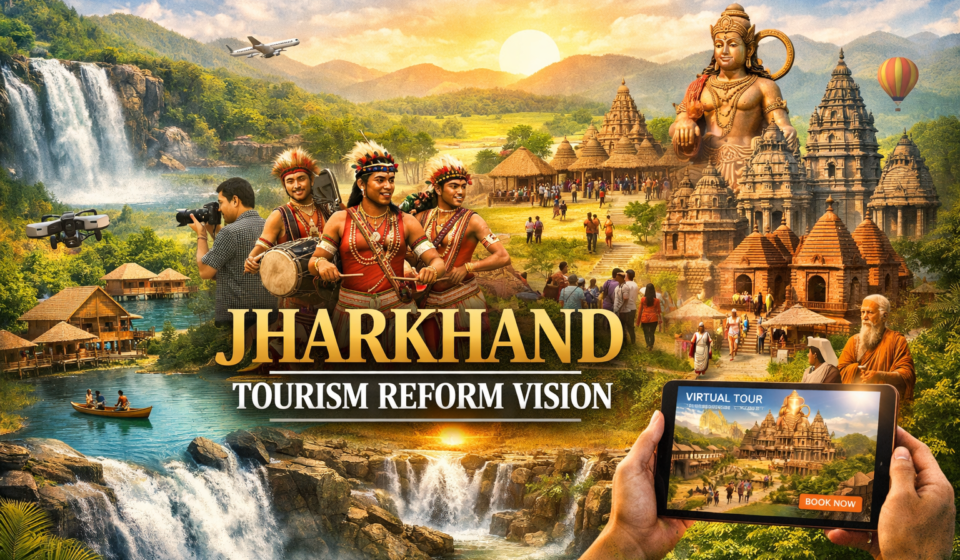
Jharkhand’s tourism sector holds immense promise to transform the state’s economy. Blessed with dense forests, hundreds of waterfalls, rolling hills, rivers, reservoirs, wildlife, vibrant tribal traditions, ancient temples, and centres of faith, Jharkhand has the potential to emerge as one of India’s most distinctive destinations. Yet despite this abundance, tourism development remains confined to a handful of well‑known spots.
Tourism is not simply about building roads or parking facilities. It becomes a powerful economic engine only when visitors stay for two or three days rather than making brief day trips. Global experience shows that tourists spend most on accommodation, local cuisine, handicrafts, transport, and cultural experiences. As long as Jharkhand remains a “visit‑and‑return” destination, local communities will never fully benefit from tourism‑driven growth.
Reimagining Jharkhand’s Tourism Model
Most visitors to Jharkhand’s waterfalls, dams, and scenic locations arrive in the morning and leave by evening because quality overnight accommodation is scarce. The government should encourage eco‑resorts, forest lodges, lakeside cottages, and homestays through Public‑Private Partnership (PPP) models and private investment. Recognising tourism as an industry and expanding the homestay policy can attract investment and create thousands of jobs.
Launch the “100 New Tourist Spots Mission”
Tourism promotion currently revolves around a few destinations such as Hundru Falls, Dassam Falls, Jonha Falls, Netarhat, and Betla National Park. Yet every district possesses breathtaking natural attractions known only to locals. A “100 New Tourist Spots Mission” should be launched to identify and develop these hidden gems. The Tourism Department, in collaboration with district administrations, local youth, travel photographers, and professionals, must ensure basic infrastructure — roads, signage, sanitation, cafés, and digital information systems — accompanies this initiative.
Tribal Culture: Jharkhand’s Unique Tourism Driver
Jharkhand’s tribal heritage is one of its greatest strengths, yet it has not been developed into a structured tourism product. Model cultural villages representing Santhal, Munda, Oraon, Ho, Birhor, Asur, and other communities can offer immersive experiences — traditional homes, indigenous cuisine, folk dances, music, handicrafts, and farming practices. These villages would generate sustainable livelihoods while preserving cultural identity and offering authentic accommodation and dining for visitors.
Religious Tourism Deserves Greater Attention
Jharkhand’s spiritual landscape is equally rich. Anjan Dham in Gumla, believed to be Lord Hanuman’s birthplace, deserves national recognition through an Ayodhya–Anjan Dham circuit. Itkhori in Chatra, a confluence of Hindu, Buddhist, and Jain traditions, could be integrated into a Gaya–Bodh Gaya–Itkhori Spiritual Circuit with Bihar. The Maluti Temple Complex in Dumka, an architectural treasure, should be nationally branded and linked with Tarapith in West Bengal. Sites associated with the Ramayana and Mahabharata traditions must be documented and promoted scientifically.
Digital Promotion: The New Frontier
In today’s digital era, tourism begins on a mobile screen. Each destination should feature drone footage, virtual tours, multilingual websites, online booking, verified map listings, and coordinated social media campaigns. Incentives for travel influencers and filmmakers can help showcase Jharkhand’s beauty to global audiences.
Tourism as Inclusive Economic Growth
Tourism creates broad‑based employment — benefiting hotel owners, taxi operators, guides, artisans, farmers, women’s self‑help groups, performers, and small businesses. It should be viewed not as expenditure but as long‑term investment in inclusive development.
For decades, Jharkhand’s economy has relied on mining. The time has come to complement it with nature‑based growth. With political commitment, effective implementation, and private participation, Jharkhand can emerge as eastern India’s leading hub for eco‑tourism, cultural tourism, and religious tourism.
Jharkhand does not lack resources — it lacks visionary planning, branding, and sustained will. Once these gaps are bridged, tourism will become a defining pillar of Jharkhand’s economic identity and a driver of sustainable prosperity.
Pratul is Chief Spokesperson, Jharkhand BJP