
Three-member team to investigate Cerebral Malaria deaths
Pioneer News Service
Jamshedpur
A sharp rise in cerebral malaria cases has placed the East Singhbhum administration on high alert, prompting an intensive surveillance campaign across the district and the formation of a high-level inquiry committee to investigate reported deaths in Potka block. With the majority of fresh infections identified as the potentially fatal Plasmodium falciparum strain, health authorities have stepped up screening, treatment, and awareness measures in vulnerable areas.
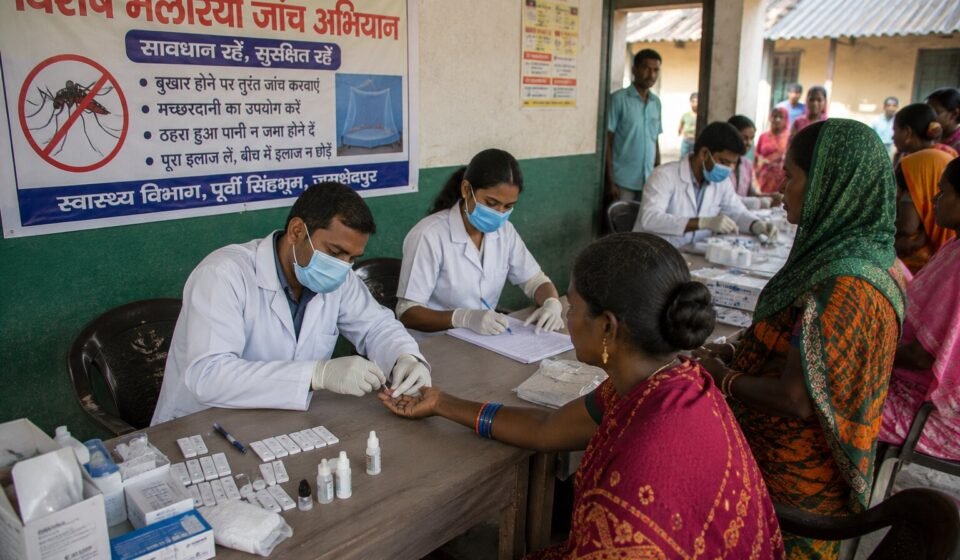
As part of a special anti-malaria campaign, the Health Department organised 90 screening camps across the district, where 10,357 people were tested for malaria. The screening detected 89 positive cases, including 66 cases of cerebral malaria caused by Plasmodium falciparum, 22 cases of Plasmodium vivax, and one mixed infection. Health experts consider P. falciparum the most dangerous malaria parasite because it can rapidly affect the brain and other vital organs if timely treatment is not provided.
Potka block emerged as the worst-affected area with 30 confirmed cases, followed by Musabani with 19 cases and Dumaria with 17. These forested and tribal regions remain particularly vulnerable to mosquito-borne diseases during the monsoon season.
To contain the outbreak, the Health Department organised special medical camps in 51 villages of Potka under the supervision of Medical Officer-in-Charge Dr. Sukant Sit. Health teams screened 2,366 residents, identified 30 malaria-positive patients, and immediately started treatment. Free anti-malarial medicines were distributed to all infected individuals to prevent complications and further spread of the disease.
Following reports of deaths allegedly linked to cerebral malaria, Deputy Commissioner-cum-District Magistrate Rajiv Ranjan constituted a three-member inquiry committee headed by the Additional District Magistrate (Law and Order). The committee also includes Sadar Hospital Medical Officer Dr. Ranjit Panda and IDSP epidemiologist Dr. Asad.
The panel has been directed to conduct a detailed field investigation, examine the circumstances surrounding the reported deaths, and determine whether any negligence or delay in healthcare services contributed to the fatalities. The committee has been asked to submit its report within three days. Based on its findings, the Jharkhand government will take disciplinary action, if necessary, while also recommending measures to strengthen disease surveillance, early diagnosis, referral systems, and emergency response to prevent similar incidents in the future.