‘Regional/tribal languages in JTET protect State’s linguistic identity’
Pioneer News Service
Ranchi
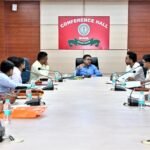
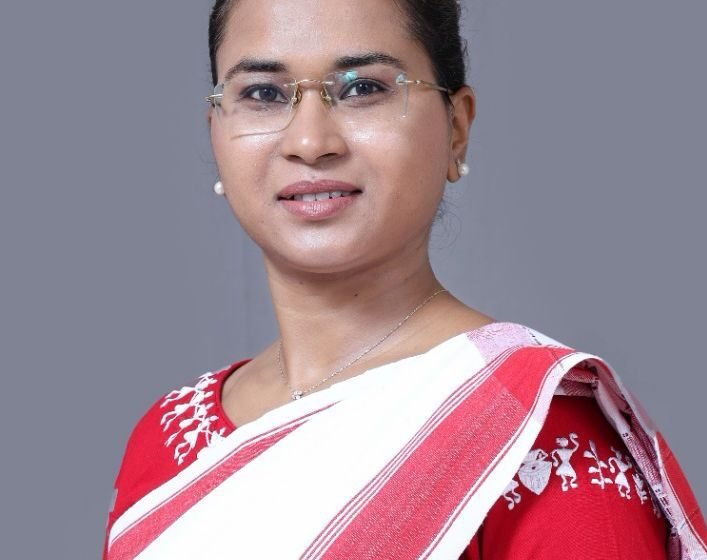
With the objective of preserving the linguistic and cultural identity of state under the Jharkhand Teacher Eligibility Test-2026 (JTET), Agriculture Minister Shilpi Neha Tirkey presented her key suggestions and academic arguments before the Language Committee.
“The ‘Teacher Eligibility Test’ (TET) is not merely a general competitive examination; rather, it is a mandatory qualification exam designed to ensure that teachers can effectively educate local children while understanding their linguistic, social, and cultural backgrounds.” She added that language is not just a medium of communication, but the very foundation of teaching.
The agriculture minister placed special emphasis on the fact that in a multilingual state like Jharkhand, language is not just a means of conversation, but an important pedagogical tool. Referencing historical contexts—such as the 1981 recommendation of the then-Commissioner Dr. Kumar Suresh Singh and the establishment of the Department of Tribal and Regional Languages at Ranchi University by Dr. Ramdayal Munda—she stated that the state’s 5 tribal languages (Kudukhn, Mundari, Santhali, Kharia, Ho) and 4 regional languages (Khortha, Kurmali, Nagpuri, Panchpargania) must be considered an integral part of the educational system, as students have been receiving education in these languages.
“The languages through which students study and are taught should be given priority in teaching and related service eligibility examinations as well.” This makes the entire education system more effective, practical, and equitable, aligning with local needs, social realities, and the linguistic background of the students.
She also clarified that including the state’s primary and widely spoken languages in ‘JTET’ is not an attempt to exclude any specific group, but rather a necessary arrangement to protect the educational interests of the students. Its sole and sacred objective is to ensure that every teacher appointed in schools is fully capable of establishing at least a minimum level of communication with young children (students) in a language familiar to them.
While presenting her views before the committee, Shilpi Neha Tirkey stated that the state of Jharkhand was carved out of Bihar specifically with the objective of safeguarding its distinct cultural identity and protecting the rights of the local people. Making the languages of neighboring states (such as Bhojpuri, Magahi, and Angika) a part of JTET based on the demographic changes or migration over the last two decades is not justified. She argued that when these languages themselves do not hold a mandatory or official status in all recruitments of the Bihar Public Service Commission (BPSC), imposing them on the youth of Jharkhand and making them a basis for eligibility would compromise the employment opportunities and local interests of the state’s original inhabitants.
Shilpi Neha Tirkey demanded that the government and the Language Committee formulate the language policy for JTET strictly on the basis of the gazette (Gazette No. 147/148) notified by the Department of Personnel, Administrative Reforms, and Official Language on March 13, 2023.