
How India’s Digital Public Infrastructure Is Changing Macroeconomics
BY: DEVANSHU JHA
Every salary hike carries an illusion. A larger pay cheque appears to make workers richer, until rising rents, school fees and grocery bills reveal otherwise. This tension between nominal income and real purchasing power lies at the heart of one of macroeconomics’ most influential ideas: expectations shape economic outcomes. More than half a century ago, Nobel laureates Milton Friedman and Robert Lucas Jr. explained how imperfect information influences employment, inflation and growth. Ironically, India’s digital transformation is now reducing many of the informational frictions on which their theories were built.
Friedman argued that unexpected inflation can temporarily stimulate economic activity because workers initially react to higher nominal wages before fully recognising the erosion of their real purchasing power. As expectations adjust, workers demand higher wages, firms face rising costs and output returns to its long-run level. Lucas extended this argument through rational expectations. Individuals are not permanently “fooled”; they simply struggle to distinguish whether a price increase reflects stronger demand for their own goods or economy-wide inflation. Once policy becomes predictable, people incorporate it into their decisions, leaving little room for systematic monetary surprises to boost real output.
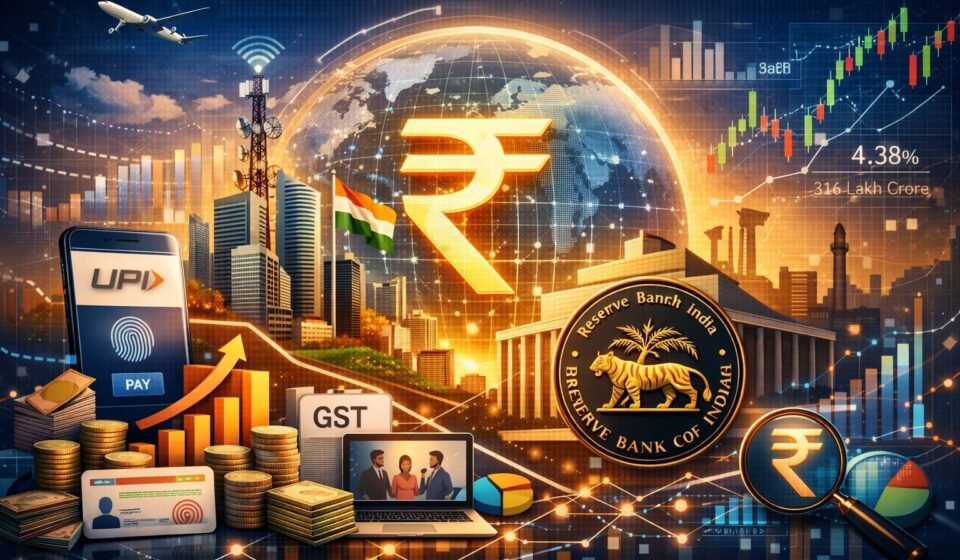
India provides a compelling illustration of how these ideas are evolving. Retail inflation rose to 4.38 per cent in June 2026, moving above the Reserve Bank of India’s medium-term target of 4 per cent. Yet inflation expectations today are shaped by far richer information than in previous decades. Households monitor prices through e-commerce platforms, businesses receive real-time market signals and financial news reaches millions of smartphones within minutes. In such an economy, expectations are formed faster and adjusted more frequently.
The real transformation, however, is India’s Digital Public Infrastructure. UPI processed more than 24,000 crore transactions worth over 314 lakh crore during FY2025-26, while accounting for nearly half of the world’s real-time digital payment transactions. Together with GST, Aadhaar and expanding internet penetration, this ecosystem has dramatically lowered search costs, improved price discovery and accelerated the flow of information across the economy. Digital infrastructure has become more than a technological innovation; it has evolved into a macroeconomic institution that shapes how expectations are formed.
The labour market reflects this shift. Corporate salary increments may appear attractive in nominal terms, but workers now compare compensation against inflation, housing costs and competing job offers almost instantly through salary benchmarking platforms and professional networks. The informational illusion described by Friedman becomes increasingly difficult to sustain when workers possess real-time information about wages and living costs.
The same logic extends to monetary policy. Lucas argued that anticipated policy loses much of its ability to influence real economic activity because rational individuals adjust their behaviour in advance. Inflation targeting institutionalises this insight. Rather than relying on surprise, the Reserve Bank of India increasingly emphasises transparent communication, inflation forecasts and policy guidance to anchor expectations. In the twenty-first century, central banks manage expectations as much as they manage interest rates.
The broader implication is profound. Economic growth today depends not merely on capital, labour or technology, but also on the quality of information flowing through the economy. By reducing informational frictions, India’s Digital Public Infrastructure is strengthening market efficiency, improving policy transmission and enhancing institutional credibility. Friedman and Lucas taught us that imperfect information could temporarily move economies. India’s experience suggests that better information can make economies more resilient. In the digital age, the most powerful economic stimulus may no longer be monetary surprise :it is public trust built on transparent information.
Devanshu Jha is a public policy expert and thought leader. He is an alumnus of London School of Economics, Lee Kuan Yew School of Public Policy and IIM RANCHI.