
Smart Habits Quietly Shape Leaders
By Sanjeevv Shekhar
Leadership is rarely tested during presentations or strategy meetings. It is revealed in the ordinary moments of everyday life. People observe how leaders behave far more closely than they remember what leaders say. That is why I have always believed that values are not taught through speeches; they are transferred through daily conduct.
Over the years, working in an organisation where safety and behavioural excellence are practised every day has reinforced many habits that have gradually become part of my personality. Today, I follow them not because they are company expectations, but because they have made me a better professional, a calmer individual and a more responsible citizen.
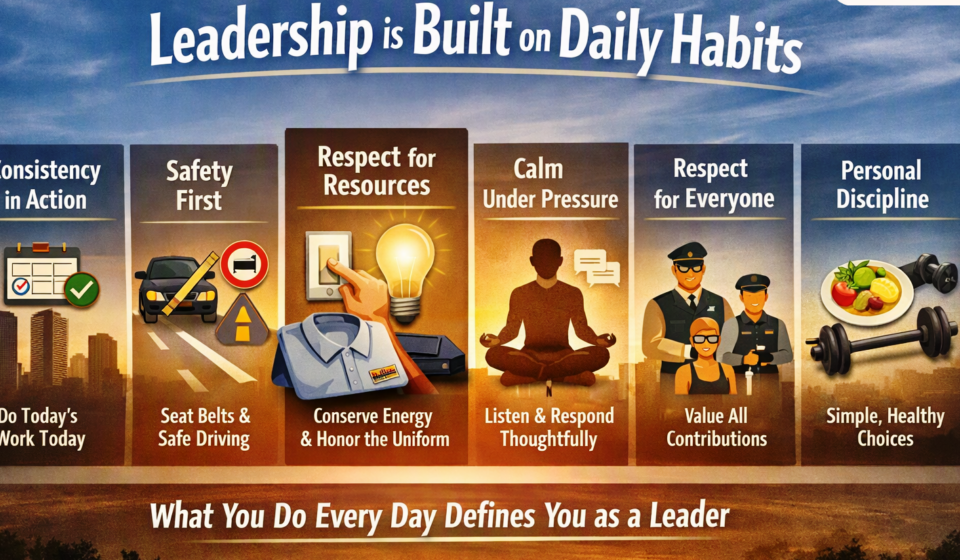
The day often begins before sunrise. A clear agenda gives direction, and I have developed a simple habit of completing today’s work today. Unfinished tasks create unnecessary pressure, while timely execution builds confidence, credibility and trust. People depend on leaders who consistently deliver, not on those who merely promise.
The same philosophy extends beyond the office. Before any journey begins, I ensure everyone in the vehicle is wearing a seat belt, including those seated at the rear. There was a time when I overlooked this simple precaution myself. Learning the risks changed that behaviour permanently. Speed on highways remains under control because reaching safely is always more important than reaching early. Even parking the vehicle in take-off mode has become an automatic habit. Small actions often make the biggest difference when safety is involved.
Respect for resources is another value that quietly influences everyday choices. Lights and electrical equipment are switched off when they are no longer required because saving energy is not merely about reducing cost; it reflects respect for shared resources. The same respect extends to the company uniform. It represents the institution long after office hours are over, and treating it with dignity reflects pride in belonging to something larger than oneself.
Every workplace experiences moments of disagreement, pressure and emotion. Experience has taught me that calmness is one of the most underrated leadership qualities. Listening before responding has prevented many avoidable conflicts. The same approach has strengthened relationships at home. Differences of opinion do not always require immediate reactions. Often, giving people time and space leads to better conversations and better decisions.
Another lesson that has stayed with me is that respect has no designation. A greeting to the security guard, a thank you to the driver, listening patiently to a colleague or acknowledging the contribution of support staff may appear insignificant, yet these gestures build an environment where people feel valued. Respect has a remarkable way of returning when it is needed most.
Even personal choices communicate leadership. I prefer simple vegetarian meals in the office, not because of a rule, but because discipline in personal habits often reflects discipline in professional life. None of these practices is extraordinary. They do not demand exceptional talent or resources. Yet, repeated every single day, they quietly shape character. Families feel safer. Teams develop trust. Organisations become stronger.
After more than three decades in Human Resources and Corporate Affairs, I have realised one enduring truth that leadership is never established by what we preach. It is established by what we practise consistently. What you do, every day, is what people ultimately learn from you.
(THE WRITER IS A CORPORATE AFFAIRS, GOVERNMENT RELATIONS AND HUMAN CAPITAL LEADER WITH OVER THREE DECADES OF EXPERIENCE ACROSS THE POWER, INFRA-STRUCTURE AND MEDIA SECTOR)