Beyond the Waterfalls: Meghalaya’s Greatest Wonder Is Its Women
By Pampi Rani Das
“Travel leaves you speechless, then turns you into a storyteller.” Few journeys affirm this truth as profoundly as our recent visit to Meghalaya. We had travelled in search of waterfalls, mist-covered hills and respite from the summer heat. We returned carrying something far more enduring, an abiding admiration for a society where women quietly shape the economy, preserve tradition and inspire resilience through the dignity of work.
The journey itself began with a simple family wish. My son, eager to spend his summer holidays away from the oppressive heat of the plains, insisted that we visit Meghalaya, a destination he had admired through travel documentaries and geography lessons. Accompanied by one of my husband’s Army colleagues and his family, we embarked on what we imagined would be a relaxing vacation amidst nature.
Nature certainly did not disappoint.
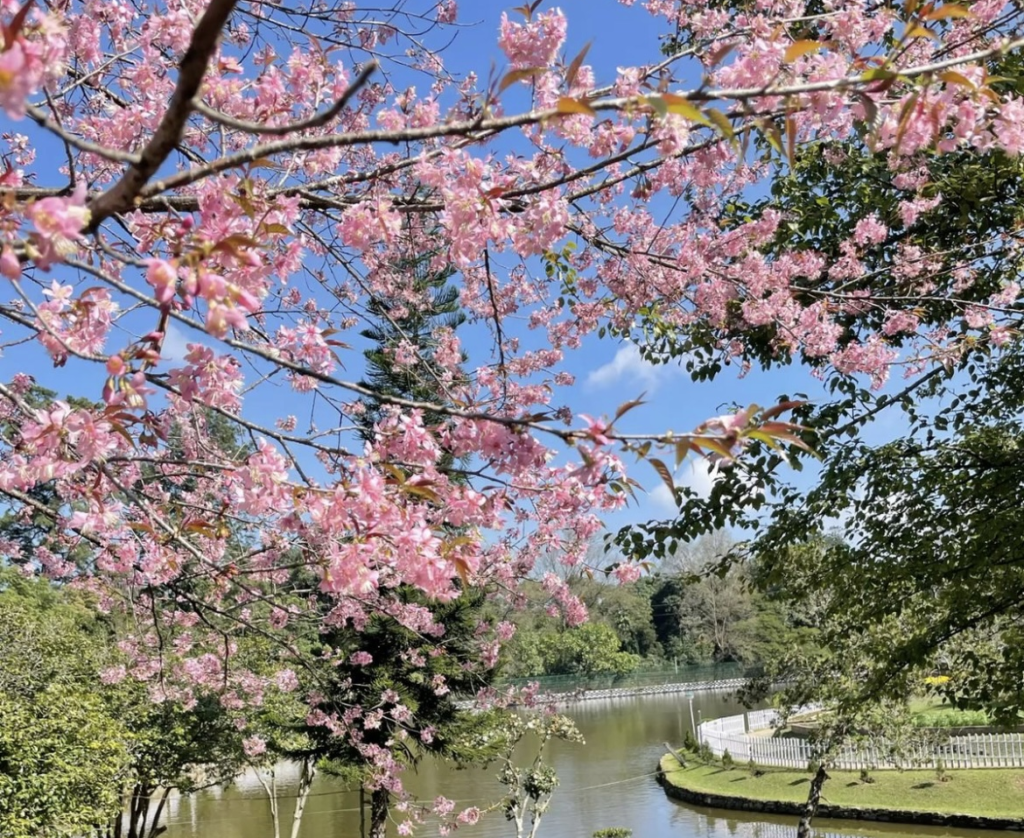
As our vehicle climbed the winding roads towards Shillong, aptly called the Scotland of the East, the landscape transformed into a breathtaking panorama. Rolling emerald hills stretched endlessly beneath floating clouds. Pine forests perfumed the cool mountain breeze. Tiny cottages with colourful roofs dotted the hillsides, while every bend in the road revealed another postcard-worthy view.
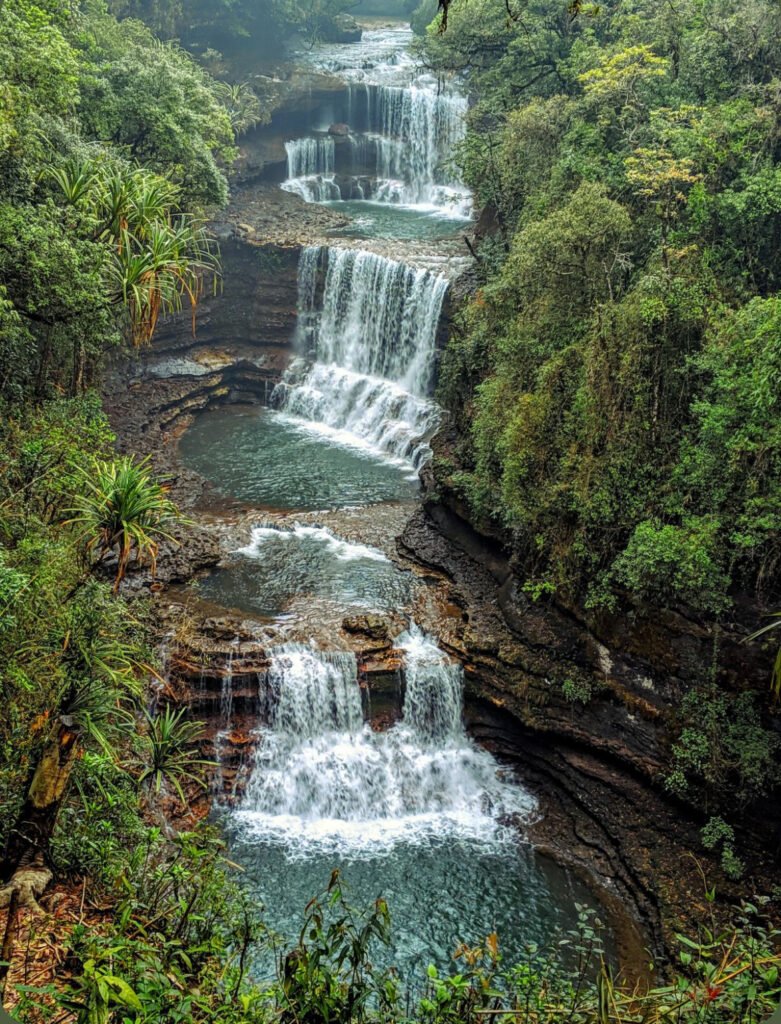
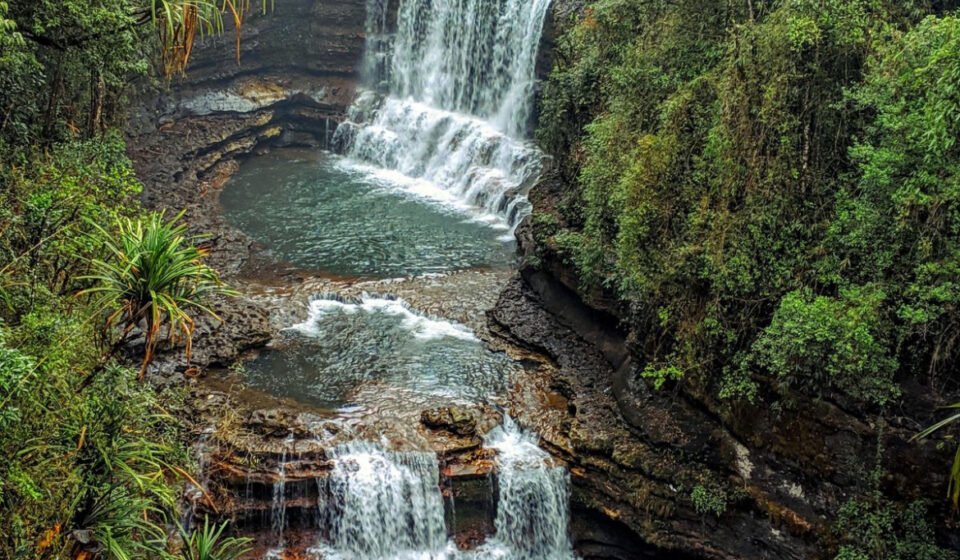
The journey to Sohra (Cherrapunji) unfolded like a moving painting. Waterfalls cascaded from towering cliffs into deep valleys. Crystal-clear streams sparkled under the sunlight. Ancient limestone caves whispered stories of geological time, and the famous living root bridges stood as extraordinary examples of how human ingenuity can coexist harmoniously with nature.
Yet somewhere along those winding mountain roads, another story quietly emerged—a story that no travel brochure had prepared us for. It was the story of Meghalaya’s women.
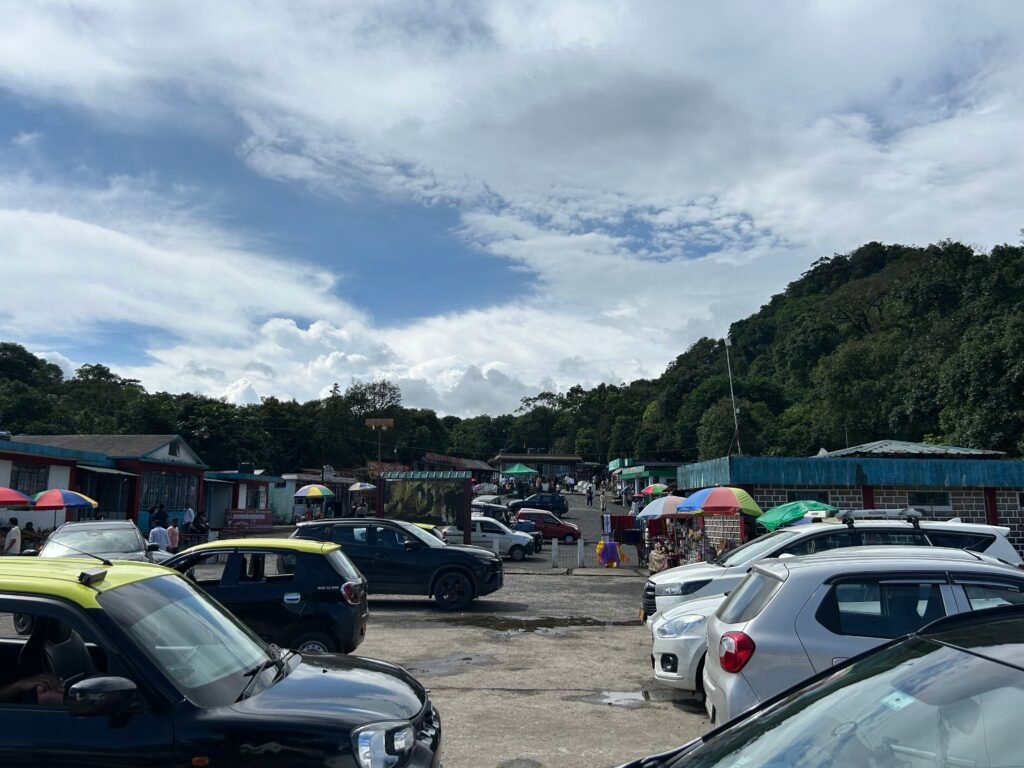
From Shillong’s bustling markets to the roadside stalls scattered along the highways leading to Sohra, women were not merely present; they were the unmistakable face of commerce.
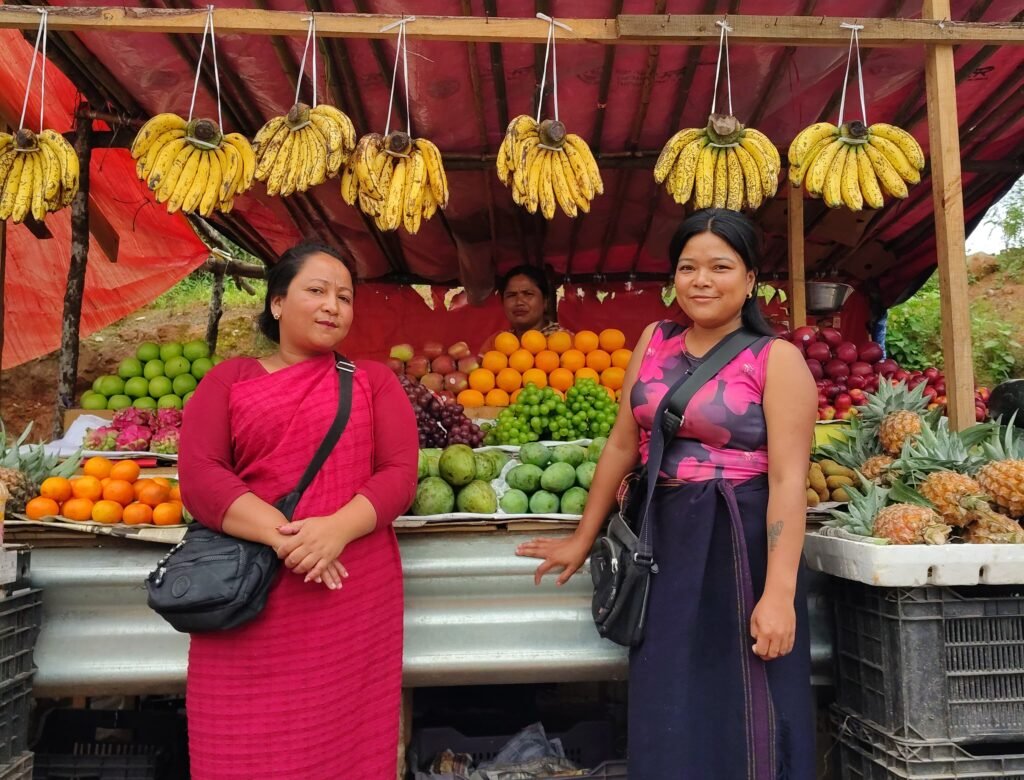
Every few kilometres, roadside stalls invited travellers to stop. Wooden tables overflowed with freshly harvested pineapples, Khasi mandarins, bananas, jackfruit, wild berries and seasonal fruits. Neatly arranged baskets displayed potatoes, sweet potatoes, ginger and the prized Lakadong turmeric, celebrated globally for its exceptionally high curcumin content. Nearby, colourful handicrafts crafted from bamboo and cane shared space with handwoven textiles, jars of homemade pickles, forest honey and locally grown spices.
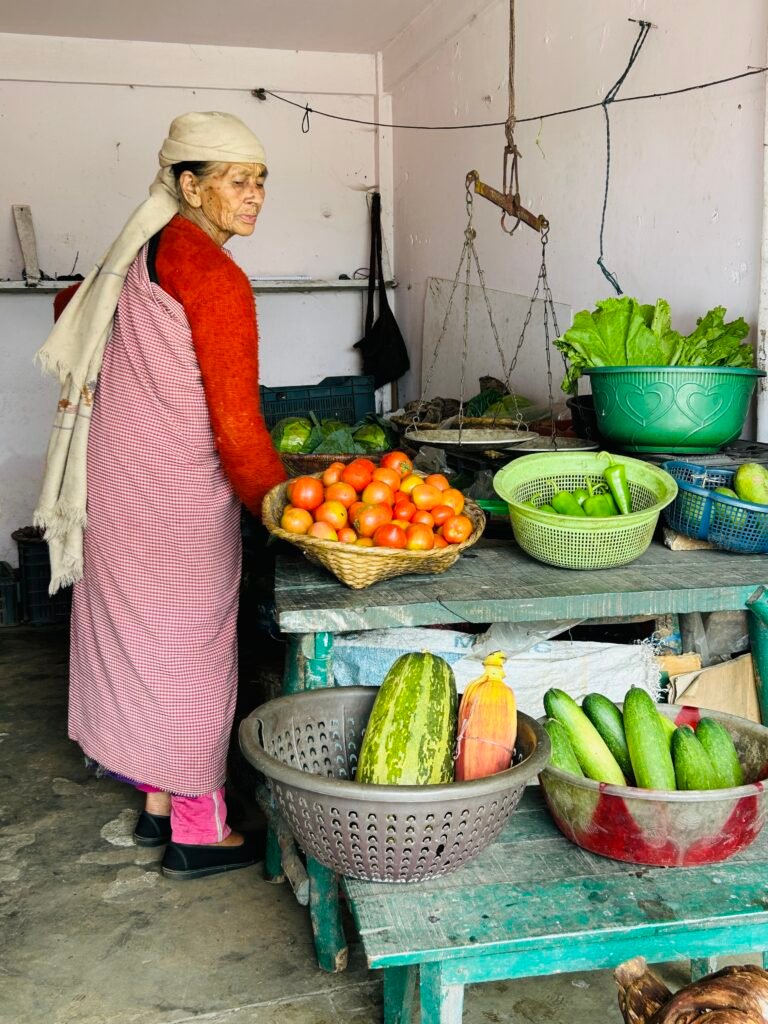
What caught my attention was not the produce. It was the people selling it. Almost every stall was managed by a woman. Some were young women balancing work with higher education. Others were mothers carrying infants while serving customers. Several elderly women, well into their seventies and eighties, sat patiently behind their counters with remarkable grace, greeting every visitor with warm smiles that reflected both confidence and contentment.
Their businesses were modest. Their confidence was extraordinary. Curiosity soon turned into conversation.
While purchasing freshly sliced pineapple from one vendor, I casually asked whether she worked because her family depended on the income. She smiled before replying, “My husband earns enough for our household. I work because I want to earn my own money. It gives me confidence and my own identity.”
Her words lingered in my mind long after we had left.
At another stall, a middle-aged woman selling turmeric, ginger and handwoven baskets shared a similar sentiment. “Financial independence isn’t only about money,” she said. “When we contribute to our family’s future, we feel respected. We become decision-makers.”
There was remarkable clarity in her words. These women were not working because society compelled them to. They were working because they believed in themselves.
Meghalaya’s predominantly matrilineal society has long accorded women an important position within the family and community. Among the Khasi and Jaintia tribes, lineage and ancestral property traditionally pass through daughters. While matriliny does not eliminate every social challenge, it has undeniably nurtured generations of women who view financial independence not as an exception but as a natural part of life.
That confidence is visible everywhere.
Women cultivate farms, manage shops, supervise markets, weave textiles, create handicrafts, process agricultural products and negotiate confidently with customers from every corner of the country.
Yet beneath this inspiring picture lies another reality, one that deserves equal attention.
Running a small business in the hills is anything but easy. Most women begin their day before sunrise.
Fresh produce must be harvested while temperatures remain cool. Fruits require careful sorting. Vegetables need cleaning and packing. Many women walk considerable distances carrying heavy baskets before reaching roads where shared transport takes them to local markets or tourist routes.
Only after completing household responsibilities do they begin their business day. Their work often continues until dusk.
Tourism remains their greatest source of livelihood.
During peak tourist seasons, business flourishes. Vehicles stop frequently, travellers purchase fresh fruits, local spices and handmade souvenirs, and earnings are enough to support their families.
But the off-season paints a different picture.
Persistent rainfall, landslides and fewer visitors can drastically reduce sales. Produce is highly perishable, leaving little room for delay. Unsold fruits often spoil before another opportunity arrives.
One elderly vendor expressed this uncertainty with remarkable serenity. “Some days we sell everything before evening,” she said with a smile. “Some days we carry everything back home. Tomorrow we return again.” There was no complaint. Only quiet determination. That resilience is perhaps Meghalaya’s greatest natural resource.
Agriculture remains the backbone of the state’s rural economy, and women are its strongest pillars. Across the fertile hills, they cultivate pineapples renowned for their sweetness, fragrant Khasi mandarins, bananas, ginger, turmeric and seasonal vegetables. Increasingly, women-led Self-Help Groups and Farmer Producer Organisations are adding value by processing, packaging and marketing products such as Lakadong turmeric and organic spices, enabling farmers to earn better returns.
The world today celebrates entrepreneurship. These women have practised it for generations. Equally fascinating is Meghalaya’s rich tradition of craftsmanship. The state’s bamboo and cane artisans transform simple natural materials into beautiful baskets, mats, rain shields and household products that are both functional and environmentally sustainable.
In weaving centres, women continue producing exquisite Eri silk, locally known as Ryndia, entirely by hand. Traditional garments like the Garo Dakmanda reflect centuries of indigenous artistry, often dyed using natural plant extracts.
Elsewhere, women continue the rare craft of black clay pottery, shaping earthen vessels entirely by hand without the aid of modern equipment. These are not merely handicrafts. They are living museums of cultural heritage.
Unfortunately, handmade products increasingly compete against inexpensive factory-made goods. Machine-produced souvenirs often sell at lower prices, leaving artisans struggling to secure fair compensation for days of painstaking labour.
Many women lack access to digital marketplaces that could connect them directly with buyers beyond the state. Transportation costs remain high due to the mountainous terrain, while fragile road connectivity often affects timely deliveries.
Yet despite these obstacles, optimism remains remarkably intact. Perhaps because their definition of success extends beyond profit.
Several women proudly spoke about educating their children through the income earned from roadside stalls and handcrafted products. Sons and daughters now study in reputed institutions across India. Some have pursued higher education overseas.
Every pineapple sold. Every basket woven. Every shawl handcrafted. Every packet of turmeric packed with care. Each represents a mother’s dream quietly taking shape.
Equally remarkable was Meghalaya’s exceptional cleanliness.
Not once during our journey did we encounter overflowing garbage heaps or neglected public spaces. Roads remained clean, markets appeared organised. Tourist destinations retained their pristine charm.
Curious, I asked local residents how they managed to preserve such discipline. Their answer revealed yet another lesson. “This is our home.” Community participation forms the foundation of civic life.
Children grow up learning that cleanliness is everyone’s responsibility. Villages regularly organise collective cleaning drives, not because they are ordered to, but because shared ownership has become a deeply embedded cultural value.
The same spirit extends towards environmental conservation. Forests are respected, water resources are protected, plastic use is consciously minimised. Nature is treated not as a commodity but as a companion. It is this harmony between people and the environment that gives Meghalaya its distinctive character.
As our holiday drew to a close, I realised that the true beauty of Meghalaya cannot be measured merely by the height of its waterfalls or the depth of its caves.
Its real beauty resides in its people, especially its women. In an age when women’s empowerment is frequently discussed in conferences, policy papers and social media campaigns, the women of Meghalaya practise it with quiet dignity every single day.
They do not seek applause. They seek opportunity.
They do not wait for empowerment. They live it.
They demonstrate that entrepreneurship need not begin in gleaming corporate offices. Sometimes it begins beneath a simple roadside shelter where a woman arranges freshly harvested pineapples with care, welcomes strangers with a warm smile and returns home knowing she has contributed not only to her family’s income but also to her own sense of self-worth. That is empowerment in its purest form.
As we drove away from the misty hills, leaving behind the clouds that had accompanied us throughout our journey, I realised the photographs stored in my phone would capture only half the story.
The waterfalls would always remain spectacular. The living root bridges would continue to amaze. The caves would forever inspire wonder. But when someone asks me what I remember most about Meghalaya, my answer will not be a place. It will be its women.
Women who transformed ordinary roadside stalls into symbols of enterprise. Women who preserved ancient traditions while embracing modern aspirations. Women who proved that resilience requires neither recognition nor grand speeches.
It simply requires the courage to rise every morning, work with dignity and dream beyond limitations.
The waterfalls may bring travellers to Meghalaya.
Its women ensure they leave inspired. And that, perhaps, is the greatest wonder this extraordinary land has to offer.
Pampi is MA in Mass Communication & Journalism from Gauhati University.
She is Founder & Director, HomeLife Services Pvt Ltd