
Sultanganj: Where the North-Flowing Ganga Carries the Eternal Current of Faith, History and Civilization
By Kumar Krishnan
Some places transcend geography to become repositories of a civilization’s collective memory. Sultanganj, situated about 30 kilometres west of Bhagalpur in Bihar, is one such landscape where mythology, archaeology, history and living religious traditions converge. Resting on the banks of the rare north-flowing (Uttarvahini) Ganga, the town is far more than a celebrated Shaivite pilgrimage centre; it is a remarkable testament to the cultural continuity of ancient Anga and the enduring pluralism of Indian civilization.
Ancient texts refer to the settlement as Jahnugriha or Jahnugiri, later evolving into Jahangira before acquiring its present name. According to Hindu tradition, the sage Jahnu had his hermitage here. When the Ganga overflowed his ashram, the enraged sage drank up the river, releasing it only after the gods intervened. Thereafter the sacred river came to be revered as Jahnavi. The legend continues to define the spiritual identity of Sultanganj, where myth and landscape remain inseparable.
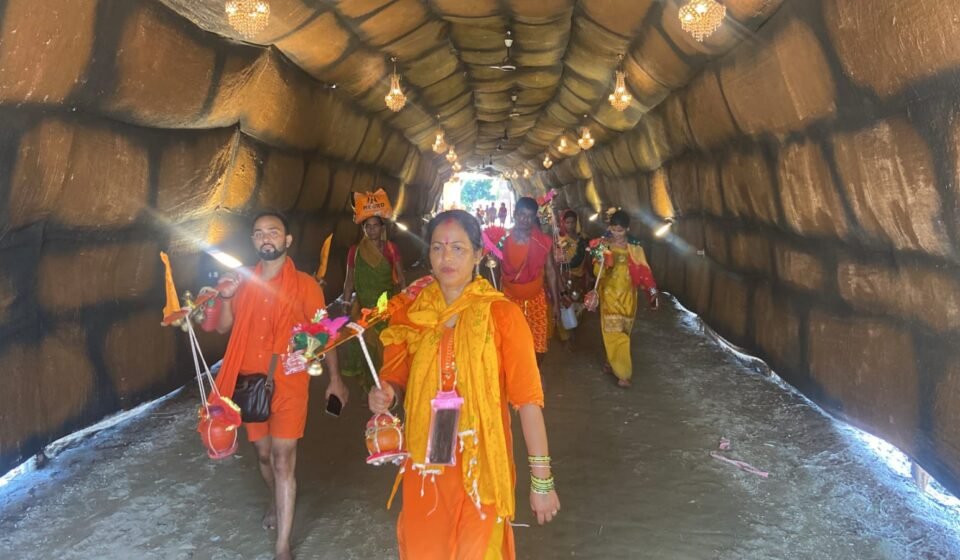
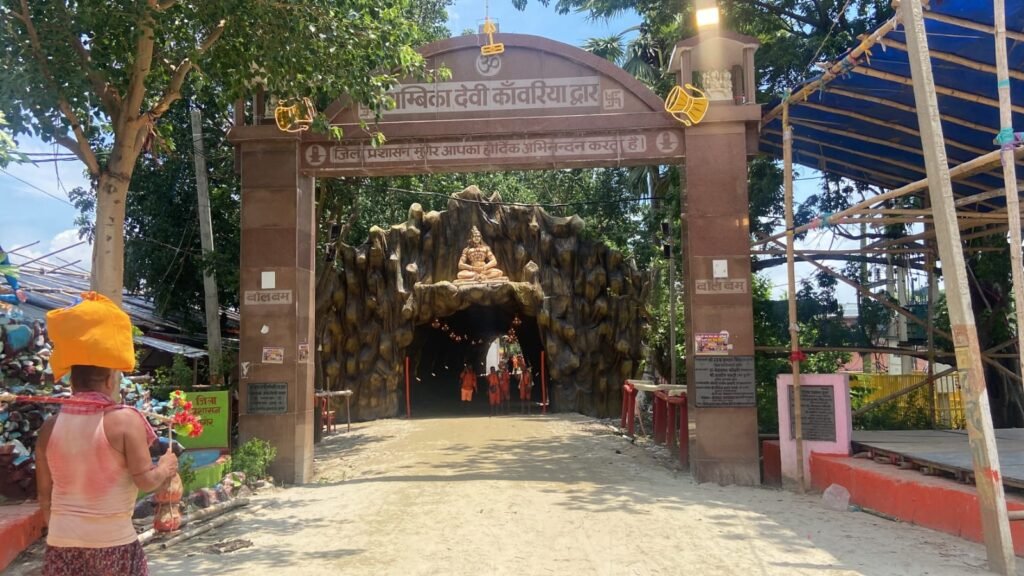
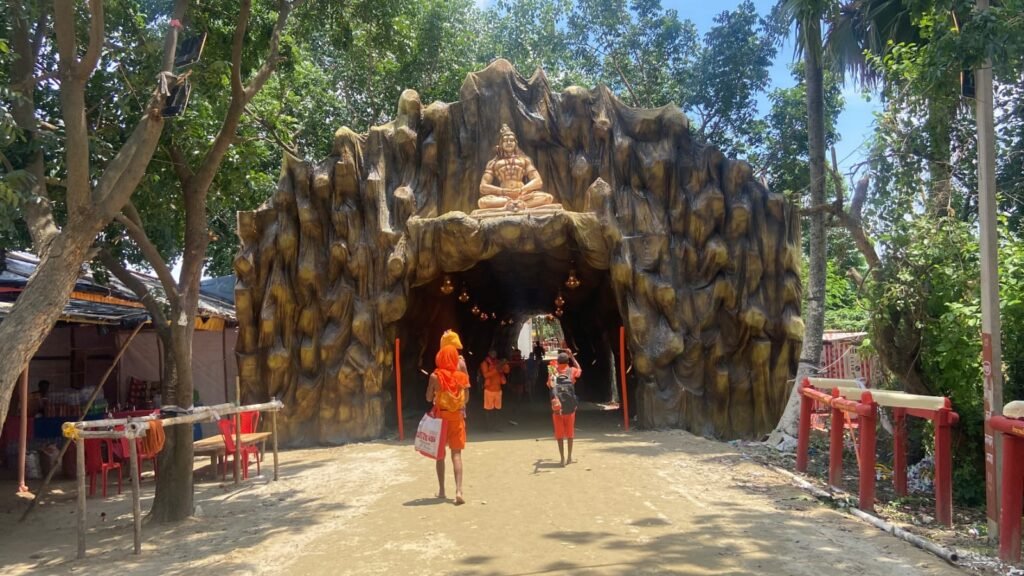
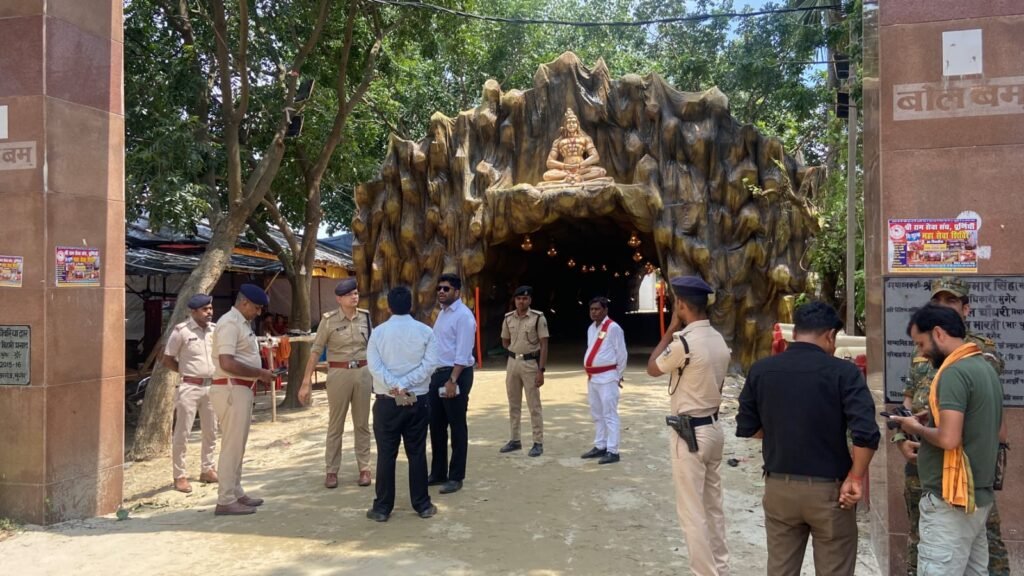
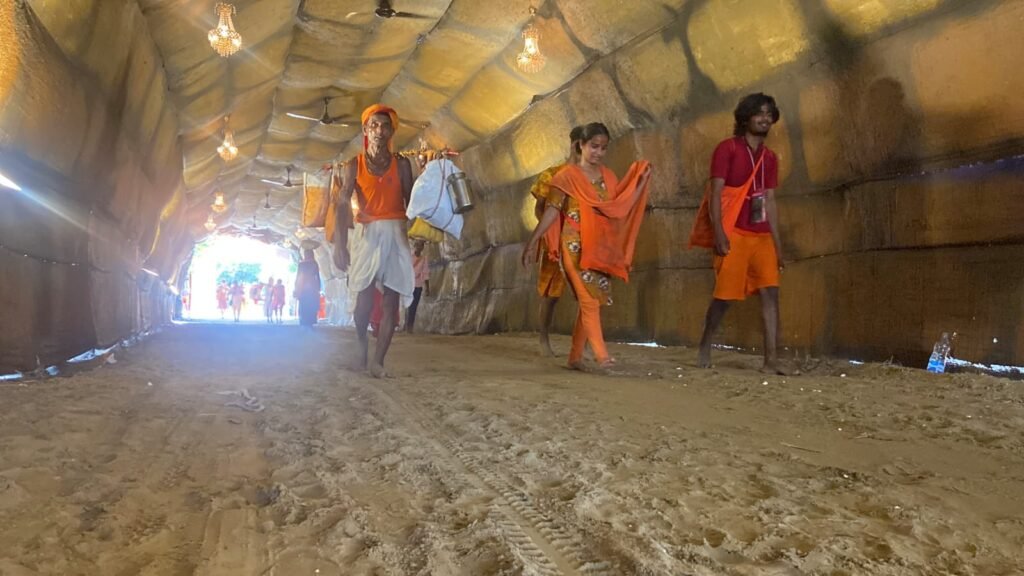
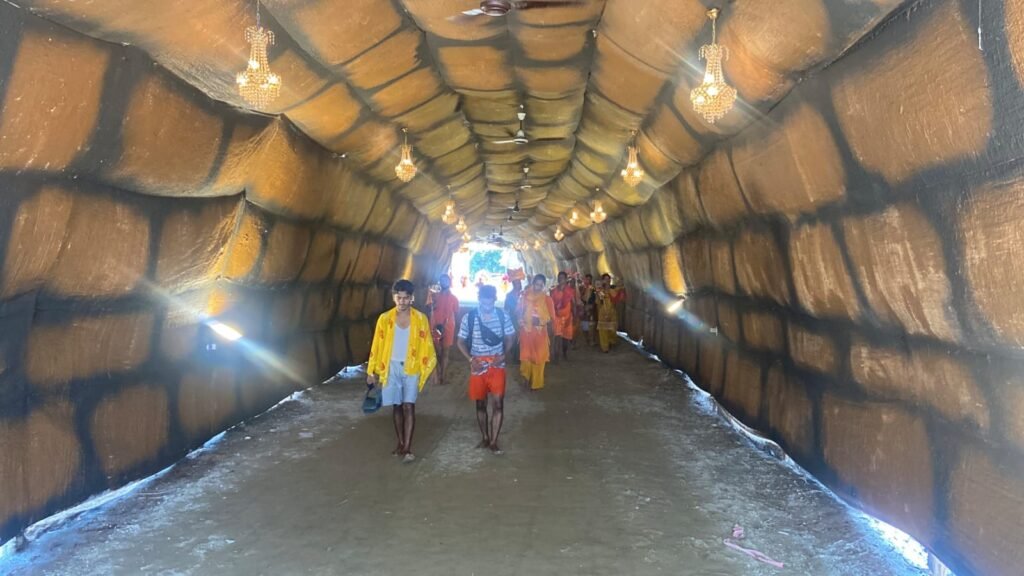
The town’s greatest distinction lies in the course of the Ganga itself. Unlike most stretches of the river, the Ganga here flows from south to north, a phenomenon regarded in Hindu belief as especially auspicious. Every year millions of devotees gather on these banks, bathe in the sacred waters, and collect holy water to undertake the arduous 105-kilometre pilgrimage on foot to the Baidyanath Jyotirlinga at Deoghar in neighbouring Jharkhand. Reverberating with chants of Bol Bam, this pilgrimage has evolved into one of India’s largest expressions of collective faith and cultural resilience.
The antiquity of this tradition was noted even by Sir Alexander Cunningham, the first Director-General of the Archaeological Survey of India. Visiting the fair in February 1879, he recorded that large congregations assembled not only during the annual fair but also on Vaishakh, Kartik and Magh Purnima, as well as during solar and lunar eclipses. His observations indicate that Sultanganj had already emerged as a major pilgrimage destination of national importance by the nineteenth century.
The iconic Ajgaivinath Temple, dramatically perched on a massive granite outcrop in the middle of the Ganga, dominates the sacred landscape of the town. Tradition attributes the consecration of its Shiva Linga to the sixteenth-century saint Harnath Bharati. For centuries, pilgrims have reached the shrine by boat, a journey that enhances the temple’s unique spiritual ambience. Surrounded by flowing waters, the shrine represents one of India’s most distinctive Shaivite sanctuaries.
Beyond its religious significance, Ajgaivinath Hill is an open-air gallery of early Indian sculpture. Rock-cut images dating from the Gupta, Post-Gupta and Pala periods portray Sheshashayi Vishnu, Ardhanarishvara, Uma-Maheshvara and several other deities with remarkable artistic sophistication. These sculptures testify not only to the excellence of early Indian craftsmanship but also to the harmonious coexistence of diverse religious traditions.
Across the riverbank stands Murli Hill, another site of considerable archaeological importance. Scattered temple remains, ancient brick structures, inscriptions and sculptural fragments depicting Shiva, Vishnu, Parvati and Surya reveal the area’s long history as a centre of sacred activity. Particularly striking are the numerous rock-cut Shiva Lingas, including an intricately carved example adorned with eighteen concentric bands and eight sculptural figures, suggesting that the region once flourished as a significant centre of Shaivite worship.
Sultanganj also occupies an important place in the history of Buddhism. Excavations near the present railway station uncovered the remains of a large monastery and stupa, together with one of the world’s finest early medieval bronze images of the standing Buddha, weighing nearly a tonne. This celebrated Gupta-period masterpiece is now preserved in the Birmingham Museum and Art Gallery in the United Kingdom. Archaeologists also recovered relic caskets containing the Buddha’s sacred remains and precious ritual objects, confirming that Sultanganj was once a thriving centre of Buddhist learning and devotion.
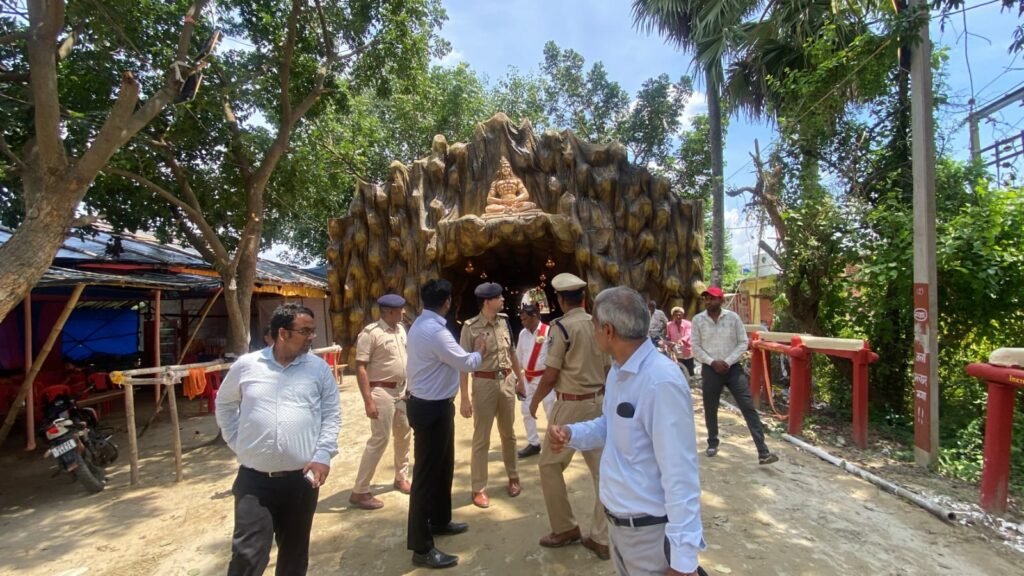
Today, the town is entering a new phase of development. Improved road connectivity has replaced the older river approach, while the construction of a modern glass bridge promises to enhance access and strengthen religious tourism. Yet infrastructure alone cannot safeguard Sultanganj’s legacy. Its archaeological wealth, sculptural heritage and Buddhist remains demand systematic conservation, scholarly documentation and sensitive interpretation.
Sultanganj deserves recognition not merely as the starting point of the famous Shravani pilgrimage but as a heritage city where the Ganga becomes a living archive of Indian civilization. Here, Shiva and the Buddha inhabit the same cultural landscape; faith and history reinforce one another; and the past continues to shape the spiritual imagination of the present. Preserving this extraordinary legacy is therefore not simply an administrative responsibility but a shared civilizational obligation. If protected with vision and care, Sultanganj can emerge as one of India’s foremost centres of cultural and spiritual heritage, offering the world a profound glimpse into the continuity of its ancient traditions.