₹7-crore tourism push begins at Dalma with launch of 15-room Eco Retreat
Jamshedpur
State government’s efforts to promote eco-tourism received a major boost on Sunday with the inauguration of the Dalma Eco Retreat at Makulakocha inside the Dalma Wildlife Sanctuary.
However, the occasion also sparked a wider debate on the growing human-elephant conflict after a remark by Tourism, Art, Culture, Sports and Youth Affairs Minister Sudivya Kumar Sonu drew mixed reactions from local residents and wildlife conservationists.
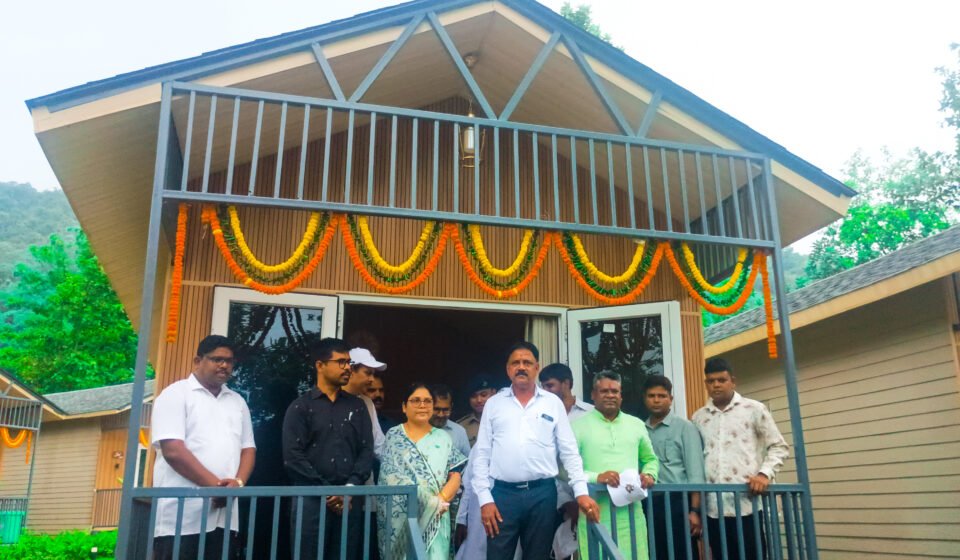
The 15-room Dalma Eco Retreat, developed by the Tourism Department near the Makulakocha check-post in the Chandil subdivision of Seraikela-Kharsawan district, was inaugurated by Minister Sudivya Kumar Sonu, Ichagarh MLA Sabita Mahato and Dalma Forest Division DFO Saba Alam Ansari following traditional rituals and Vedic prayers.
The inauguration ceremony was attended by Somesh Soren, Deputy Commissioners and Superintendents of Police of East Singhbhum and Seraikela-Kharsawan districts, senior officials of the Forest and Tourism Departments, public representatives and local villagers.
Built amid the forests of the Dalma Wildlife Sanctuary, the eco-retreat has been designed to offer visitors a nature-based stay while preserving the area’s ecological character. The facility comprises 15 modern rooms, landscaped surroundings, fountains and other visitor-friendly amenities aimed at providing tourists with an immersive wilderness experience.
Officials said the state government is developing tourism infrastructure at Makulakocha and Pindrabera at an estimated cost of around ₹7 crore. The project is expected to enhance eco-tourism, increase tourist arrivals and generate employment for local communities.
Addressing the gathering, Minister Sonu said the government is committed to transforming Dalma into a premier eco-tourism destination. He informed that 30 youths associated with the Tourism Development Council (TDC) have undergone specialised hospitality training at the Institute of Hotel Management (IHM), Mumbai, and will now be engaged in tourism-related activities.
“The growth of tourism will benefit the local economy. Hotels, transport operators, shops and small businesses will all gain. Even if a tourist buys a bottle of water or a packet of biscuits, the benefit reaches local people,” the Minister said.
However, the event took a controversial turn when journalists questioned the Minister about the increasing incidents of human-elephant conflict in the Dalma region.
Responding to the query, the Minister remarked, “If you build a house in the forest, elephants are bound to destroy it.”
The statement immediately triggered discussion among villagers and wildlife experts, many of whom argued that the issue extends beyond human encroachment into forest areas.
Residents claimed that recurring forest fires, degradation of natural habitats and inadequate food and water availability inside the sanctuary have altered elephant movement patterns, forcing herds to spend longer periods in Ichagarh and adjoining villages. They alleged that shrinking habitats have increased encounters between humans and elephants over the past few years.
Villagers also questioned whether sufficient attention is being given to wildlife conservation alongside tourism infrastructure. They argued that the success of Dalma as a tourism destination ultimately depends on the presence of its wildlife.
“Tourists come to Dalma to experience nature and see elephants, deer and other wildlife. If wildlife disappears from the sanctuary, tourism will also suffer,” several residents said.
Local communities demanded long-term measures to reduce human-elephant conflict, including installation of solar fencing, construction of safety trenches, development of elephant food plots, restoration of water sources inside the sanctuary and deployment of permanent monitoring teams in vulnerable areas.