Kumar Prabhat/ Dumka :
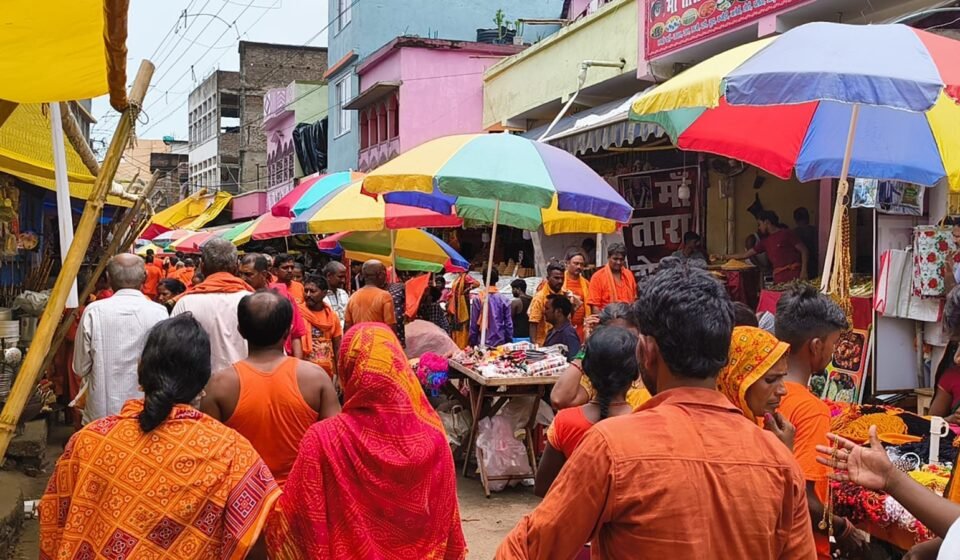
As the world-renowned Shravani Mela draws hundreds of thousands of devotees to Basukinath, a lingering management oversight has sparked widespread concern among small-scale shopkeepers and town visitors alike. While pilgrims stream into the holy precinct from across the country, hundreds of temporary vendors setting up shop from Dumka and neighboring states find themselves operating in an administrative vacuum, devoid of basic infrastructure or designated commercial zones.
Despite months of high-level preparatory meetings held by the district administration to guarantee smooth arrangements for worshippers, a stark contradiction has emerged on the ground. On one hand, administrative directives emphasize keeping mela pathways strictly clear of encroachments; on the other hand, the local municipal body auctions off revenue rights to private contractors, who aggressively collect fees from vendors operating along the main roads.
Lacking allocated stalls or earmarked market zones, incoming traders are left with no choice but to lay out their merchandise directly along busy thoroughfares. This triggers a recurring daily cycle of disruption: when magistrates and police personnel inspect the area to enforce traffic rules, shopkeepers are forced to pack up, only to return the moment enforcement teams pass by. Aggrieved vendors argue that if they are contributing to local government revenues through official fees, they should not be subjected to perpetual harassment and eviction.
The escalating friction raises pressing questions regarding accountability and governance. Observers point out that if collecting levies from roadside vendors is legitimate, the administration is obligated to provide basic vending infrastructure. Conversely, if roadside setup is prohibited, authorities must address who authorizes fee collection from these temporary stalls. With dense crowds clogging the town daily, unorganized commercial encroachment along narrow pilgrimage corridors poses a severe safety hazard, raising serious concerns over who will bear responsibility in the event of a stampede or major accident.