STUDENT’S CORNER
My School Event
A school celebration took an unexpected turn on Monday when a mysterious locked box appeared on the stage.
The Annual Day programme had begun with songs, dances and a play. Suddenly, a student noticed a small wooden box lying near the curtains. There was no name on it, but a note on top read, “Open me only at the end of the programme.”
Everyone grew curious. Teachers checked with the organisers, but nobody knew where the box had come from.
The programme continued, but students kept looking at the mysterious box. Finally, at the end of the event, the Principal opened it.
To everyone’s surprise, it contained a beautiful time capsule filled with photographs, drawings and letters written by students a decade ago!
The biggest surprise came when the Principal found a letter addressed to the current students. It said, “One day, you will leave this school too, but your memories will always remain here.”
The students cheered and decided to create their own time capsule to be opened ten years later.
What had started as an ordinary school event ended with a mystery, a surprise and a memory that the students would never forget.
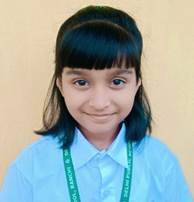
AHANA YASHASVI (Class III)
My Mother
My mother is the dearest one,
She fills my world with love and fun.
She wakes me up with a gentle smile,
And stays beside me all the while.
She cooks my favourite meals each day,
And guides me in the proper way.
She helps me get ready for school,
And teaches me each golden rule.
When I am sad or feeling low,
Her loving words help me to grow.
If I make mistakes at times,
She teaches me with love so kind.
When I am sick, she stays awake,
For me, she does whatever it takes.
Her love is deeper than the sea,
She’s God’s most precious gift to me.
I pray to God both night and day,
To keep my mother happy always.
No words can tell how much I care,
I’m blessed to have her love to share.
ARNIKA AGARWAL (Class III)
The Pressure to Have a Plan
“What do you want to become?”
It is a simple question, but sometimes it feels surprisingly difficult to answer.
As teenagers, we are often expected to have our entire future figured out. We are asked about our careers, our marks, our goals and the college we want to attend. The question is usually asked with good intentions, but somewhere along the way, it begins to feel less like a question and more like a deadline.
At this time, we are standing at a strange point in life. We are old enough to be told that our choices will shape our future, yet young enough to still be discovering who we really are.
We are expected to choose subjects wisely, prepare for competitive examinations, participate in competitions, maintain good grades and somehow remain confident about what we want to do with the rest of our lives.
But what if we are not sure?
What if someone enjoys mathematics but also loves writing? What if someone dreams of becoming an engineer today but discovers a completely different passion tomorrow? What if someone simply needs time to understand what they are good at?
Not having a perfect plan does not mean having no ambition.
Sometimes, we confuse certainty with success. We admire people who seem to know exactly where they are going, forgetting that many successful journeys begin with uncertainty. A map can be useful, but life rarely follows a perfectly drawn route.
There is also an invisible pressure to turn every hobby into an achievement. Reading should become a competition. Drawing should become a certificate. Speaking should become a prize. Even free time sometimes needs to be “productive.”
Perhaps we have forgotten that young people are allowed to explore without immediately turning everything into a career.
Of course, planning for the future is important. Hard work matters. Dreams matter. Education matters. But so does the freedom to make mistakes, change our minds and discover ourselves along the way.
Maybe the better question to ask a teenager is not, “What will you become?”
Maybe it is:
“What are you curious about?”
Because curiosity gives us the courage to explore, and exploration helps us find our direction.
We do not all need to have the same destination, and we certainly do not need to know the entire route right now.
Perhaps growing up is not about having all the answers.
Perhaps it is about having the courage to keep asking questions until we find our own.
And maybe, for now, “I’m still figuring it out” is not an uncertain answer at all. It is an honest one.
Name- Akshita Dwivedi
Class-11 ‘E’
School- DPS Ranchi
Aeroplanes: The Poetry of Flight
There is something almost surreal about watching an aeroplane take to the skies. One moment, it is a magnificent machine resting on the tarmac; the next, its engines roar into life, thrust builds, and it begins its determined race along the runway. Then comes that extraordinary moment when the wheels leave the ground– a moment when engineering appears to perform the work of magic.
As a thirteen-year-old growing up in the age of artificial intelligence, satellites and virtual reality, I am accustomed to technology doing extraordinary things. Yet aviation continues to fascinate me because it transforms one of humanity’s oldest dreams into a measurable reality: the dream of flight.
Inside the cockpit, every movement is governed by precision. Pilots monitor altitude, airspeed, fuel levels and navigation systems while communicating with Air Traffic Control. Beyond the cockpit glass, however, lies something far less mechanical– the infinite sky.
An aeroplane flies because of an elegant conversation between lift, thrust, drag and gravity. The engines generate thrust; the wings create lift; drag resists the aircraft’s movement; and gravity constantly reminds it of the earth below. It is remarkable that something weighing hundreds of tonnes can rise effortlessly into the atmosphere simply because its aerodynamics have been so precisely engineered.
I particularly love looking through the window after take-off. At cruising altitude, the world below seems to undergo a transformation. Roads become threads, rivers resemble silver veins and cities appear like intricate circuits of light. The clouds, meanwhile, float beside the aircraft like enormous islands in an endless white ocean.
Sometimes turbulence arrives, and the aircraft trembles briefly. The seat-belt sign illuminates, and the cabin becomes unusually quiet. Yet even turbulence fascinates me. It reminds me that the atmosphere is not an empty space but a constantly moving ocean of air, full of invisible currents and forces.
I often wonder what aviation will look like when my generation becomes responsible for shaping the future. Perhaps electric propulsion will make aircraft quieter and cleaner. Perhaps artificial intelligence will assist pilots with increasingly sophisticated flight systems. Perhaps supersonic aircraft will once again cross the skies, reducing journeys between continents to mere hours.
But despite all the technology– the radar, avionics, autopilot systems, navigation computers and sophisticated engines– I believe the most extraordinary component of every aircraft remains the human imagination that conceived it.
An aeroplane is, after all, more than a fuselage, wingspan, engines and instruments. It is an idea given wings.
From the first uncertain experiments with flight to today’s technologically advanced aircraft, aviation represents our refusal to accept that the sky must remain beyond our reach.
And whenever I watch an aircraft climb through the clouds, leaving behind a thin contrail against the blue, I am reminded of something beautifully paradoxical: The higher we fly, the more clearly we seem to understand how limitless human possibility can be.
By
Adhrit Verma
Class VIII-G
DPS Ranchi
THE WEIGHT OF A RED LINE
The bell rings at 2:00 PM, but nobody in Section B moves to pack their bags. Instead, forty heads remain bowed over wooden desks, eyes fixated on white sheets stamped with red ink.
We are fifteen years old. We are in Class 9. Yet, we are already living under the suffocating shadow of a monster that hasn’t even arrived: The Class 10 Board Examinations.
In our society, 10th boards aren’t treated as a mere academic milestone; they are treated as a public trial of our worth as human beings. The narrative fed to us daily—by relatives, neighborly gossip, tuition teachers, and social media—is absolute and brutal: If you score above 90%, you are a golden child with a bright future. If you fall below that line, you are a failure, a burden, and a disappointment.
Before we have even figured out who we are, we are told that our entire destiny will be decided in a three-hour exam hall.
The silent war on Friendship
The worst part about this pressure isn’t just the sheer volume of formulas to memorize or the late-night coffee jitters. The worst part is how it systematically destroys the way we look at each other.
In middle school, my friends and I were a team. We shared tiffin boxes, cracked silly jokes during dull lectures, and met on weekends to play games. Today, those same friends feel like competitors in a high-stakes game of survival.
When term papers are handed back, the first question is never, “Did you understand the concept?” It is always, “How much did you get?” followed immediately by, “How much did he get?”
A good score doesn’t bring genuine happiness anymore—it brings a cold, temporary sigh of relief that you beat someone else. A bad score doesn’t just mean you need to revise quadratic equations; it brings a paralyzing wave of shame. We have started hiding our test papers from one another. We lie about how many hours we studied the night before. We pretend to be nonchalant while secretly burning the midnight oil because showing weakness feels dangerous.
The system has turned our classrooms into quiet battlegrounds, and in the process, it has robbed us of the very essence of youth: connection and trust.
The Unspoken Mental Health Crisis
Behind closed bedroom doors, a silent crisis is unfolding across households.
No one talks about the tightness in the chest that starts on Sunday evenings. No one talks about the sudden panic attacks before weekly unit tests, or the teenagers crying quietly into their pillows because they scored a 75% instead of an 85%. The mental health of an entire generation is being sacrificed on the altar of academic perfection.
We are told to “manage our stress” and “work harder,” but how do you manage stress when society measures your self-worth purely through a percentage? We are taught how to calculate the trajectory of a projectile in physics, but no one teaches us how to process the overwhelming fear of letting down our parents.
When a student struggles, society’s instinct is to label them lazy or distracted. But most of the time, that student isn’t lazy—they are simply exhausted. They are burned out from trying to meet expectations that keep moving further away.
Beyond the Percentage
Let us speak the truth that adults often forget: a board exam paper measures speed, memory recall, and the ability to perform under extreme stress. It does not measure:
– A student’s creativity or original thinking
– Emotional intelligence, kindness, or empathy
– Resilience in the face of real-life adversity
– Artistic talent, leadership, or problem-solving capability
Some of the greatest innovators, artists, entrepreneurs, and leaders our world has ever seen were never top scorers in school. The real world does not care about your 10th-grade report card after a few years; it cares about who you are, how you treat people, and what you can build with your hands and mind.
A Message to the World
As Class 9 students stepping onto the threshold of Class 10, we are not asking to skip the work. We are not asking to avoid exams or give up on discipline.
We are simply asking society to change the narrative.
Stop telling us that our life ends if a number on a website isn’t what you hoped for. Stop comparing us to our cousins, our neighbors, and our classmates. Give us room to fail, to learn, and to breathe.
A report card is just a piece of paper—a single data point in a life that will span decades. It can measure how well we remembered a syllabus on a Tuesday morning in March. But it will never have the power to define who we are, what we are worth, or how far we can go.
Name: MISHBAHUL KARIM
Class & Section: Class IX – G
Roll Number: 23
SOVEREIGN ETERNAL : THE UNSHACKLED DESTINY OF BHARAT
What if the India we know today had never been forced to bow to foreign chains ? This is my question to all my readers. Have you ever thought about this ? But before letting you think on these questions it would be better if you know more about India and its glory before being conquered for the first time. Historically ,India was known as Bharatvarsha.Sone Ki Chidiya (The Golden Bird) is the iconic epithet given to India to describe its legendary wealth, prosperity and economic dominance before foreign invasions and colonial rule .India is not merely a territory but a land where the snow-capped silence in the Himalayas meets the roaring waves of the Indian Ocean, a place where Deserts rule in the West and water does so in the North East and all this makes it powerful geographically and provides a beautiful climate to the nation.G-20 adopted this ancient Indian ideal: “The ethos of Vasudhaiva Kutumbakam – the world is one family-which the world embraces today through forums like G-20 ,was born on this very soil centuries ago.India is a land where language, taste and tradition recreate themselves with every mile.Bharat was also the home to renowned centres of Nalanda and Takshila which received students from all over the world.
India had earned most of its wealth through vibrant trade over Asia,Europe and Africa.However the innocent minds of this nation never knew that their trade would be one of the biggest reasons for being conquered… And this was the beginning of India’s history being reshaped.Talking about India we cannot say that there was just one conquerer instead Bharat is a land that has flourished even after several foreign invasions.Over centuries different powers entered the Indian subcontinent-from the campaigns of Alexander the Great to the establishment of the Delhi Sultanate and later the Mughal Empire founded by Babur.The Mughals had built the most influential empires over South Asia leaving a lasting legacy of art ,architecture and culture.But there were not colonisers when compared to the European powers.The first European powers to seek colonial possessions were the Portuguese followed by the Dutch ,the French and finally the British.They initially came as traders of the East India Company but no one could figure out when their intentions of traders changed to that of conquerers and this made them rule for more than 200 years. All these empires definitely drained the resources of India, even the Kohinoor diamond flowed into the coffers of the British.Yet despite this immense loss,Bharat’s spirit, culture and aspirations for freedom remained untouched.
But as every coin has two sides, here too existed some positive impacts of invasion.Through them there was a huge exchange in culture, as they provided us with new schooling systems, crops, methods of cooking, languages as well as new systems of governance, taxation and administration that influenced later states.Crops like tomatoes, potatoes, chillies which are used widely Indian kitchens were brought by the Portuguese.Cities like Hyderabad and Lucknow in the modern India are widely known for their biryani and kebabs respectively, but I must let you know that these were too introduced by the Mughals .Even the Taj Mahal ,widely known as an Indian Gem built by Shah Jahan for his wife as a powerful symbol of love would never have existed! Yet, we must acknowledge that these benefits existed alongside with violence and hardships caused by invasions.
Now, we shall get back to our main question that is about India which was never conquered? While there are no straight-forward answers , we can imagine some possibilities. Economically, India might have remained as one of the wealthiest nations of the world, a land where poverty rarely knocked the doors.It might have evolved to the changes but in a smoother and adaptive way instead of being forced to change by the conquerers.The nation may also have developed a stronger continuity with its own kingdoms ,languages, traditions and institutions.India could have gained a control over technology, trade networks, science ,arts and architecture in different ways without compromising with its sovereignty. Another possibility is that it could have been a national monarchy with local leaders ruling different provinces instead of being a democracy.Maybe the system of visiting temples on birthday would have sustained instead of cutting birthday cakes, maybe the terracotta toys had never been replaced by the plastic guns and the barbie dolls, maybe the halwa and laddus had never been converted into pastries and doughnuts.While we cannot definitively know what an unshackled India would look like today, we can appreciate the endless possibilities. With all this I conclude that “An Unshackled India would have been a nation beyond our dreams and imagination-a country possessing one of the most beautiful and glorious histories the world would ever have”
NAME- MANASVI SINGH
CLASS/SEC-XF
A Life On PAUSE
Her sister had gifted her a diary on her fourteenth birthday. Two years later, the pages were still blank.
Mira always saw herself as the main character of her own story. She was ambitious, hardworking, and full of dreams. She pictured herself on stages, winning competitions while everyone applauded, creating something extraordinary.
But this one habit of hers quietly worked against her. Mira was always fascinated by everyone else’s story more than her own. She dreamt about being the best, but spent all her time in constant scrolling and comparing. It started with small reels, gossip, messages. She was always aware of what other people were doing, always comparing herself to them and hardly found time to focus on her own life.
The diary was supposed to be a canvas for her to picture her dream life; organize her thoughts and dreams, manage her emotions. But Mira never opened it. What was the point, she thought, of writing about a life no one, not even she, found interesting? She was far more curious about everyone else’s story than her own. The diary sat untouched in a drawer, blank as day one, forgotten.
One regular afternoon, while walking and talking with her friends in the school garden, she found a strange device lying on the grass. It looked like a phone but had no camera, no apps, no internet, nothing; just a small glowing word on the screen-ENTER.
At first, she hesitated, but that night, alone in her room, curiosity got the better of her and she pressed the button.
And suddenly, she was inside someone else’s life. She couldn’t be seen. She couldn’t touch anything. She couldn’t change a single thing. She could only watch-and hear their thoughts.
She watched the girl everyone envied, sitting alone, terrified that she wasn’t good enough. She watched the boy everyone thought was fearless, rehearsing a conversation in his head, afraid of getting rejected. She watched two best friends drift apart over a jealousy neither of them could define. She watched people falling in love, and people falling apart in embarrassment, nobody else would ever know about.
Mira was stunned. Everyone had secrets. Everyone had fears. Everyone had a story…And she wanted to know them all.
Then a message flashed on the screen:
You will be given only three chances to return
Her first choice appeared: STAY or RETURN.
She chose to return. She went to school in the morning. After she came back, she dropped her bag on the sofa and pressed ENTER again.
The second chance came at a tempting moment-she could see what the most popular girl of the school thought about her. She pressed STAY.
Her phone rang. It was her best friend, Tara. Another call. Another message: Where are you? She ignored it. Another: You promised you’d help me today. She ignored that too.
There was always another life to watch. Another secret. Another person whose reality seemed more interesting than her own. What was frightening was that she had stopped noticing.
When the third chance came, she hurriedly pressed STAY. Days became weeks, weeks became months. Tara stopped calling. Her friends stopped waiting. Her unfinished work piled up. Her dreams sat exactly where she had left them-inside her own head.
But Mira didn’t care. The device had become her world. She watched successful people, talented people, who had everything she wanted. She told herself she was learning from them. But she wasn’t.
She was only
Judging,
Comparing,
Losing out on her own life….
One day that will be me, she told herself.
But that one day never came-because she was too busy watching it happen to someone else, while quietly abandoning her own dreams.
Then she saw something that made her heart stop. A name appeared on the screen.
MIRA.
She clicked it.
For the first time, she saw her own life from outside. Her empty chair. Her abandoned notebooks. Her unfinished project. Her unanswered messages. Tara, sitting alone at lunch. Her teachers asking where she’d gone. Her parents going more worried day by day.
She saw the stage, the one she had once dreamed of standing on, but she wasn’t there.
Someone else stood beneath the lights.
Someone else was receiving the applause.
Someone else was holding the trophy she had spent years imagining her own hands around.
Mira pressed RETURN. Nothing happened. She pressed it again. Nothing.
The screen flashed:
NO EXIT AVAILABLE.
For the first time, she was afraid. She had forgotten the rule. Her three chances were gone. She screamed. She fought with the device. She begged it. She was trapped-watching her own life pass by, unable to live even a second of it. But the world didn’t stop for her. People still laughed, cried, fell in love, failed, succeeded. Life went on. And all she could do was watch.
Then the device displayed a final message: You have watched 18,478 lives.
Beneath it, another line appeared:
How many moments of your own did you miss?
Mira had no answer. She only knew, painfully, how precious these moments had been-because they were hers.
Nobody had stolen her dream.
Nobody had defeated her.
Nobody had taken her place.
She had simply not shown up for her own life.
She hadn’t noticed time passing. Somewhere between one life and the next, one curiosity and the next, ten years had passed away without her realising it, and now, it was too late, to get them back. Her friends had grown. They had excelled, moved ahead, built their dream life, just like the one she used to dream about. But here she was, left behind-alone in a life that was still hers, but that she had never shown up for, because she was too busy being a spectator in other people’s lives.
And yet, she didn’t let go of hope. Ten years were gone, yes! But that doesn’t mean she has lost it all. There were still years left, still a life left, that could be hers to shape, if only she decided to live it instead of watching it slip by.
The screen went dark and after so many years, she was left with nothing to watch.
No secrets.
No strangers.
No other lives.
Only silence.
Then, slowly, one final choice appeared:
WATCH AGAIN or LIVE
Mira stared at the two words for a long time. And for the first time, she didn’t care about what anyone else would think if she went back. She thought of herself, about Tara, about her unfinished dreams, the stage she had missed, the person she had once wanted to become.
She pressed ‘LIVE’
The device shattered. Mira opened her eyes, in tears.
She was sitting in her own room. Morning sunlight entered through the window. Her desk was covered with old notebooks, her unfinished project sat in the corner, gathering dust. Her phone lay beside her, screen lit with thousands of waiting notifications. She picked it up. Her thumb hovered over the screen. Then she turned it off.
She reached for the old diary -her sister’s gift to her; the one she had once thought no one would ever care to read — and opened it. The first page was still blank. Tears rolled down her cheeks onto the diary.
For once, she didn’t know what everyone else was doing. And somehow…that felt wonderful.
She picked up her pen, and at the top of the page, she wrote:
MY STORY
Not the story she had watched.
Not someone else’s story.
Hers.
She understood that time waits for none. She was so engrossed in other people’s lives that she forgot to live her own life. She had lost ten years. She could not get them back, and some part of her would always ache for that. But she was not going to lose the years that were still hers—not one more of them—to someone else’s story.
She kept writing,
not because anyone was watching, not because anyone would applaud.
But because for the first time, her story mattered to the one person who had almost forgotten to live it–herself.
Her life was on pause for some time, and now was the time she was determined to resume it…
By Tiya Agarwala
Class X F
THE SHOP THAT SOLD LOST MOMENTS
In the middle of an ordinary town,between a bakery and an old bicycle shop ,there was a tiny shop that nobody remembered seeing before.It’s signboard simply said”LOST MOMENTS-FOUND HERE.”There were no advertisements,no bright lights,and no customers standing outside.Yet every evening at exactly six’o clock,the shopkeeper opened the door.
One day,a fourteen year old named Natasha noticed the shop while walking home from school.She had never seen it before.Curious,she pushed open the door.A small bell rang above her head.Inside,hundreds of glass bottles covered the shelves.Each bottle contained a tiny golden light that moved like a firefly.
“What are those”Natasha asked.
The old shopkeeper smiled.”Moments people lost without realizing it.”
Natasha picked up a bottle.A label was tied around its neck.It read”The last time someone laughed with their grandfather”.Another said,”The morning a mother stopped worrying for five minutes”.Another contained”The sound of rain heard by someone who was leaving home forever”.
Natasha felt a strange sadness.”Can people buy these?”
“No,”said the shopkeeper.”They can only take back a moment that once belonged to them”.
Natasha looked around carefully.Then she noticed a bottle on the highest shelf.It had her name on it.
She reached for it.
The shopkeeper suddenly stopped her.
“That one is not for sale”.
“Why?”
“Because you haven’t lost it yet”.
Natasha stared at the bottle.Inside it was a warm golden light ,brighter than all the others.
“What moment is it?” she asked.
The old man shook his head.”If I tell you, it won’t happen”.
Natasha left the shop confused.
The next morning,she went to school as usual.Nothing seemed different.She attended her classes,ate lunch with her friends,and returned home.But that evening,she noticed her mother sitting alone at the kitchen table.
Her mother looked tired.
Natasha sat beside her.
They began talking.
They talked about school,childhood,old photographs,silly mistakes,and dreams they had forgotten.For the first time in months,neither of them looked at a phone or hurried anywhere.
They simply talked.
Then her mother laughed.
It was a small laugh but Natasha remembered it.
The next day,the mysterious shop was gone.
The bakery was still there.The bicycle shop was still there.But between them was only a blank wall.
Natasha never found the shop again.
Years passed.
She grew older and moved to another city.She became so busy that she sometimes forgot to call home.One evening,while cleaning an old cupboard,she found something strange.
A small glass bottle was lying inside.
There was a label around it.
The moment Natasha almost forgot to remember.
Her hands began to tremble.
She opened the bottle.
A tiny golden light floated into the room.
And suddenly,she heard her mother’s laughter from that evening years ago.
Natasha closed her eyes.
She finally understood what the shopkeeper had meant.
People thought moments disappeared because time moved forward.
But moments did not disappear.
They disappeared when people stopped remembering them.
Natasha placed the empty bottle on her desk.
From that day onward,whenever life became too busy,she stopped for a moment.
She listened,looked around and remembered.
And somewhere in a town that nobody could find on any map,an old shopkeeper opened the door at exactly six o’clock.
The bell above the door rang.
Another lost moment had arrived.
NAME-VANSHIKA SHARMA
CLASS-XI E
Reconstruction Is Not Recovery
The war did not end with a sound.
There was no final explosion, no announcement, no celebration. It ended the way storms sometimes do–quietly, when you realise the rain has stopped but everything around you is still soaked. The people said the town was free again.
I am that town… I remember what freedom looked like before, and I know what it looks like now.
The war ended on a Tuesday. By Friday, the silence had learned our names.
They returned slowly. Not in groups, not with relief, but one by one, as if afraid the town might not recognise them anymore. Some walked through the main road where shops once shouted prices and the children chased tyres. Now the road was smooth, newly laid and painfully quiet. Roads are easier to build than memories.
Out of forty-three houses, thirty-nine were reconstructed within a year. Four were left untouched. Not because of lack of money or material, but because no one came to unlock their doors. The paint dried on walls that would never hear footsteps again. Even loss needs permission to be acknowledged.
The school reopened in autumn. The same bell rang–loud, proud, and determined. But it rang for fewer children. Desks were arranged neatly, textbooks stacked carefully, names written on registers no one answered to. The teacher paused every morning before calling out attendance, as if hoping absence might respond if given enough time. It never did.
They planted trees where buildings had collapsed. People praised the greenery, called it progress, called it healing. No one mentioned that trees were easier to grow than forgiveness. Or that their roots were drinking from soil that remembered blood.
The playground was rebuilt too. Fresh paint, strong swings. A slide that shone under the sun. On most days, the swings did not move. Wind passed through them gently, like a visitor unsure whether they were welcome. Children came, but not the way they used to. They played quietly. They knew games could end suddenly.
The clock tower in the centre of the town was repaired last. It had stopped at 4:17. No one asked why. When it started again, some people complained it was a minute slow. No one complained that it had witnessed everything.
Markets reopened. Shops displayed goods neatly, shelves filled again. But bargaining sounded different. Laughter was shorter. Grief has a way hiding in normal sentences. Names slipped into sentences and then disappeared quickly, like they had said too much.
There was a wedding six months after the war. The decorations were bright, music played, food was served generously. One chair remained empty. No one removed it. Some absences demand respect.
A man rebuilt his house exactly as it was before–same doors, same windows, same colour. Only one room stayed locked. He said it was for storage. The town knew better. We always do.
At night, one streetlight flickered near the old bus stop. Electricians fixed it repeatedly. It always flickered again. People stopped reporting it. Some things are not meant to be corrected.
The war took many things, but it left habits behind. People still lowered their voices at sudden sounds. They still flinched at unfamiliar footsteps. Children still asked questions adults could not answer. Peace arrived, but trust did not come with it.
A grandmother returned to find her neighbour’s house gone. In its place stood a small park with a bench and two trees. She sat there every evening, feeding birds that did not remember her. She said that the park was beautiful. She never said what was missing.
They say time heals everything. That is not true. Time teaches you how to function while hurting. Healing is when something stops aching. We only learned how to carry the ache without dropping it.
One day, a boy found a pair of shoes near the town entrance. They were old, dusty, and carefully placed side by side. No one claimed them. No one moved them either. Eventually, grass grew around them. Visitors thought it was a memorial. It was not planned to be one. The most honest monuments are accidental.
The town celebrated a festival again. Lights hung across the streets. Diyas glowed warmly. Music echoed softly. At sunset, one extra diya was lit in every house. No announcement was made. Everyone knew why. Silence can be collective too.
People began saying the town had recovered. Reports were written. Photographs were taken. Before-and-after comparisons looked impressive. The “after” had stronger buildings, better roads, and cleaner walls. The “before” had more people…
Children born after the war asked questions. Why does that house have no windows? Why does everyone go quiet near the river? Why does the clock tower matter so much? Adults answered carefully, often with half-truths. Some stories are too heavy to be handled to small hands.
A man once said, “We survived.” The town did not argue. Survival is not the same thing as living.
The war is not remembered in dates anymore. It is remembered in habits. In pauses. In the way people look at the sky before making plans. In the way happiness is celebrated cautiously, as if it might be taken away for being too loud.
They rebuilt the hospital first. That made sense. Then the roads. Then the houses. People? People were last, and even then, only partly.
They do not hear what I hear at night–footsteps that never arrived, doors that will never open, names that echo without answer.
I stand today with walls repaired and streets intact. From the outside, I look whole. Visitors admire my resilience. They say I’m strong…
We did not rebuild the past. We could not.
But something changed.
People who once lived behind closed doors began sitting outside in the evenings. Neighbours who barely spoke before now shared tea in silence that felt less heavy. Children from different streets started playing together, not because they forgot, but because they understood.
Hands that once rebuilt their own homes began helping rebuild others. Not out of duty, but because loss had made everyone equal.
Pain, for the first time, was not carried alone.
The flickering streetlight still stands. But now, someone always waits beneath it —not for repair, but for company.
The empty chair at gatherings is still left untouched. But no one sits alone beside it anymore.
The boy who found the shoes visits them often. Recently, another pair appeared beside the first. Then another. Not as a sign of loss, but as a quiet promise — no one would be left behind again.
They say the town has healed.
That is not true.
Healing is when something stops hurting.
We still remember. We still pause. We still carry what was lost.
But now, we carry it together.
And somewhere between shared silence, flickering lights, and steady hands, we found something stronger than what the war took away —
Not a perfect town. But a common ground.
And that, perhaps, is the truest form of rebuilding there is.
But…I hate war. I despise war.
“Progress was born the day we learned to cooperate; war was born the day we decided some lives mattered less.”
“The first weapon was not made of stone; it was the idea that another human could be an enemy.”
“Everything went wrong the day a cavemen learnt he could kill his fellows.”
How could anyone not hate war?
What was won that was worth what we lost?
-Me, the town that saw everything…
By- Adwita Alankrita
Class- X ‘F’