
Beyond Abandonment: Why Jharkhand Needs an Elder Care Policy!
OPINION
By Prof. Anant Kumar
A society is judged not only by how it nurtures its young but also by how it cares for those who can no longer care for themselves. As India’s population ages at an unprecedented pace, this cannot be ignored. Yet while the country debates pensions, healthcare, and demographic change, a more immediate question remains largely unaddressed: whether we, as a society, are prepared to ensure that the elderly are neither isolated nor neglected.
It is easy to blame uncaring children, and sometimes that blame is fair. But it is worth being honest about something less comfortable: many elderly people end up in old-age homes not because they were thrown out, but because running a house alone after children have moved away for work or marriage becomes difficult, particularly the bills, repairs, and the everyday grind that used to be shared. In such cases, an old-age home is not abandonment. It is often a practical choice made out of necessity.
HelpAge India’s 2024 report, based on responses from over 5,000 elderly people and 1,300 caregivers across twenty cities, found that 7 per cent of elderly people reported abuse, mostly by sons (42 per cent) and daughters-in-law (28 per cent). A separate study using the Longitudinal Ageing Study in India found that Bihar, with a rural, joint-family culture similar to Jharkhand’s, had an abuse rate of 11.6 per cent, among the highest in the country. If Bihar’s numbers are any indication, Jharkhand’s situation is likely no better, but we simply do not have the data to know for certain. The 2007 Maintenance and Welfare of Parents and Senior Citizens Act was meant to make children legally responsible for their ageing parents. In practice, it barely functions. HelpAge India’s own survey found that only 9 per cent of elderly people had even heard of the law. A law nobody knows cannot protect anyone.
The UNFPA’s 2023 India Ageing Report projects that India’s elderly population will double from 149 million in 2022 to 347 million by 2050 and will outnumber children under 15 by 2046. Over 40 per cent of India’s seniors already live below the poverty line, and nearly a fifth have no income of their own. Jharkhand, with its large rural population and steady outward migration of young people for work, will feel this shift as much as anywhere in the country. India has an estimated 600 to 1,700 facilities, many of which lack staffing standards, geriatric training, and inspections. Families pay for places that offer no immediate medical care or night attendants, revealing a fundamental care gap. Yet the state has no dedicated elderly welfare policy and no effective system to monitor its old-age homes.
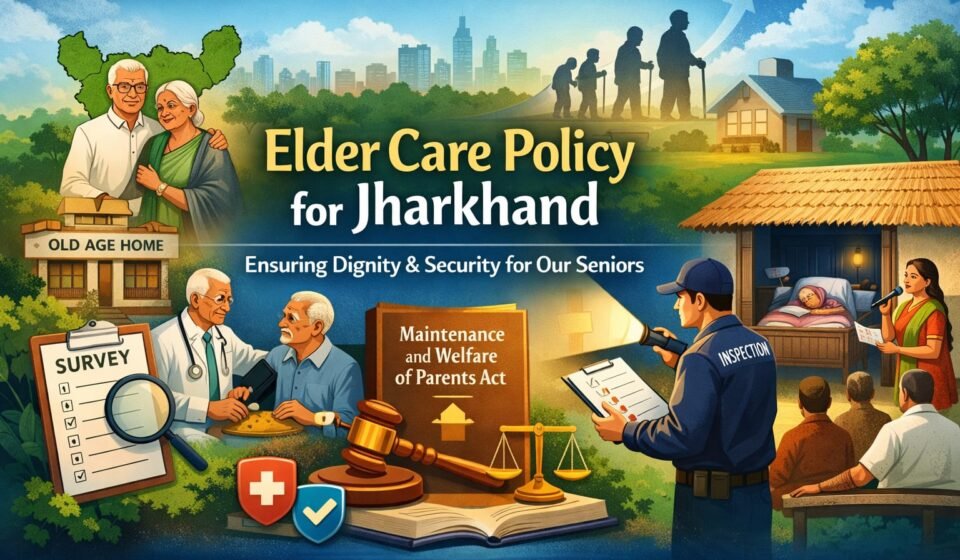
Three simple steps can significantly improve elder care in Jharkhand. First, develop a state-level elder welfare policy supported by a survey, as current data is lacking. Second, require all old-age homes to register and pass regular inspections with minimum standards for medical emergencies and night staffing. Third, promote the Maintenance and Welfare of Parents Act through panchayats, ration shops, and local media to raise awareness from 9 per cent to near-universal levels. No law can force a family to love. But no elderly person should have to face a medical emergency alone at night simply because nobody thought to ask what old-age homes in Jharkhand look like once the front gate closes.
The author is a Professor at Xavier Institute of Social Service, Ranchi. The views expressed are personal.
Email: pandeyanant@hotmail.com