
Boards Cannot Ignore Ground Level Employee Sentiment
By Sanjeevv Shekhar
In boardrooms, we regularly discuss growth, digital transformation, market expansion, profitability, and shareholder value. Yet one of the strongest indicators of future business performance often receives limited strategic attention.
That indicator is employee sentiment. Employee trust erosion becomes visible long before business disruption appears. It starts quietly through declining engagement, reduced collaboration, loss of confidence in leadership, and growing uncertainty about the organisation’s future. Unfortunately, many boards only react when attrition rises, productivity falls, or financial performance begins to weaken. By then, the challenge has already become systemic.
The modern board must recognise that human capital and organisational culture are not soft issues. They are strategic assets that directly influence business resilience, reputation, and long term value creation.
Ground level employee sentiment reflects the lived experience of the workforce. It reveals whether employees trust their leaders, believe in the organisation’s purpose, and feel connected to its future. When this trust weakens, the impact is immediate. Innovation slows, customer experience suffers, productivity declines, and talented people begin looking elsewhere.
A polished quarterly presentation may show healthy numbers, but it may not reveal that frontline teams are disengaged. Financial indicators often capture the consequences of a problem, while workforce sentiment identifies the problem itself.
Corporate governance is evolving rapidly. Investors, regulators, employees, and other stakeholders increasingly expect boards to go beyond financial oversight. Culture stewardship is becoming an essential governance responsibility.
This does not mean that boards should manage day to day HR operations. It means they should ensure that leadership decisions align with the realities experienced by employees across the organisation. Just as boards review financial audits, they should also review culture audits.
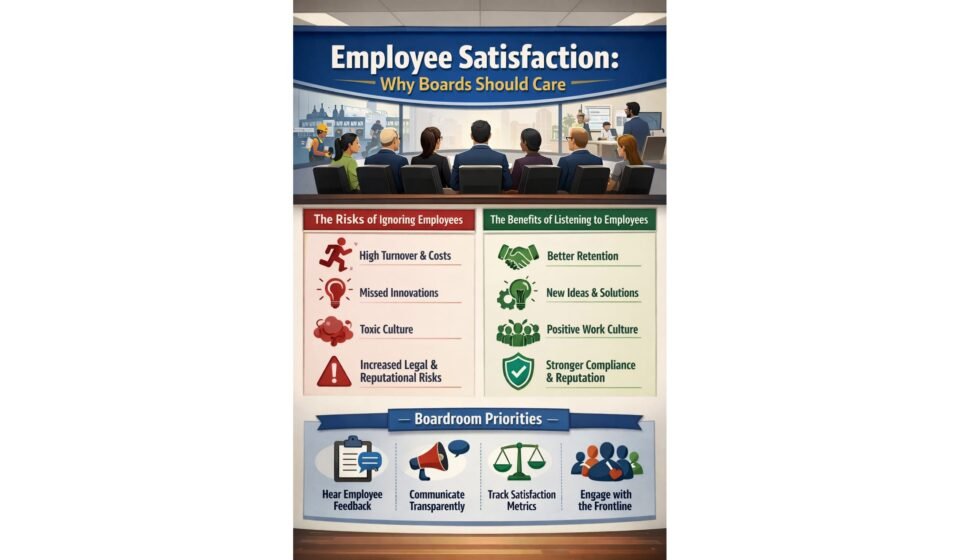
A few practical actions can strengthen this approach. Boards should institutionalise periodic workforce sentiment reviews supported by meaningful employee feedback and retention risk assessments.
Employee trust erosion should be integrated into enterprise risk frameworks as a material business risk rather than being viewed only as an HR concern. Leadership teams should provide transparent and unfiltered insights instead of carefully curated narratives that may hide emerging challenges. Most importantly, culture metrics should inform strategic decisions related to transformation, mergers, restructuring, succession planning, and organisational change.
Boards are guardians of sustainable value. That value is inseparable from the trust employees place in their leaders. A board that ignores ground level employee sentiment is not simply overlooking culture. It is overlooking strategy. The organisations that will remain resilient in the future will be those where the boardroom understands what the shop floor, branch office, factory, and frontline

(THE WRITER IS A CORPORATE AFFAIRS, GOVERNMENT RELATIONS AND HUMAN CAPITAL LEADER WITH OVER THREE DECADES OF EXPERIENCE ACROSS THE POWER, INFRA-STRUCTURE AND MEDIA SECTOR)