
Ink Over Algorithms: Why the Soul of Storytelling Transcends AI
Book Review
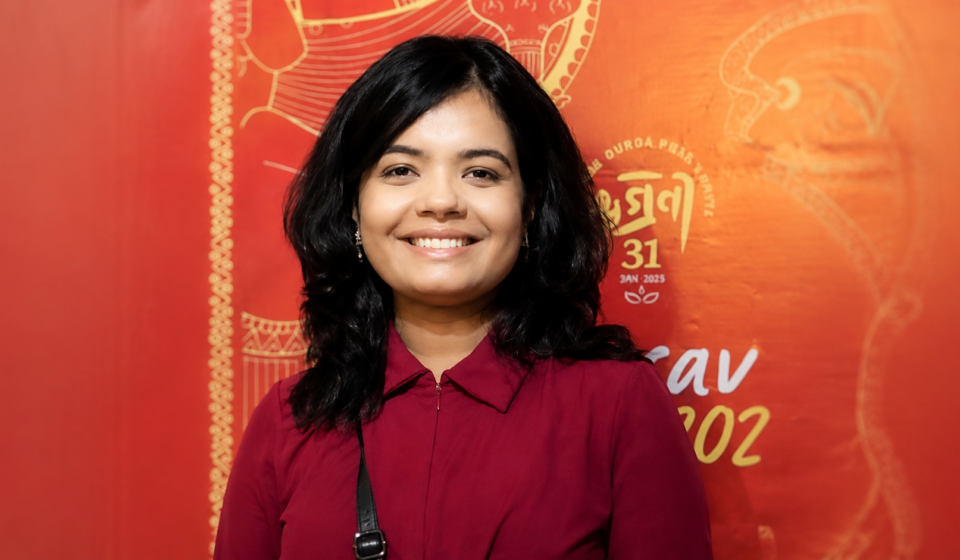
Review by Anjali Yadav
Recently, The Serpent in the Grove by Jamir Nazir won the Caribbean regional award of the 2026 Commonwealth Short Story Prize, later accusations came out about it being heavily AI generated. The controversy prompted a larger question: if machines can write so convincingly, what space remains for human writers? Has human creativity become redundant? These are the questions that Manjima Misra takes up in Ink Over Algorithms, guiding readers through a thoughtful exploration of Generative AI’s role in writing, research, and creative practice. In doing so, she also develops a deeper understanding of what makes writing distinctly human—its motivations, possibilities, and idiosyncrasies.
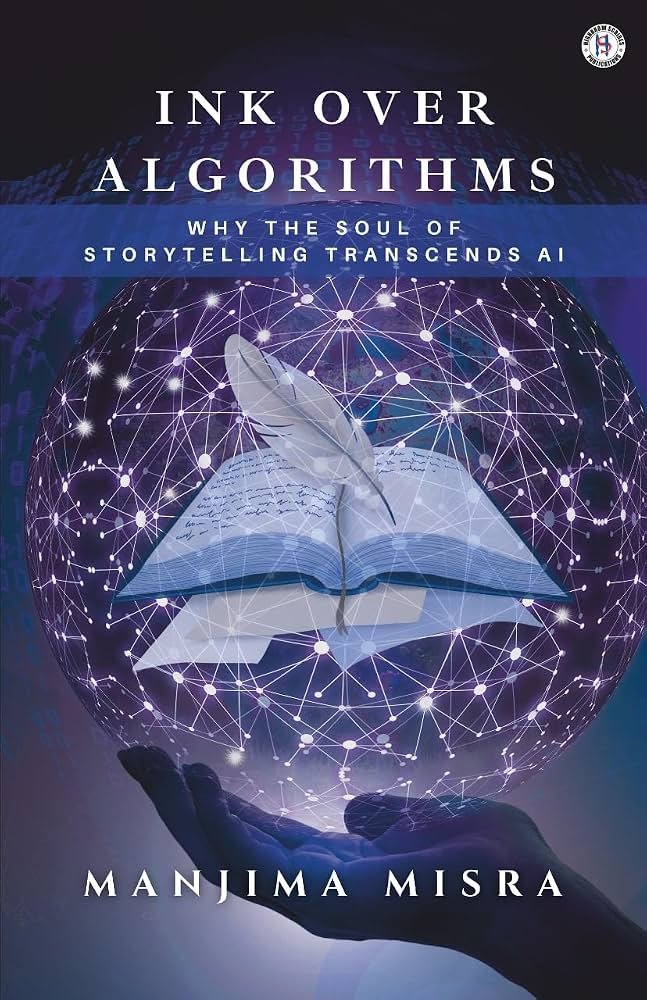
Through examples of intelligent prompting, Misra demonstrates both the capabilities and limitations of AI. She argues that AI does not truly create; it reproduces. Even the most detailed prompts cannot generate what emerges from a human mind shaped by lived experience, emotion, and reflection. In demystifying the fascination surrounding AI-generated art, she also addresses a concern increasingly troubling writers: why their work is sometimes flagged as AI-generated.
Misra explains AI’s writing process as one based on coding language and predicting the most probable sequence of words from patterns learned during training. Since that training data consists largely of material drawn from across the internet, AI’s outputs are fundamentally rooted in human-created content. Intelligent prompting, therefore, does not create new language but rearranges existing linguistic patterns. It is unsurprising, she suggests, that AI can produce sophisticated prose or even win literary recognition, because its language originates in human art and expression.
Yet this is also where AI encounters its limits. It cannot generate genuinely new ways of thinking or passionately argue for an original perspective because it does not feel, experience, or reflect. While it can assemble elegant sentences, it cannot construct a new lens through which to understand beauty, meaning, or reality. Writing emerges from thought, from engaging with both the past and the present. Without that process, AI may serve as a useful tool for writers, but it cannot become one. This leads Misra into a broader examination of authorship itself.
Adopting a feminist and decolonial perspective, she also interrogates the data on which AI systems are trained. Is it sufficiently diverse? Can AI recognise and challenge biases embedded within its training material? Misra asks who develops AI and whether these systems can understand the fluidity of language, the cultural and political forces that shape it, or the creative resistance through which languages evolve. She questions whether AI can function without flattening linguistic and cultural complexity.
At the same time, the book acknowledges AI’s constructive potential. Misra discusses how it can strengthen feminist frameworks and improve accessibility through tools such as audiobooks for children and people with disabilities. She also highlights the environmental implications of AI, arguing that such concerns must be central to ethical AI practices.
Ultimately, Ink Over Algorithms is both a defence of human creativity and a reflection on the craft of writing itself. From narrative voice and characterisation to setting and symbolism, Misra reminds readers that art emerges from curiosity, struggle, and discovery. Her concluding question lingers: what is lost when creativity is optimised for speed and efficiency? In its current form, AI remains no match for the human curiosity that shapes art.
Anjali Yadav is a writer, researcher and poet based in Delhi. She holds a postgraduate degree in Political Science from Lady Shri Ram College for Women. She has a knack for unearthing rhythms and patterns, her writing features in Brown History, Monograph Magazine, and is forthcoming in Ayaskala.