
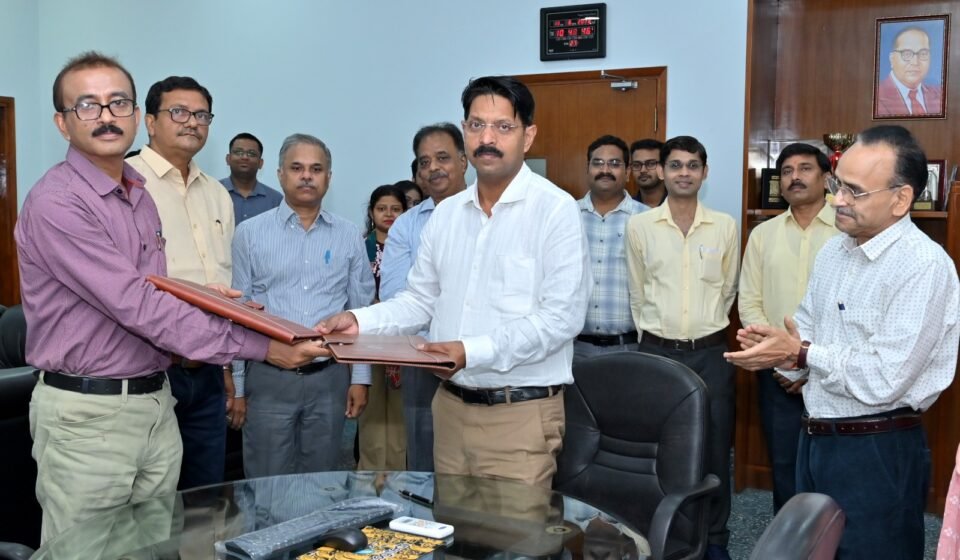
CSIR-NML, R2E Greentech join hands to recycle lithium-ion battery waste
PNS
Jamshedpur
In a significant boost to India’s clean energy and circular economy goals, the CSIR-National Metallurgical Laboratory (CSIR-NML), Jamshedpur, has signed an agreement with New Delhi-based R2E Greentech Pvt. Ltd. to commercialize an indigenous technology for recycling end-of-life lithium-ion batteries.
The Memorandum of Understanding (MoU), signed on Thursday, aims to convert discarded lithium-ion batteries into a valuable source of critical raw materials. The initiative comes amid a rapid rise in the use of electric vehicles (EVs), smartphones, laptops, and renewable energy storage systems, all of which rely heavily on lithium-ion batteries.
Developed by CSIR-NML, the technology enables the recovery of key materials such as lithium, cobalt, nickel, manganese, copper, aluminium and graphite from used batteries. These metals are essential for manufacturing new batteries, EVs, electronics and energy storage systems.
Experts say the technology could help India reduce its dependence on imported critical minerals, particularly lithium and cobalt, while creating a sustainable secondary source of raw materials. Officials associated with the project described battery waste as an “urban mine,” highlighting the economic and strategic value hidden in discarded batteries.
The MoU was signed in the presence of CSIR-NML Director Dr. Sandip Ghosh Chowdhury and senior scientists, including Dr. Manis Kumar Jha and Dr. Sanjay Kumar. Representatives of R2E Greentech expressed confidence that the partnership would support the development of a safe, responsible and scalable battery recycling ecosystem in the country.
The collaboration comes at a crucial time as lithium-ion battery consumption is expected to surge globally. Industry estimates suggest discarded lithium-ion batteries could reach nearly 11 million metric tonnes annually worldwide by 2030-31, while India’s battery waste generation may approach 2 million tonnes by 2035 due to increasing EV adoption.
Experts warn that improper disposal of used batteries can cause fires, toxic leaks, soil and water contamination, and health hazards. Recycling, they say, can help recover valuable materials, reduce environmental risks, strengthen supply chains and support India’s long-term energy security.
The initiative also aligns with the United Nations Sustainable Development Goals on responsible consumption and sustainable partnerships.