
Fatehpur sets benchmark in Environmental Conservation
Shatrughn Prasad
Deoghar
While the world observes World Environment Day with one-day events, villages in Fatehpur Block of Jamtara district, Jharkhand, are demonstrating year-round commitment to environmental protection through sustained community efforts.
Under the Gram Saksham Project, implemented by SAMVAD with support from the SBI Foundation, significant work is being carried out in water conservation, organic farming, and ecological restoration across several villages.
A few years ago, many villages in the Aspiration Block faced acute water scarcity during summer. Traditional ponds had dried up, affecting irrigation and livestock. To address this crisis, the project revived 28 traditional water bodies across 25 villages. These ponds were cleaned, deepened, and repaired, resulting in improved water retention throughout the year. The restored water bodies now provide reliable irrigation for farmers, support livestock, and help recharge groundwater levels, while also restoring the local ecological balance.
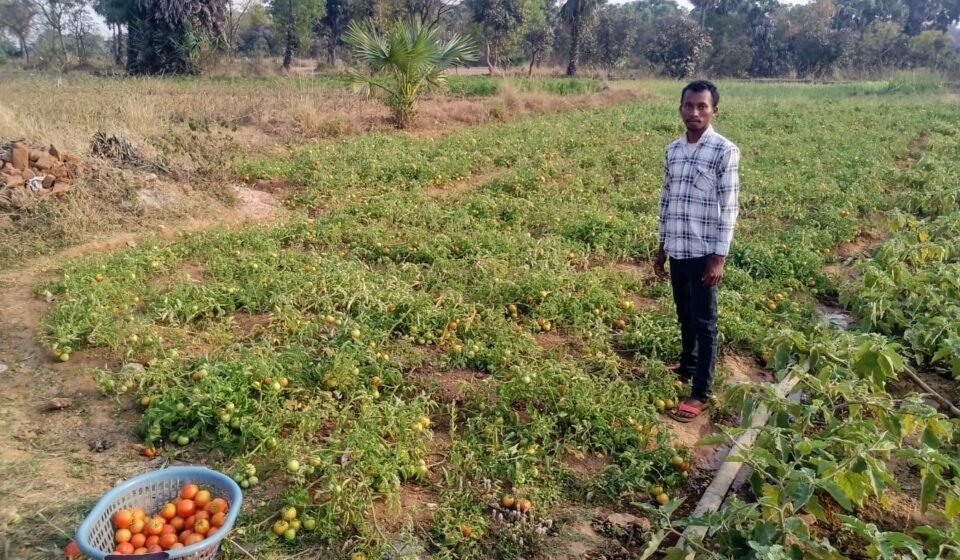
In addition to water conservation, the project strongly promotes sustainable agriculture. Farmers are being trained through regular village meetings and workshops to shift from chemical-based farming to organic methods. They are encouraged to use organic compost, cow dung manure, Jeevamrit, and other natural inputs to reduce costs, restore soil health, and ensure long-term productivity.
The initiative has also established nurseries and greenhouses that produce a variety of fruit-bearing, medicinal, shade-giving, and environment-friendly saplings using organic methods. These saplings are distributed to Gram Sabhas, schools, Anganwadi centres, and individual households. Importantly, SAMVAD’s field teams provide continuous guidance on plantation techniques, aftercare, and protection of saplings to ensure high survival rates.
On the occasion of World Environment Day, special awareness programmes were organised focusing on water conservation, afforestation, cleanliness, and organic farming, with active participation from children and youth.
The impact is clearly visible. Villagers who once showed little interest in environmental issues are now actively involved in pond maintenance, tree plantation, and organic farming. Many farmers have successfully transitioned to natural farming practices.
The Gram Saksham Project in Fatehpur stands as a shining example of community-led sustainable development. By reviving water bodies, promoting organic agriculture, and encouraging large-scale plantation with proper care, SAMVAD and SBI Foundation are creating a replicable model for environmental conservation and climate resilience.
The message from Fatehpur is clear: Protect water, grow trees, and practise natural farming — not just for one day, but every day.