

PNS
Every thread of Jharkhand’s Tassar silk carries a story—one that begins deep within the state’s lush forests and ends draped in timeless elegance. Unlike machine-made fabrics, Tassar is born through patience, skill and the close relationship between nature and the people who have nurtured this tradition for generations.
The journey begins on the leaves of Asan and Arjun trees, where silkworms are carefully reared by tribal families. Feeding on these forest trees, the silkworms gradually spin golden-brown cocoons, nature’s own masterpiece. Once the cocoons mature, they are collected with great care and sorted according to their quality. They are then processed to preserve the precious silk filament hidden within.
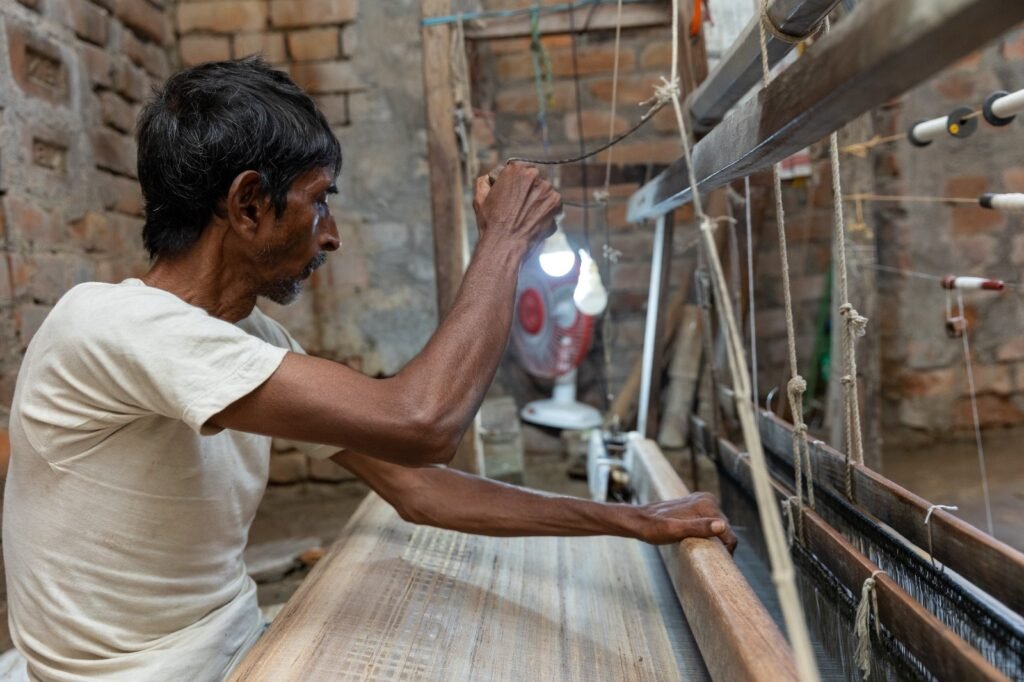
The silk is gently reeled or spun into yarn, depending on the condition of the cocoon. The yarn is washed, twisted and dyed in vibrant shades before reaching the loom. In the hands of skilled weavers, simple threads begin to transform into exquisite sarees, stoles, dupattas and fabrics. Every throw of the shuttle, every woven motif and every finished fabric reflects generations of craftsmanship, preserving the cultural identity of Jharkhand while embracing contemporary design.
Yet the story of Tassar does not end at the loom.
Jharcraft has played a significant role in taking this heritage beyond village clusters and into national and international markets. By working closely with artisans and weavers, the organisation supports product development, introduces modern design interventions, improves quality standards and creates collections that appeal to today’s consumers without losing their traditional soul. Through exhibitions, emporiums, fashion showcases, government initiatives, digital campaigns and retail platforms, Jharcraft has transformed Tassar silk into one of Jharkhand’s strongest cultural ambassadors.
Today, when a customer chooses a Jharkhand Tassar silk saree or stole, they are not merely purchasing a fabric. They are embracing a journey that began in the forests, passed through the skilled hands of rural artisans and reached the world carrying the warmth of tradition, the dignity of craftsmanship and the enduring spirit of Jharkhand.
From cocoon to couture, Jharkhand’s Tassar silk is not just woven—it is lived, preserved and proudly shared with the world.
In the heart of Jharkhand’s forests, where the golden threads of wild silk shimmer against the green canopy, a quiet revolution is unfolding. The Jharkhand Silk Textile & Handicraft Development Corporation (Jharcraft) has become the torchbearer of this transformation, breathing new life into Kuchai Tussar silk — a fabric that carries centuries of tribal heritage yet speaks fluently to the language of modern fashion.
What began as a state initiative has evolved into a movement of empowerment. Tens of thousands of rural and tribal artisans now find themselves at the center of a thriving ecosystem. Jharcraft provides them with training, raw materials, and access to expert design mentorship from institutions like NIFT and NID. It manages marketing through emporiums, national expos, and partnerships with retail chains, ensuring that Kuchai silk is no longer confined to local looms but showcased on global platforms.
The corporation’s initiatives are as diverse as they are impactful:
- Market Expansion through expos and retail collaborations.
- Artisan Development via funds, schemes, and village-level cluster executives.
- Design Modernization that adapts tribal weaving into urban chic.
- Quality & Certifications with Silk Mark, GI Tag, and GOTS standards boosting credibility and exports.
Kuchai silk today is more than a textile — it is a story of heritage meeting innovation, of tribal resilience merging with global ambition. As Jharcraft weaves together tradition and modernity, it positions Jharkhand not just as India’s leading producer of wild silk, but as a cultural powerhouse redefining sustainable fashion.
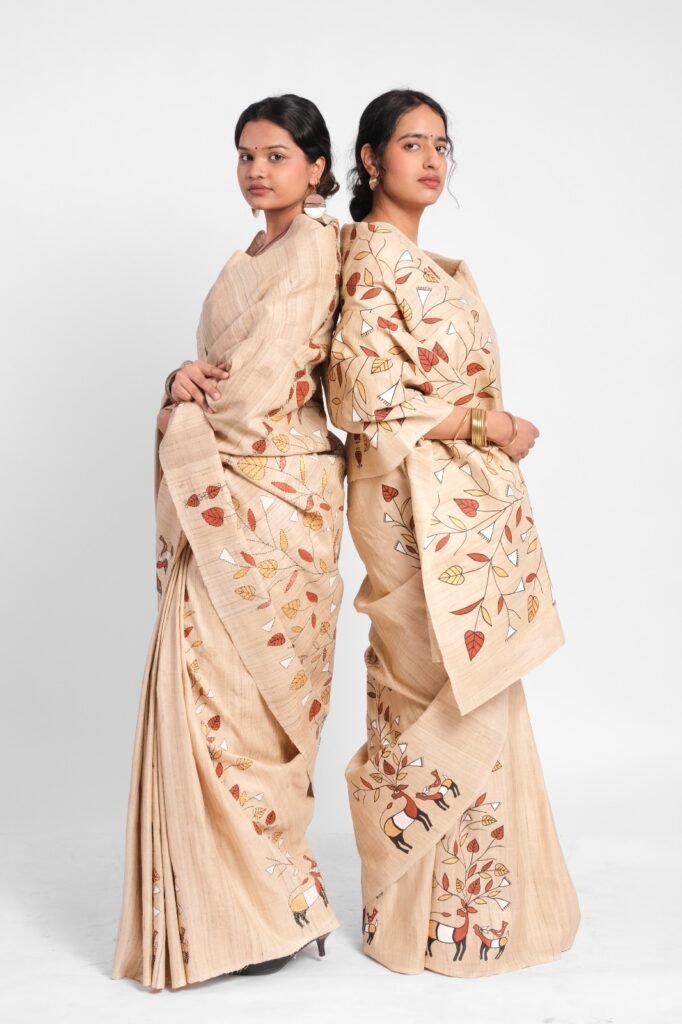
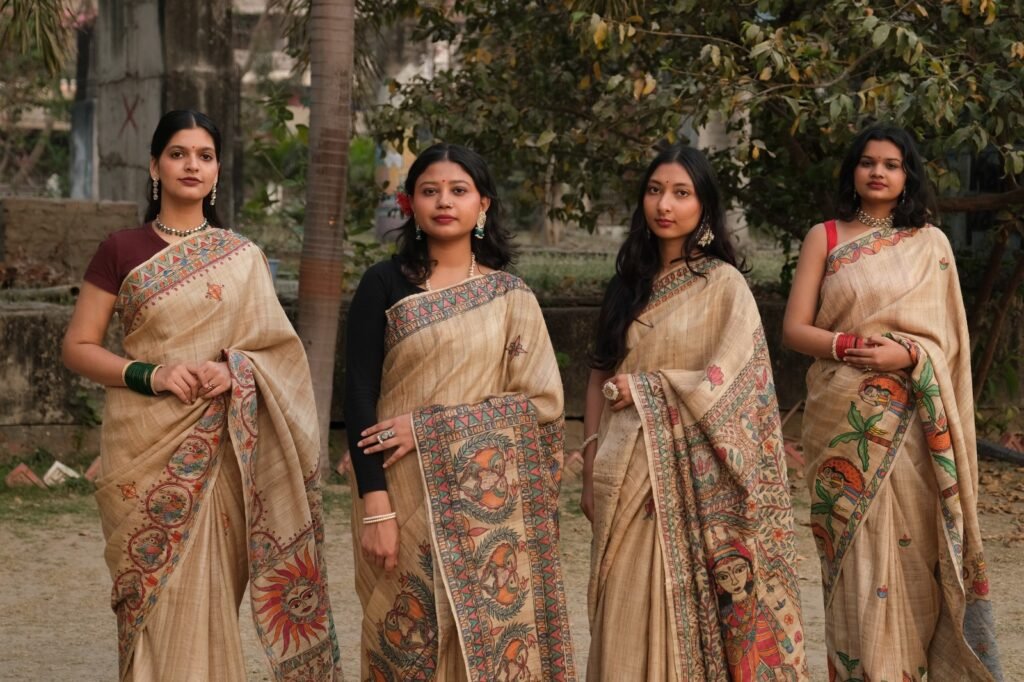
Jharkhand Silk Varieties
Primary Silk Varieties (By Silkworm Type)
- Tasar Silk: Jharkhand’s crown jewel, with a golden-bronze sheen and textured feel. Dominated by the Daba eco-race, reared on Arjun and Asan trees.
- Eri Silk: Produced in smaller quantities, valued as “peace silk” since pupae aren’t harmed. Its wool-like texture makes it ideal for warm, ethical fabrics.
- Gheecha Silk: A coarse yarn spun from damaged Tasar cocoons, adding rustic irregularity and charm to traditional garments.
Globally Recognized GI-Tagged Varieties
- Kuchai Silk: From Kharsawan, entirely forest-reared by tribal communities. Known for resilience, natural lustre, and hand-spinning traditions passed down generations.
- Bhagaiya Silk: From Godda, blending Tasar with cotton, katan, or zari. Famous for elegant sarees and stoles that fuse tribal heritage with contemporary design.
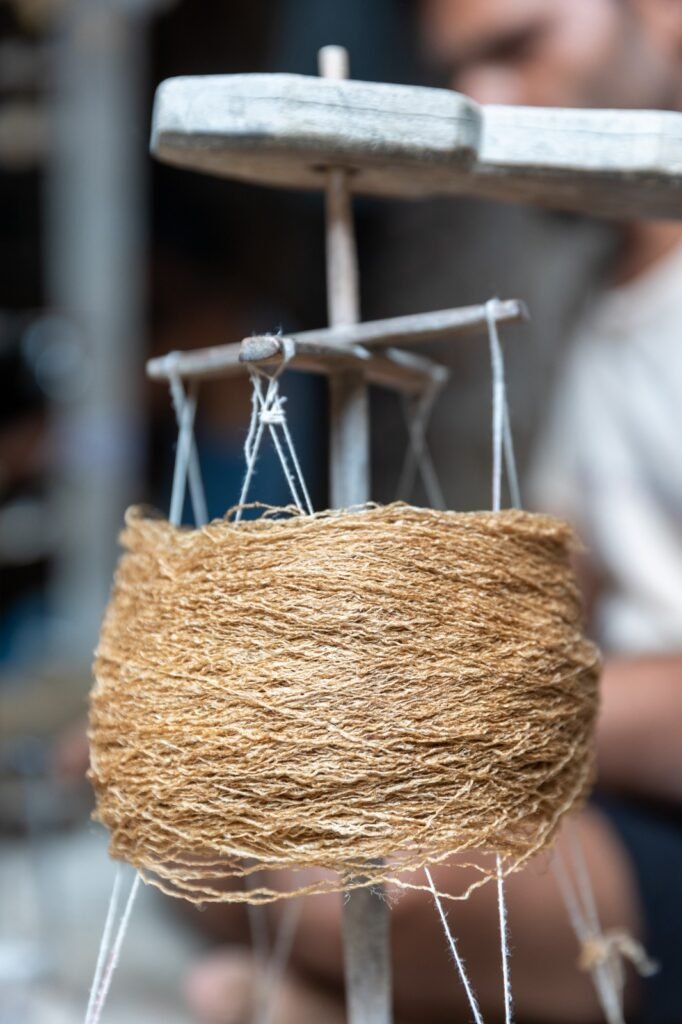
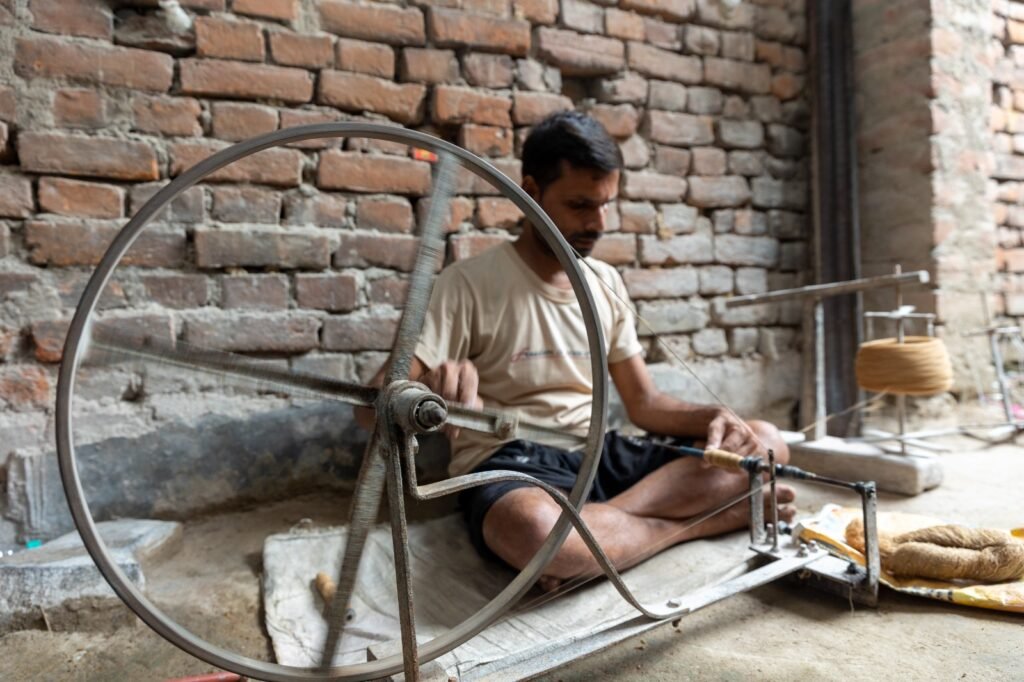
Silk Cocoon & Harvesting
What is a Cocoon?
- A protective casing spun by silkworms (mainly Bombyx mori) during pupation.
- Made of a continuous filament of raw silk (300–900 meters long), bound by sericin (a natural gum).
How It’s Made
- Silkworms secrete liquid proteins over 2–3 days, which harden into twin filaments.
- In nature, the moth breaks the filament when emerging, making it unsuitable for weaving.
Harvesting Process
- Farmers collect cocoons before emergence.
- Pupae are neutralized with steam or hot air.
- Cocoons are soaked in hot water to soften sericin, then filaments are unspooled and combined into continuous silk yarn.