Mrituanjay Kumar
Ranchi
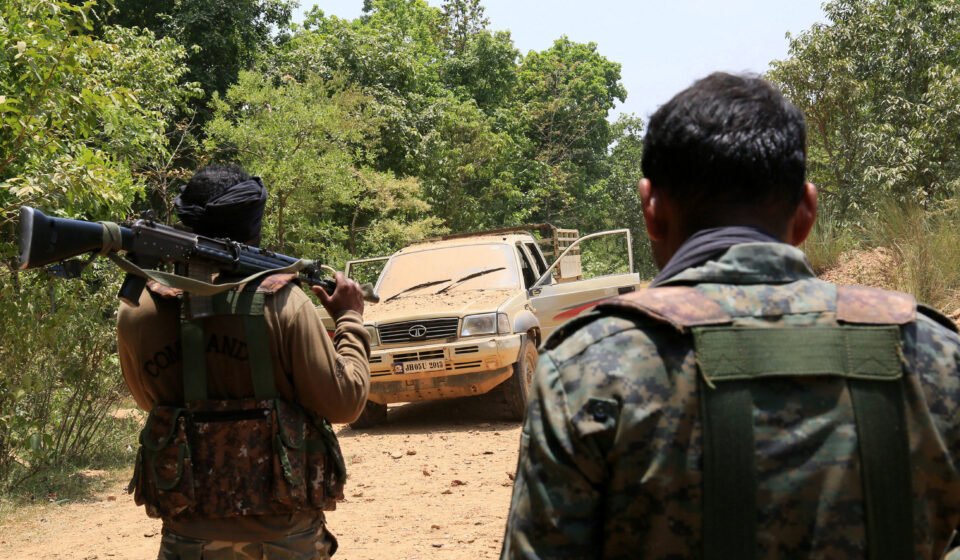
‘Saranda’, once regarded as one of Jharkhand’s most formidable Maoist strongholds, has emerged as a Naxal-free zone following sustained security operations against Left-wing extremism, according to data released by the Jharkhand Police on Monday.
The police have identified the ‘Saranda, Tonto, Goilkera and Porahat areas of Kolhan’ among several erstwhile Maoist strongholds in the State that have now been freed from Naxal influence. The development marks a significant shift in the security landscape of the forested Kolhan region, which had for years remained a major operational base of CPI (Maoist) cadres.
The police said the achievement was the result of continuous anti-Naxal operations across Jharkhand. Other areas listed as having become Naxal-free include Budha Pahar along the Chhattisgarh-Garhwa-Latehar border, Koleswari in Chatra-Palamu, Parasnath in Giridih, Lughu Pahar and Jhumra Pahar in Bokaro, parts of Gumla, the Sarayu-Garu-Mahuadanr forest belt of Latehar, western hill areas of Lohardaga, forest areas of Khunti and Kuchai in Seraikela-Kharsawan.
The scale of the anti-Naxal campaign is reflected in the figures released by the police. Between January and August 15, 2026, a total of 113 Naxalites belonging to different extremist outfits were arrested in the State. They included 49 Maoists, 30 PLFI cadres, 23 TSPC members, 10 JJMP cadres and one member of SJMM. Among those arrested were several high-value Maoist leaders carrying rewards ranging from Rs 5 lakh to Rs 1 crore.
The campaign has also resulted in a substantial number of surrenders. During the same period, 50 Naxalites surrendered, including 46 Maoists, one PLFI cadre and three JJMP members. Significantly, 43 of those who surrendered handed over 28 weapons and 4,549 rounds of ammunition at the Jharkhand Police headquarters.
Security forces also recorded 22 Maoist deaths in encounters between January and August 15. Those killed included senior cadres carrying rewards of up to Rs 1 crore.
The campaign has simultaneously weakened the armed infrastructure of extremist groups. Police recovered 111 weapons, 9,904 rounds of ammunition, 11 kg of explosives and Rs 6 lakh in levy money* during the period. IEDs planted by Naxalites were also detected and destroyed.
The police attributed the progress not only to operations within Jharkhand but also to coordination with neighbouring States. Inter-state meetings have focused on intelligence sharing, Naxal eradication and strengthening surveillance along border districts. Inter-State and mirror check posts have also been established to prevent the movement of extremists, weapons and other illegal activities across state borders.
For Saranda and the wider Kolhan region, the police’s declaration of Naxal-free status represents a major security milestone. Areas that were once synonymous with armed insurgency are now being brought within the regular security and administrative framework, signalling a potentially decisive phase in Jharkhand’s long-running fight against Left-wing extremism.
The Jharkhand Police said it remains committed to making the entire state free from crime and extremism through sustained operations, modern technology, a dedicated force and public cooperation.