

Taiwan Travelogue: A Deserving Winner of the International Booker Prize 2026.
BOOK REVIEW
By AJAY KUMAR SINGH
Winston Churchill’s famous radio broadcast at the beginning of World War-II in October 1939, shortly after the Soviet Union signed a non-aggression treaty with Nazi Germany, is still remembered for the manner in which Russia was described as a “riddle wrapped in a mystery inside an enigma”. Taiwan today seems as mysterious and enigmatic as Russia once was. Following the first Sino-Japanese War in 1895, Taiwan was annexed by Japan and it remained a Japanese colony till its defeat in World War-ll. Taiwan returned to Nationalist Chinese control in 1945 but in the ensuing civil war the communist armies led by Mao defeated the Nationalist forces in 1949. The Nationalist government and armies fled to Taiwan and the Republic of China (ROC) – as distinct from the People’s Republic of China (PRC) – has been at the helm in Taipei ever since. China steadfastly claims Taiwan as part its territory and ROC remains diplomatically a pariah country. This has not however deterred Taiwan from becoming a global economic powerhouse and one of the world’s leading producers of semiconductors and computer technology. The enigma of the place and its people still excites curiosity.
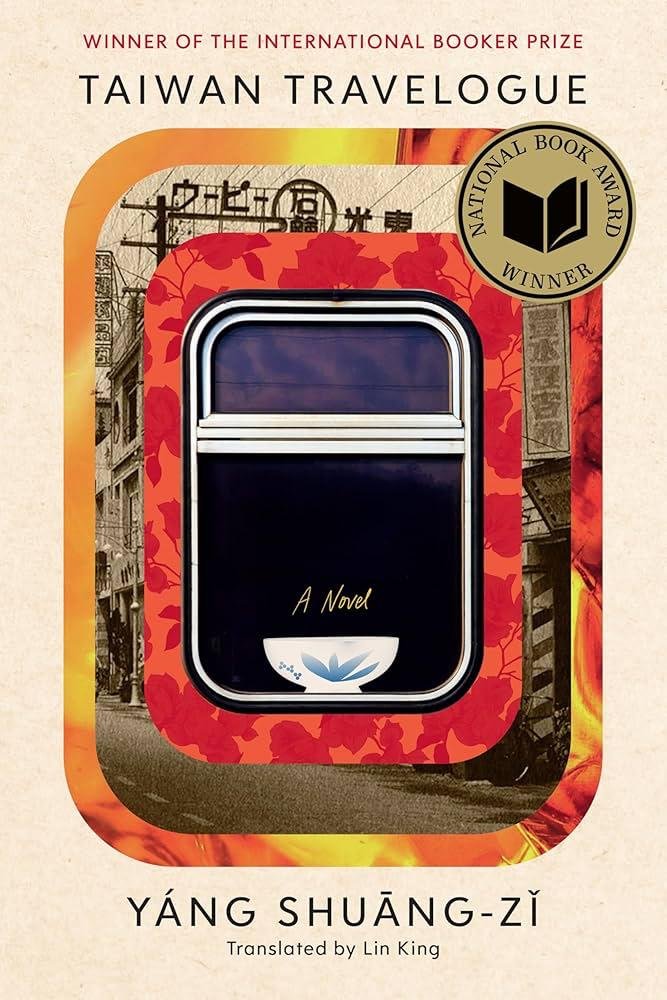
The 2026 International Booker Prize has been bestowed upon the book Taiwan Travelogue which gives a fascinating glimpse into the life and times of pre-war Taiwan under Japanese colonial occupation. Written by Taiwanese author Yang Shuāng-zi and Taiwanese-American translator Lin King, it’s the first novel translated from Mandarin Chinese to English to win the prestigious award.
The novel is a first person account of a young Japanese writer Aoyama Chizuko who had spent a year in Taiwan in 1938 when it was part of the Japanese Empire. She earlier became an instant star after her first novel was adapted for the silver screen and the Japanese Government of Taiwan invited her to Taiwan for a sponsored lecture tour. Aoyama Chizuko was also supposed to send dispatches from her travels to the island (as Taiwan was referred during Japanese expansionist times) in Mainland (Japan) newspapers and magazines. These essays and articles were published under the title Taiwan Travelogue. The novel Taiwan Travelogue was published in 1954, fifteen years after Chizuko’s trip. The imperialist Southern Expansion policy was perhaps one of the government’s primary motives for sponsoring the trip and the writer’s travel dispatches might well have contained traces of the Japanese imperial agenda, yet the novel forsook all such influences.
“Why did Aoyama Chizuko choose to rewrite the story as a novel instead of publishing her travel essays on Taiwan as a collection?”, the novel’s translator Ms Yang Shuāng-zi questions herself. Her self-response is sentimental but nearly true: “A novel is a piece of amber, one that coagulates both the ‘real’ past and the ‘made-up’ ideals. It is something that can be visited again and again in its unparalleled beauty”. Ah, the Southern Country ! Ah, the Island ! Ah, Taiwan !
Aoyama Chizuko has no interest in the official banquets or the imperialist agenda. She instead longs to experience real Taiwan life and to taste as much of its authentic cuisine as her ‘monstrous appetite’ can bear. She finds her companion in her official interpreter Ong Tshian-hoh who is a former schoolteacher and whom Chizuko soon befriends and starts calling Chi-chan. Chi-chan is charming, erudite and methodical and she meticulously arranges the writer’s travels and together they embark on a culinary tour of the island. They travel around the island and Chi-chan shares Chizuko’s passion for food and introduces her to the delicacies of the local cuisine as also some of the culture and history of Taiwan.
The fascinating culinary journey of Aoyama Chizuko has a visceral side as well. She is infatuated by Chi-chan’s and craves for her friendship. However despite their easy companionship and affection there is a distance between them that Chi-chan is eager to maintain. At the outset of the novel it’s explained how power dynamics infect even most intimate relationships: “The lofty barrier that stood between the two ladies was not only the power imbalance between the coloniser and the colonised, but also Japan’s loss of the Pacific War and the subsequent division of Taiwan and Japan from one country into two “. After Chizuko makes repeated advances and coaxes Chi-chan to break her impending marriage and move to the Mainland with her, her translator calls it a day and leaves the enamoured writer for good.
The last chapter of the original Japanese version of the novel ends with the heartbreaking separation between Aoyama Chizuko and Chi-chan. When Chizuko’s adopted daughter, Aoyama Yōko, first read the book she went to her mother in tears and asked whether it was a true story. “It’s too sad; please give it a happy ending “. Mother accepted that it was indeed a sad and true story but in the novel’s first reprint in 1970 she added a twelfth chapter. Each chapter of the Taiwan Travelogue is interestingly named after a Taiwanese dish. The last and twelfth chapter is named Kam-Ā-Bit (Fruit and Jelly Ice) which turns out typically as a dessert that aptly concludes the ‘main course’ offered in the preceding chapters.
The novel delightfully explores issues of love, culture and colonialism. It also unravels the enigma of Taiwan and demystifies it to the reader who will surely feel like going and visiting Taiwan and exploring its cuisine. The conclusion of the Booker judges is apt: “Taiwan Travelogue pulls off an incredible double act: it succeeds as both a delicious romance and an incisive postcolonial novel”.
The writer is a former IAS Officer and presently working as Head, Corporate Affairs for Jindal Steel in Jharkhand.