US Consul team visits NML for collaboration in critical minerals research
Pioneer News Service
Jamshedpur
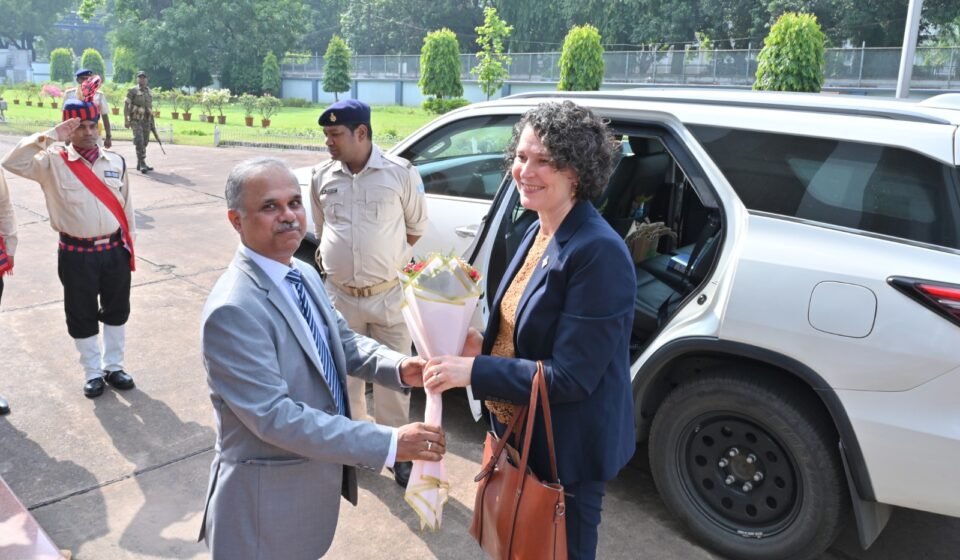
In a significant development aimed at strengthening Indo-US cooperation in the strategically important critical minerals sector, a high-level delegation from the United States Consulate visited the CSIR-National Metallurgical Laboratory (CSIR-NML) in Jamshedpur. The visit comes in the backdrop of the recently signed Memorandum of Understanding (MoU) on Critical Minerals between India and the United States, highlighting the growing importance of the sector for economic growth, technological advancement, and clean energy transitions.
The visiting delegation was led by Kathy Giles-Davis, Consul General of the US Consulate, and included Barphus Kalund, Consul for Political and Economic Affairs. During their visit, the delegation held detailed discussions with CSIR-NML scientists and officials to identify potential areas of cooperation with research and academic institutions in the United States.
The discussions centered on the growing global demand for critical minerals, which are essential for manufacturing electric vehicle batteries, renewable energy systems, advanced electronics, aerospace components, and defence technologies. Both sides explored opportunities for joint research, technology development, knowledge exchange, and capacity building in this emerging sector.
The meeting reflected the shared commitment of India and the United States to securing sustainable and resilient supply chains for critical minerals, which are increasingly becoming vital for energy security and industrial competitiveness.
During the visit, the US delegation was introduced to the extensive research and technological capabilities of CSIR-NML through a detailed presentation delivered by Director Dr. Sandip Ghosh Chowdhury. The presentation highlighted the institution’s pioneering work in mineral processing, metallurgy, materials science, recycling technologies, and sustainable resource utilization.
The delegates were also shown various ongoing projects and technological advancements related to critical minerals, advanced materials, metals extraction, and allied metallurgical research being undertaken at the premier laboratory.
A key focus of the interaction was identifying avenues for collaboration between CSIR-NML and leading US universities, research laboratories, and technology institutions. Officials discussed possibilities for joint research programmes, exchange of scientific expertise, training initiatives, and collaborative projects aimed at addressing future resource challenges.
Such partnerships are expected to contribute significantly to the development of innovative technologies for extracting, processing, recycling, and recovering critical minerals from both primary and secondary resources.
Addressing the gathering, Kathy Giles-Davis emphasized the importance of stronger engagement between CSIR-NML and its counterpart institutions in the United States. She noted that both countries share common interests in developing sustainable technologies for processing mineral resources and recovering valuable materials from industrial waste and recycled products.
She underlined that enhanced cooperation in these areas would play a crucial role in meeting the growing demand for clean and green energy technologies while promoting environmentally responsible resource management.