Dr. Syama Prasad Mookerjee: Architect of National Unity and Cultural Nationalism
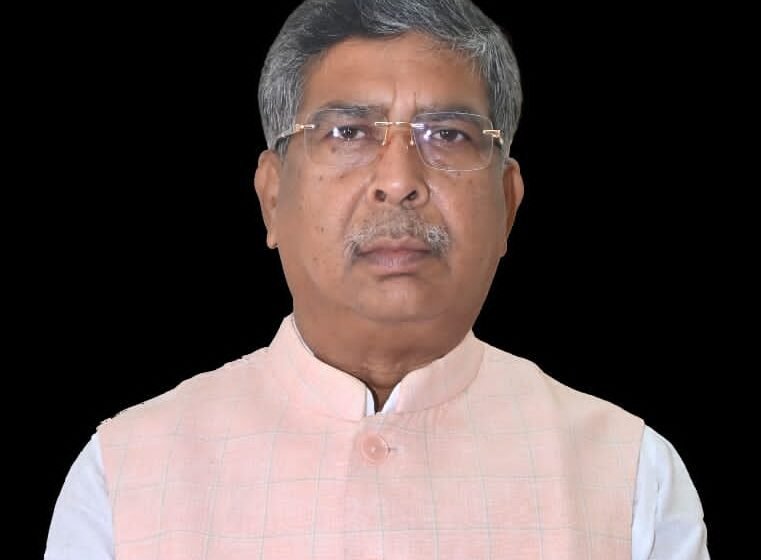
By Aditya Prasad Sahu
(Jharkhand BJP President)
“Where Mookerjee made his supreme sacrifice, that Kashmir is ours.”
History remembers certain figures not merely as individuals but as symbols of an idea, a resolve, and an era. Dr. Syama Prasad Mookerjee was one such towering personality. His martyrdom is not just the remembrance of a leader but a reaffirmation of India’s unity, integrity, and cultural nationalism — ideals for which he gave his life.
Early Life and Academic Brilliance
Born on July 6, 1901, in Kolkata, Dr. Mookerjee came from a distinguished family. His father, Sir Ashutosh Mookerjee, was a celebrated jurist and educationist. From childhood, Syama Prasad displayed brilliance, patriotism, and leadership. At just 33, he became the youngest Vice-Chancellor of Calcutta University — a feat that remains unmatched in Indian academia. His intellectual achievements were only the beginning of a life devoted to service.
Politics as Service, Not Power
Dr. Mookerjee believed politics was not a pursuit of power but a means of service. During the trauma of Partition, he fought decisively for the rights of millions of Hindus in Bengal. His determination ensured that large parts of Bengal and Punjab remained within India. His courage and foresight safeguarded the nation’s territorial integrity at a time of great upheaval.
Industrial Visionary
As India’s first Minister for Industry and Supply in independent India, Dr. Mookerjee laid the foundations of modern industry. Steel plants and industrial hubs such as HEC, Durgapur, Rourkela, and Bhilai were conceived under his vision. Yet, when he felt certain policies were detrimental to national interest, he resigned from office — proving that principles mattered more to him than position.
Founding the Bharatiya Jana Sangh
Recognizing the need for a political force rooted in nationalism, cultural identity, and public welfare, Dr. Mookerjee founded the Bharatiya Jana Sangh on October 21, 1951. This was not merely the birth of a party but the beginning of a new chapter in nationalist politics. The ideological foundation he laid continues to resonate in the Bharatiya Janata Party today, with the guiding principle of “Nation First, Organization Above All.”
The Kashmir Struggle
His most historic struggle was for the complete integration of Jammu and Kashmir. He firmly opposed the special status granted to the state, declaring that one nation cannot have two constitutions, two prime ministers, and two flags. Leading a nationwide movement, he courageously entered Jammu and Kashmir in May 1953, only to be arrested. On June 23, 1953, he died under mysterious circumstances in custody — a sacrifice remembered as one of the greatest for India’s unity.
Decades later, in 2019, the abrogation of Articles 370 and 35A by the Government of India fulfilled his dream, serving as a true tribute to his sacrifice.
Champion of Social Harmony
Dr. Mookerjee believed that India’s progress was meaningful only if it reached the last person in society. His vision of social upliftment is reflected today in the principles of Antyodaya and the mantra of “Sabka Saath, Sabka Vikas, Sabka Vishwas, Sabka Prayas.” His politics was not about power but about nation-building.
Inspiration for the Youth
His life remains an inexhaustible source of inspiration for the youth. He taught that true leadership lies in dedication to the nation, loyalty to principles, and courage in adversity. As India marches toward becoming a developed nation, his ideas are more relevant than ever.
Legacy of Sacrifice
Dr. Syama Prasad Mookerjee was not a seeker of power but a servant of principles. His sacrifice continues to inspire generations to live for the motherland. Though he is no longer physically among us, the seed of nationalism he sowed has grown into a mighty tree, offering shade and strength to the nation.
On his martyrdom day, let us pledge to walk the path he illuminated — strengthening India’s unity, integrity, cultural pride, and welfare of the poor — and contribute to building a truly developed India.