
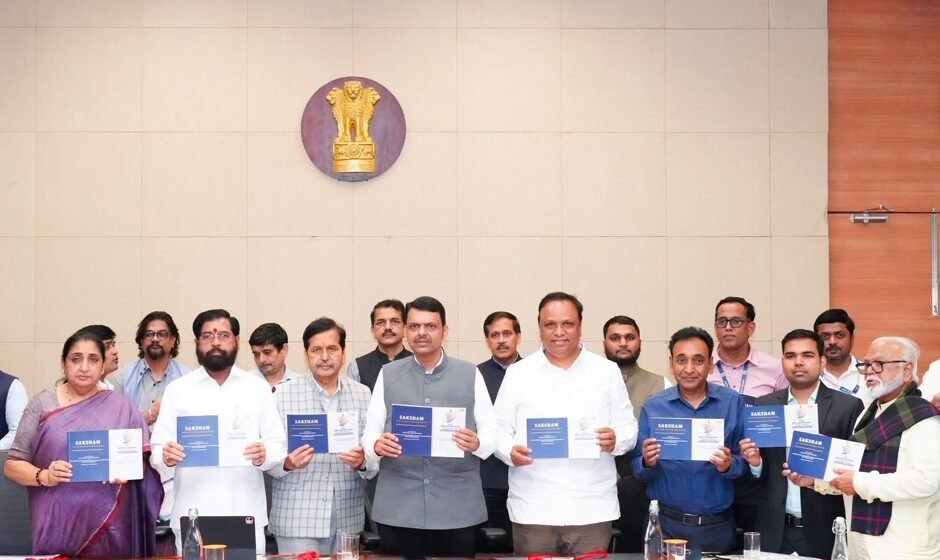
draws national attention after Maharashtra showcase
Pioneer News Service
RANCHI
An artificial intelligence-powered skill census model developed by Jharkhand-born technology entrepreneur Ashwin Srivastava has come into the national spotlight after the Maharashtra government unveiled its impact at a State Cabinet meeting chaired by Chief Minister Devendra Fadnavis on Tuesday.
The initiative, titled “Citizens in the Loop,” forms the backbone of Maharashtra’s AI-driven Saksham Skill Census, a first-of-its-kind programme designed to continuously map citizens’ skills, aspirations and employment readiness rather than relying on one-time surveys.
Srivastava, who was born and raised in Sahibganj district of Jharkhand, conceptualised the model with the objective of keeping citizens actively connected to government systems. The platform combines artificial intelligence voice agents capable of communicating in local languages with on-ground survey teams to regularly update information on individuals’ skills, career aspirations and availability for work.
The six-month pilot project in Mumbai Suburban district’s H-West Ward, covering Bandra West, Santacruz West and Khar West, has produced significant results. According to officials, the survey covered more than 59,000 households and created detailed profiles of over 44,000 young people. More than 37,000 individuals were connected to skilling and livelihood opportunities, while 1,018 employers and 54 training institutes were brought onto the platform. The numbers far exceed the district’s earlier annual target of skilling and employment for 800 to 1,000 candidates.
Speaking about the initiative, Srivastava said the project used a hyperlocal approach by dividing the ward into micro-territories, conducting door-to-door surveys with advanced technology and using AI to identify hidden trends that could translate into employment opportunities.
One of the notable outcomes of the pilot has been the inclusion of women homemakers who were previously outside the formal workforce. Around 100 women identified through the census are now engaged in data annotation work for AI model development, enabling them to earn an income while working from home.
Observers believe the model could hold particular relevance for Jharkhand, a state that has long witnessed large-scale migration of its youth in search of employment. The system is considered adaptable to districts across Jharkhand, including Ranchi, Dumka, Sahibganj and Palamu, where it could help identify local talent, match workers with skill development programmes and create employment opportunities closer to home.
Mumbai Suburban District Collector Saurabh Katiyar described the exercise as “not just a census, but a pathway for livelihood impact.” Following the Mumbai pilot, the model is being expanded to Nagpur district, while discussions are underway with leading academic institutions and international organisations to explore its wider adoption in India and developing economies abroad.
For Jharkhand, the achievement carries added significance as the architect of the pioneering AI-based governance model traces his roots to Sahibganj, underscoring the state’s growing contribution to technology-led public innovation.