
By Richa Sanchita
Every year, August 15 brings back a familiar set of images and memories. There is the Tricolour, the national anthem, children dressed as freedom fighters, patriotic songs and speeches about the sacrifices made during the freedom struggle. These are all an important part of the day. But as the years pass, I sometimes wonder whether we have stopped asking what Independence Day actually means to us.
For those of us born long after 1947, freedom is something we have always known. We have never experienced a foreign government ruling our country. We have grown up with elections, the Constitution, courts, Parliament and the right to vote. It is therefore difficult to imagine what it must have felt like to live in a country where important decisions about our own lives were taken by a power sitting thousands of miles away.
That is perhaps why Independence Day is also a day to look back and understand what earlier generations went through.
India’s freedom was not the result of one movement, one leader or one particular moment. It was a long and complicated struggle. There were different approaches, different political ideas and people who came from very different backgrounds. Some chose non-violence and mass movements, while others believed that more radical methods were necessary. Many went to prison, lost their livelihoods and, in some cases, their lives.
We naturally remember names such as Mahatma Gandhi, Jawaharlal Nehru, Sardar Patel, Subhas Chandra Bose and Bhagat Singh. But there were thousands of others whose names are not familiar to most of us. Students, farmers, workers, women and ordinary families all became part of the movement in different ways. Their contribution reminds us that the freedom struggle was not simply a story of a few great leaders. It gradually became a movement in which ordinary Indians began to believe that they too had a role in deciding the future of their country.
Mahatma Gandhi understood this perhaps better than anyone else. His ability to connect a national political struggle with everyday life made the movement accessible to people who had never considered themselves political. The Salt March is a good example. Salt was something every household needed, yet the protest against the salt tax became a powerful expression of resistance. It showed how an apparently simple issue could bring people together around a larger question of freedom.
When independence finally came on August 15, 1947, it was naturally a moment of great celebration. But it was also a deeply painful time. Partition had divided the country and forced millions of people to leave their homes. Families were separated, communities were torn apart and countless lives were lost. The celebrations of independence therefore existed alongside enormous human suffering.
That part of our history is important because it reminds us that the making of modern India was not a simple or easy process. We inherited a country with serious challenges—poverty, illiteracy, displacement and deep social divisions. The leaders of the time had to build institutions almost from the ground up.
One of the most important decisions was to create a constitutional democracy.
The Constitution was not simply a document establishing the machinery of government. It placed the individual at the centre of the new republic and promised justice, liberty, equality and fraternity. India also took the remarkable step of giving adult citizens the right to vote. At a time when a large part of the population was poor and many people had little or no formal education, this was an enormous democratic experiment.
The idea was simple but powerful: citizenship was not to depend on wealth, education, caste or social position. Every citizen was entitled to participate in the country’s democracy.
Nearly eight decades later, we have travelled a long distance. India has changed enormously since 1947. We have developed new industries, built institutions, expanded education and become a major economy. Technology has transformed the way we work, communicate and even the way we participate in public life.
Yet development also brings new questions.
What does freedom mean when social prejudice still determines opportunities for many people? What does equality mean when economic circumstances can decide the quality of education a child receives? What does freedom of expression mean in an age when information can spread across the country within seconds, sometimes without anyone checking whether it is true?
These are not questions that make us less proud of India. In fact, I believe they are questions that a mature democracy should be willing to ask.
For me, one of the most important aspects of freedom today is the ability to respect another person’s rights even when we disagree with that person. Democracy becomes meaningful not when everyone agrees, but when people with different opinions can live together, speak freely and still respect the law and each other.
This is also why the Constitution remains so relevant. Independence gave us the freedom to govern ourselves, but the Constitution gave us a framework within which that freedom could be exercised. It placed limits on power and recognised rights that belong to citizens simply because they are citizens.
So when we celebrate August 15, I think we should remember both parts of the story. We should remember those who sacrificed so that India could become independent, but we should also remember that independence created a responsibility for every generation that followed.
The India of 1947 had its own challenges. The India of today has different ones. We may no longer have to fight colonial rule, but we still have to work towards reducing inequality, protecting individual dignity, ensuring justice and creating opportunities for those who have been left behind.
Perhaps that is what makes Independence Day relevant even after all these years. It is not only a day to remember how India became free. It is also a day to think about whether the freedom we inherited is reaching every citizen in a meaningful way.
When I watch the Tricolour being raised on August 15, I therefore think not only about the past but also about the India we are leaving for the next generation. The freedom fighters could give us an independent country. The Constitution gave us the institutions and values through which we could build it.
What we do with that freedom is now our responsibility.
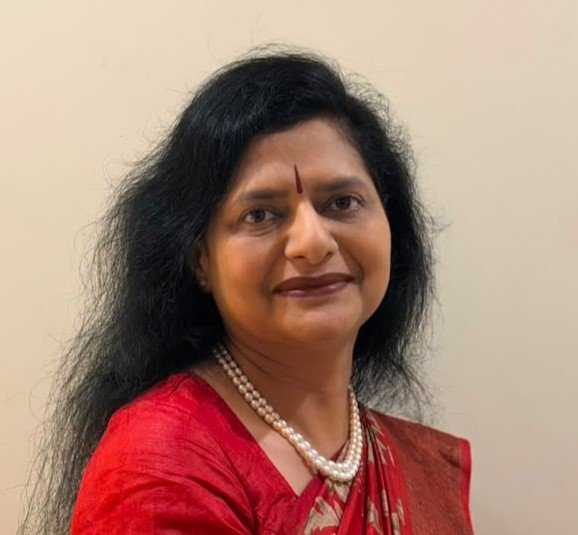
Richa Sanchita is an advocate of Jharkhand High Court with more than 24 years of experience. Her area of expertise are Civil, Writs, Criminal and Banking.