Farm-to-Table Movement in India: Reality or Marketing Gimmick?
By Chef Ashutosh Tiwari
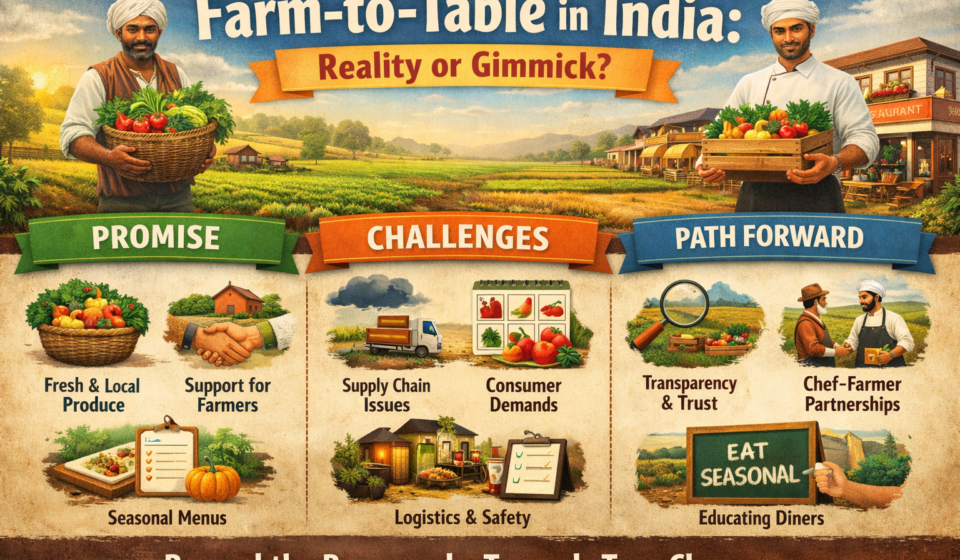
The phrase “farm to table” has become one of the most frequently used expressions in the hospitality industry. It appears on restaurant menus, social media campaigns and food festivals, often promising diners freshness, sustainability and authenticity. But as the concept gains popularity across India, an important question deserves attention: Is farm-to-table genuinely transforming the way we eat, or has it become another marketing buzzword?
As someone who has spent years working in professional kitchens and consulting for food businesses, I believe the answer lies somewhere in between.
At its heart, the farm-to-table philosophy is simple. It encourages restaurants to source ingredients directly from farmers, reduce the distance food travels, and serve produce that is fresh, seasonal and locally grown. The idea benefits everyone involved. Farmers receive fairer returns, restaurants gain access to better ingredients, and customers enjoy food that is often fresher and more flavourful.
India, in many ways, has always embraced this philosophy without giving it a fashionable name. For generations, local markets, seasonal vegetables and regional produce have been an integral part of our food culture. Families bought what was available in the season, and meals naturally reflected the agricultural cycle. Ironically, what is now being promoted as a modern dining trend has long been part of our culinary heritage.
However, today’s restaurant industry presents a more complex picture. Not every establishment claiming to be farm-to-table actually follows the practice consistently. In some cases, only a handful of ingredients are sourced directly from farms, while the majority continue to come through conventional supply chains. Yet the label is prominently displayed because it appeals to consumers who associate it with healthier and more responsible dining.
This is where the line between genuine commitment and clever marketing begins to blur.
That does not mean the movement lacks value. Across the country, several restaurants and chefs are building meaningful relationships with local farmers, promoting indigenous ingredients and designing menus around seasonal availability. These businesses are proving that farm-to-table is far more than a branding exercise it is a long-term commitment that requires planning, trust and flexibility.
The challenge, however, is that implementing such a model in India is not always easy. Weather conditions, inconsistent supply, transportation issues and fluctuating crop quality can make sourcing directly from farms difficult. Restaurants also need reliable logistics to maintain quality and food safety standards. For many businesses, especially smaller establishments, balancing these realities with commercial viability remains a constant challenge.
Consumers, too, have a role to play. While many appreciate the idea of fresh, locally sourced food, they often expect every ingredient to be available throughout the year. True farm-to-table dining demands a different mindset one that values seasonality over convenience and understands that menus should naturally evolve with changing harvests.
Perhaps the real success of this movement should not be measured by how often the phrase appears on a menu but by the relationships restaurants build with farming communities. When chefs know where their ingredients come from, respect seasonal produce and support local agriculture, everyone benefits from the grower to the guest.
In my view, the farm-to-table movement in India is neither entirely a reality nor merely a marketing gimmick. It is a promising idea that risks losing its credibility when used only as a promotional slogan. Authenticity cannot be printed on a menu; it must be reflected in everyday practices.
If the hospitality industry chooses transparency over trends and partnerships over publicity, farm-to-table can become much more than a fashionable concept. It can become a meaningful step towards a healthier food system, stronger farming communities and a more responsible future for Indian dining.