
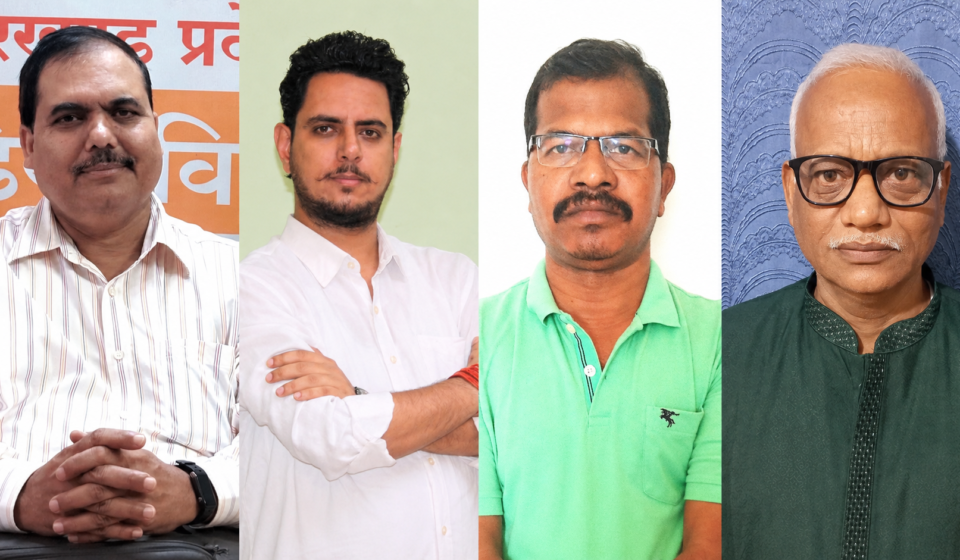
Four information commissioners appointed in State
Pioneer News Service
Ranchi
The Governor cleared the appointments of Anuj Kumar Sinha, Tanuj Khatri, Amulya Neeraj Khalkho and Shivpujan Pathak as the new Information Commissioners in the Jharkhand State Information Commission.
The Personnel, Administrative Reforms, and Rajbhasha Department issued the formal notification confirming these appointments. The Governor’s clearance is subject to crucial conditions directed toward ensuring the smooth, unhindered, and transparent operation of the Right to Information (RTI) framework in the state.
The Governor explicitly directed the state government to immediately ensure the early selection and appointment of a Chief Information Commissioner to run the Commission efficiently. He clarified that the state government will bear full responsibility if any procedural discrepancies are detected or if issues arise regarding compliance with Supreme Court orders governing these appointments. Following the notification, all four appointees are expected to take oath and assume office.
With the Governor’s approval now in place, the long-pending process of strengthening the state’s information commission is expected to move forward. During the appointment process, the political affiliations of certain individuals included in the panel sparked the most discussion. It came to light that Amulya Neeraj Khalkho was linked to the Congress, Tanuj Khatri to the JMM, and Shivpujan Pathak to the BJP. Out of four appointees, Sinha is a journalist having an experience for more than two decades.
Opposition parties and various social organizations raised questions regarding the appointment of individuals with political backgrounds to an institution of constitutional importance like the Information Commission.
While approving the appointments, the Governor directed the state government to ensure the early appointment of the Chief Information Commissioner so that the commission can function smoothly and effectively. He also made it clear that any procedural lapses in the selection process or issues related to compliance with Supreme Court directives would be the sole responsibility of the state government.
Notably, the Governor had earlier returned the proposal twice. The first time, concerns were raised over the alleged political affiliations of some candidates. After the government submitted clarifications and resent the file, it was returned again seeking clarity on pending cases against certain nominees.
The appointment process had also drawn objections from several individuals and organisations, who had urged the Governor to halt the selections, citing alleged violations of the Right to Information Act and Supreme Court guidelines.
In the resubmitted proposal, the government clarified that the individuals against whom allegations had been raised had been exonerated. Furthermore, it was stated that those associated with political parties would resign from their respective party posts upon appointment.