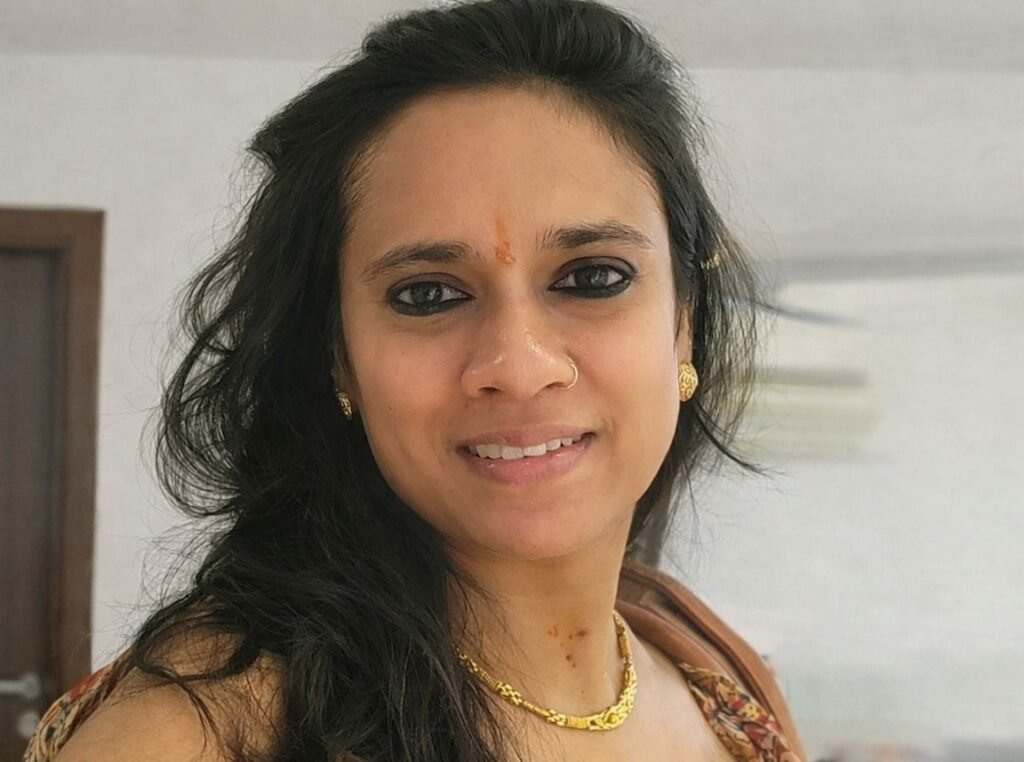

As Siddhhi Gattani Comprehends
– By Neha M. R. Aggarwal
Language is humanity’s greatest invention – besides letting us an expression, it finds us thinking, remembering, negotiating, imagining and evolving. Every word we utter today is the product of centuries of migration, conquest, trade, innovation and human experience. Languages breathe, adapt and reinvent themselves with every generation. It is this dynamic journey of language that has become the focal point of Siddhhi Gattani’s academic and intellectual exploration.
An alumna of Sacred Heart School – Ranchi, Siddhhi pursued B.A. (Honours) in English from Christ University (Bangalore) before completing her M.A. in Linguistics from Jawaharlal Nehru University (JNU), New Delhi. Her academic interests extend beyond grammar and literature into the fascinating disciplines of cognition, language evolution, morphology, semiotics, communication and the sociology of language.
One of the central questions that fascinates her is deceptively simple: How do sounds become meaning?
Human communication begins with sounds. These sounds gradually acquire patterns, forming phonemes, that combine into morphemes – the smallest meaningful units of language. Morphemes give rise to words, words construct sentences, and sentences eventually shape cultures. Language, therefore, is way beyond being just a system of communication; it is a record of how human cognition organises reality.
Her research also explores the history of writing systems, tracing how abstract sounds transformed into scripts, alphabets and symbols. From pictographs to phonetic alphabets, from handwritten letters to digital emojis, every stage reflects humanity’s changing ways of expressing thought.
She happens to share insights about the striking relationship between language and society.
Languages constantly negotiate with their surroundings. Urbanisation, migration, technology, politics and popular culture reshape vocabulary almost daily. Words disappear, new expressions emerge, regional dialects influence mainstream speech, and digital communication introduces entirely new grammars of interaction. Even silence, punctuation and emojis have become meaningful linguistic tools.
Another area of inquiry that finds Siddhhi ponder over is, manifestations of language beyond speech. Gestures, visual symbols, gifts, rituals, letters and even shared cultural references communicate meanings that words often cannot. Human interaction is as much about interpretation as it is about vocabulary.
Literature occupies a special place in this exploration. Every literary work captures the linguistic consciousness of its era. Through literature, one witnesses how societies negotiate identity, emotion, memory and power through language. The evolution of literary choices often mirrors the evolution of civilisation itself.
Travel complements this intellectual pursuit. Every region possesses its own linguistic landscape – its accents, idioms, metaphors and cultural expressions. As Siddhhi walks through the vibrant streets of Goa, where centuries of Portuguese and Indian influences coexist, or when she strolls through the quieter rhythms of Shimla, where language echoes history and landscape alike, each destination offers another chapter in understanding how geography shapes speech, she understands language as the study of humanity. It reveals how people classify the world, preserve traditions, transmit knowledge and construct identities. To understand language is to understand how we become who we are.
For Siddhhi Gattani, this remains an enduring academic pursuit – besides documenting the evolution of language for her thesis, as well to understand the remarkable relationship between mind, meaning and civilisation, one word at a time.
(Neha is a Lawyer, Writer and a Pranic Healer)