
The Hul Movement: A Legacy of Organized Resistance
By Kumar Krishnan
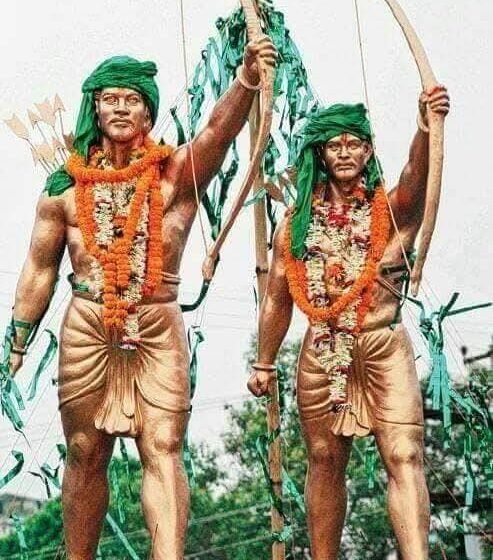
The Santhal Hul Rebellion of 1855–56 stands as one of the earliest and most powerful organized uprisings against colonial exploitation in India. More than 171 years ago, the Santhal community, led by Sidhu, Kanhu, Chand, and Bhairav Murmu, along with Phulo and Jhano, rose against the oppressive structures imposed by the East India Company. Their cry of “Hul! Hul!”—meaning rebellion—still resonates as a symbol of courage and resistance.
The rebellion was born out of deep grievances. The British introduced the zamindari system, dispossessing Santhals of their lands and burdening them with exorbitant taxes. Moneylenders and landlords, acting as agents of colonial power, trapped tribal families in cycles of debt and bonded labor. The social and cultural fabric of the Santhal community was torn apart by this exploitation. Against this backdrop, the Hul emerged as a collective assertion of dignity and rights.
On June 30, 1855, nearly 50,000 tribals from 400 villages gathered at Bhognadih in present-day Sahibganj district. Armed with bows, arrows, and traditional weapons, they declared they would no longer pay land revenue. Sidhu Murmu’s proclamation—“Do or die; Englishmen, leave our land”—was a clarion call that anticipated Gandhi’s Quit India Movement by nearly six decades. The rebellion quickly spread across Jharkhand, Bihar, and Bengal, shaking the foundations of colonial authority.
The Santhals attacked moneylenders, landlords, and corrupt officials, but their struggle was guided by a moral code. Sidhu insisted that innocents must be spared, emphasizing that the fight was against exploitation, not indiscriminate violence. Despite their primitive weapons, the Santhals displayed remarkable organization and bravery. They captured Burhait, stormed prisons, destroyed railway lines, and disrupted postal and telegraph services. At its peak, nearly 60,000 Santhals were mobilized, and British authority in the region nearly collapsed.
The colonial government responded with brutal force. Troops from multiple regiments were deployed, martial law was imposed, and rewards were announced for rebel leaders. Fierce battles raged across Kahalgaon, Suri, and Raghunathpur. Around 20,000 tribals lost their lives, and eventually, Sidhu and Kanhu were betrayed and hanged in Bhognadih on July 26, 1855. Yet, as historian Hunter observed, “the Santhals did not understand surrender; therefore, the drums kept beating and the people kept fighting.”
The Hul was not merely a tribal revolt; it was a freedom movement of the oppressed against exploiters. Its legacy influenced later uprisings, including the Munda Rebellion. In recognition of Santhal grievances, the British eventually passed the Santhal Parganas Tenancy Act in 1876, offering some protection to tribal land rights.
Today, Hul remains alive in memory and practice. June 30 is observed as Hul Day, much like a martyrdom day. The spirit of rebellion continues to inspire tribal struggles against displacement, illegal mining, and corporate exploitation. The consciousness awakened by Hul is visible in demands for a Sarna religious code and in movements to preserve tribal culture, language, and traditions. In an era where industrialization threatens forests, water, and land, the Hul reminds us that organized resistance rooted in justice can challenge even the most entrenched powers.
The Hul Movement was, and remains, a powerful voice against injustice. Its message—that dignity and rights must be defended collectively—continues to guide tribal communities in their ongoing fight for social justice and self-governance.
EoM