
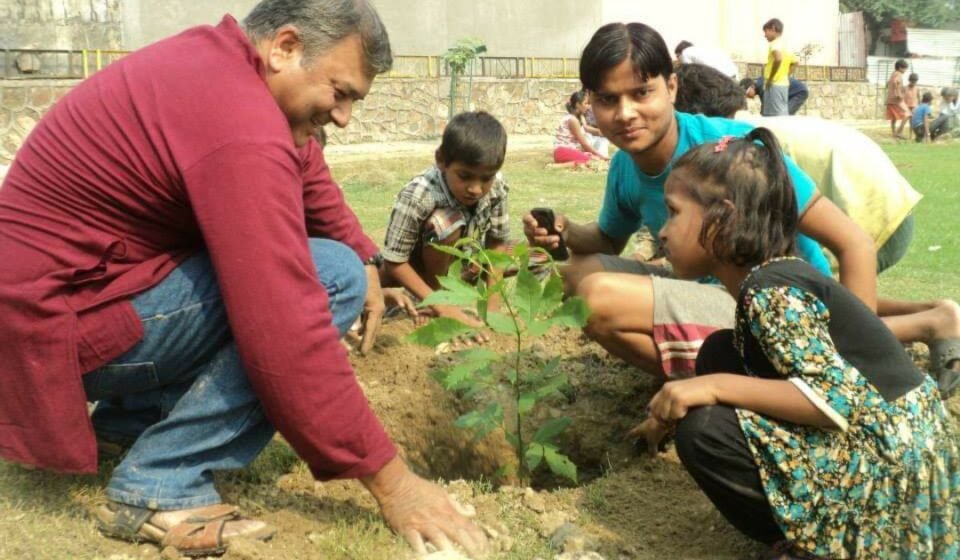
Tree plantation drive marks World Environment Day
PNS
Jamshedpur
Marking World Environment Day with a message of ecological responsibility and spiritual awareness, noted environmental conservationist Peepal Baba launched his much-awaited book, Ghosts on Peepal Trees, during a tree plantation programme. Published by Penguin and available on major online platforms, including Amazon, the book explores the profound relationship between nature, culture and human consciousness.
More than a conventional environmental work, Ghosts on Peepal Trees presents the Peepal tree as a symbol of energy, wisdom and spiritual awakening. Through personal experiences, reflections and stories gathered over decades, Peepal Baba highlights the ecological, cultural and emotional significance of trees, urging readers to rediscover their connection with the natural world.
Speaking about the book’s journey, Peepal Baba revealed that the idea first emerged in 2012 but took over a decade to materialize. Despite being deeply engaged in environmental work and overcoming challenges, including a road accident in November 2024, he continued developing the manuscript until its eventual publication.
The book chronicles nearly five decades of grassroots conservation efforts. Peepal Baba writes about restoring vegetation across approximately 270,000 hectares of land and contributing to the plantation of more than 25 million trees and an equal number of shrubs. While describing these achievements as modest contributions, he emphasizes their significance in building a greener and more sustainable future.
Drawing from India’s rich cultural heritage, myths and scriptures, the author explains how trees have traditionally occupied a sacred place in society. His fascination with the Peepal tree began during childhood and evolved into a lifelong mission to plant, protect and promote the species. The book reflects this enduring relationship and the lessons learned along the way.
Peepal Baba credits his grandmother for nurturing his environmental consciousness through childhood visits to the forests and landscapes of Uttarakhand, including Corbett, Rajaji, Haridwar, Rishikesh, Tehri, Uttarkashi, Nainital and Almora. These experiences, he says, shaped his understanding of nature and inspired his commitment to conservation.
Throughout the book, he underscores the importance of citizen participation in environmental movements. According to him, meaningful environmental change begins not only through policies and institutions but through individuals taking responsibility for the land, water and biodiversity around them.