
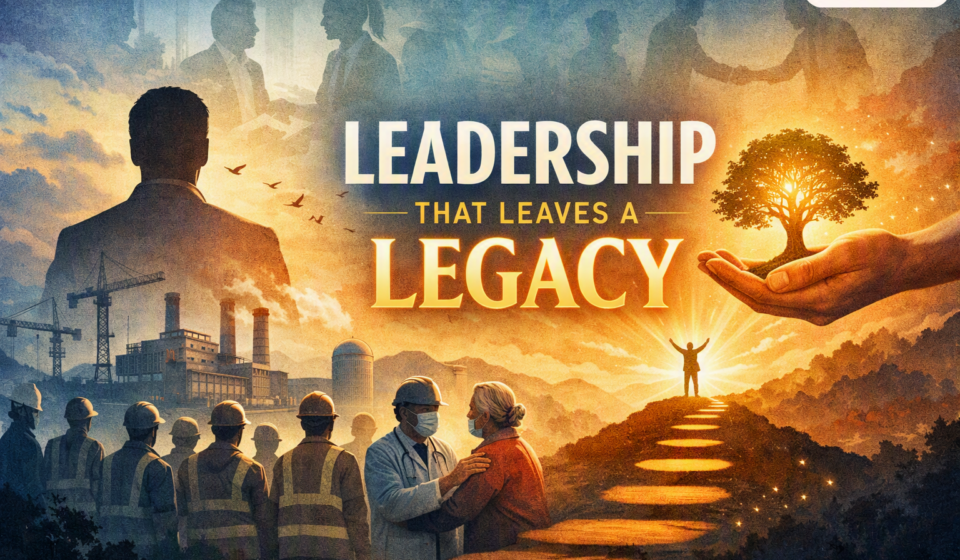
Beyond the Chair: Leadership That Leaves a Legacy
By Sanjeevv Shekhar
Leadership is rarely remembered for a title. It is remembered for the decisions made in the most difficult circumstances. Titles change over time, but decisions become part of an institution’s memory.
The COVID-19 pandemic was one such test for all of us. At the power project site in Godda, Jharkhand, plant construction had reached a critical stage in 2019. As with every major infrastructure project across the country, we were navigating an unprecedented situation. Employees and contract workers were anxious. Many had families in neighbouring states like Odisha, West Bengal and Andhra Pradesh who were struggling through the pandemic. Fear was spreading faster than reliable information, and there was a genuine concern that the project could lose momentum.
What made the difference was not the authority of any one individual, but the strength of collective leadership. Under the guidance of our Site Head, we functioned as one integrated team. I had the privilege of being part of that team, representing HR and working closely with colleagues from Security, Safety, Corporate Affairs and the Medical department. We had one shared priority, to protect our people first. We believed that if we got that right, the project would take care of itself.
We decided that our responsibility did not end at the project boundary. Medical support, medicines, oxygen cylinders and financial assistance were arranged not only for employees at the site but also, wherever possible, for their families. On-site medical screening, isolation protocols, food support and contractor welfare became part of our daily routine. Every decision was driven by empathy, urgency and a sense of responsibility rather than by process alone. That approach gave employees the confidence to stay, continue working and place their trust in the organisation during one of the most uncertain periods any of us had experienced. The outcome was not just continuity of the project but also a workforce that stood firmly with the organisation. Attrition remained low, continuity was maintained, and the project was commissioned on schedule.
Looking back, I do not believe people remember who held which designation during those difficult months. What they remember is that the organisation stood by them when they needed it most. Institutions are built on moments like these. Employees may forget meetings, presentations and organisational charts, but they never forget who stood beside them during a crisis.
Leadership is not about being the most visible person in the room. It is about making the right decision when people are looking for hope, direction and reassurance. “An institution does not preserve the names on office doors. It preserves the decisions that gave people confidence when confidence was hardest to find.”
(THE WRITER IS A CORPORATE AFFAIRS, GOVERNMENT RELATIONS AND HUMAN CAPITAL LEADER WITH OVER THREE DECADES OF EXPERIENCE ACROSS THE POWER, INFRA-STRUCTURE AND MEDIA SECTOR)