
Dumka Admin initiates groundwork for effective PESA implementation
KUMAR PRABHAT
DUMKA
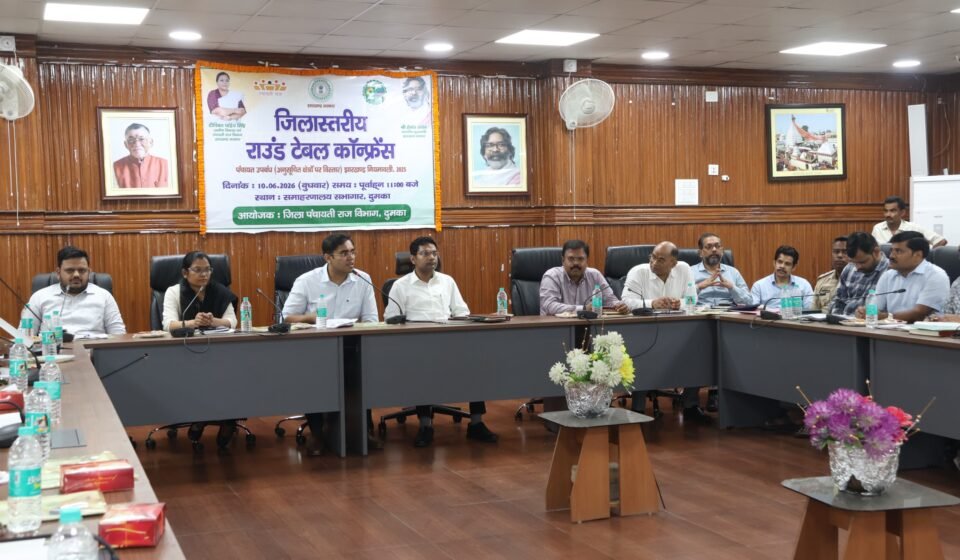
In a proactive move to fortify grassroots governance and ensure the seamless implementation of the Panchayat Extension to Scheduled Areas (PESA) Jharkhand Rules 2025, a one-day district-level round table conference was convened at the Collectorate Auditorium on Wednesday.
The high-level session, chaired by Dumka Deputy Commissioner Abhijit Sinha, brought together administrative officials, traditional tribal heads, and civil society members to establish a coordinated framework for empowering Gram Sabhas across the district’s scheduled areas.
Addressing the assembly, Deputy Commissioner Sinha underscored the significance of the PESA legislation, noting that it provides tribal communities with essential statutory authority over local resources, customary traditions, and the planning of development schemes. He emphasized that the Jharkhand Rules 2025 offer a definitive roadmap for translating these provisions into reality at the village level. Consequently, he called upon all line departments and local stakeholders to harmonize their efforts to ensure that the rules are effectively communicated and that Gram Sabhas are transformed into robust, self-reliant decision-making bodies.
Technical insights into the new regulations were provided by master trainers Shailendra Singh, Jon Soren, and Sebastian Soren. Through comprehensive presentations, they detailed the operational nuances of the 2025 rules, specifically focusing on the critical role of Gram Sabhas in the management of natural resources, the preservation of indigenous cultural identity, and the mandatory inclusion of local voices in developmental planning. The sessions aimed to bridge the gap between administrative processes and traditional tribal self-governance frameworks.
The event also served as an open forum for stakeholders to offer feedback and actionable suggestions. Discussions focused on the immediate necessity for capacity-building programs for village representatives, the launch of extensive awareness campaigns, and the establishment of transparent protocols for project implementation. Participants lauded the district administration for the initiative, promising full cooperation to ensure the success of these tribal self-governance efforts.
The conference witnessed active engagement from senior administrative leadership, including the Deputy Development Commissioner, the Additional Collector, the Sub-Divisional Officer, and the District Panchayat Raj Officer. They were joined by a broad spectrum of attendees, including Block Development Officers, Circle Officers, social activists, and numerous representatives from traditional tribal governing institutions and Gram Pradhans.