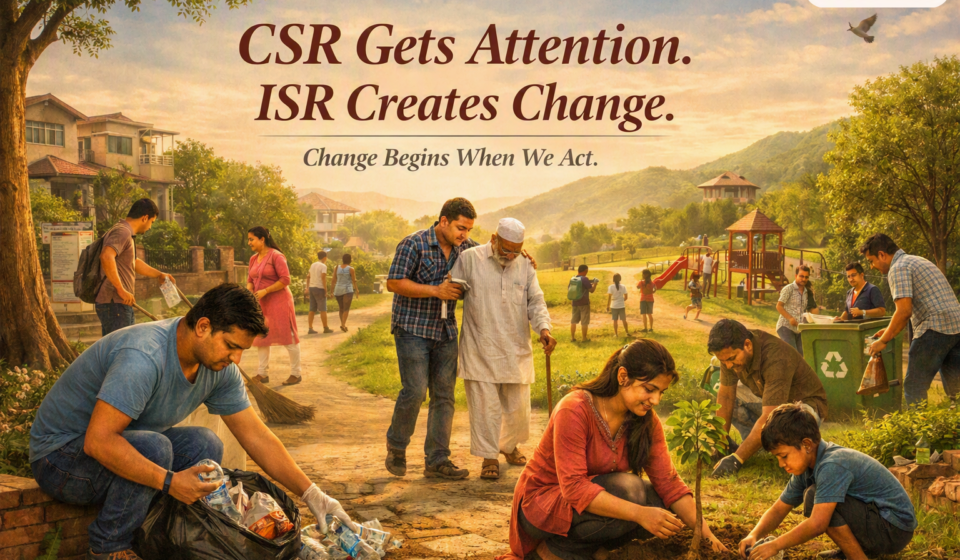
CSR Gets Attention. ISR Creates Change
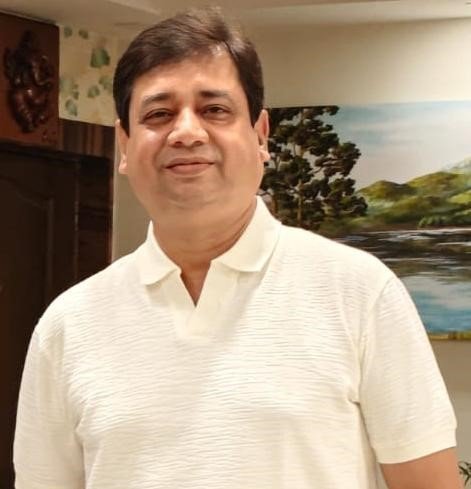
By Sanjeevv Shekhar
We often talk about Corporate Social Responsibility, or CSR. Companies have a responsibility towards society, and many organisations are doing meaningful work in education, healthcare, the environment and community development. But as a leader, I often ask myself a simple question: Can CSR alone bring the change we want to see?
I believe it cannot, unless we also understand and practise Individual Social Responsibility, or ISR. The challenge is not always that people do not know what they should not do. The bigger challenge is that we do not always ask ourselves, “What should I do for the betterment of the society around me?” The other day, while walking in my society, I noticed a black polythene bag lying near the boundary wall. It had broken glass inside. Initially, I thought the cleaner would remove it while cleaning the campus. I left it there. But it remained there for several days.
During morning walks, I heard some members criticising the society committee and staff for not removing it. I also realised I was part of the problem because I had seen it and simply assumed someone else would take care of it. An inner voice in me said, “Why am I waiting for somebody else?”
I finally picked it up and disposed of it safely. Nobody noticed what I did. But that was not important. What mattered was that something which had become a subject of criticism was finally taken care of. This small incident made me feel good and elated. We take great care of our homes. We keep them clean, organised and comfortable for our families. But the moment we step outside our homes, our sense of responsibility often becomes someone else’s responsibility.
We complain about dirty roads but sometimes throw waste from our vehicles. We want clean public places but leave plastic bottles and food packets behind. Public conveniences exist, yet people still urinate in open spaces. We complain about traffic but sometimes ignore basic road discipline. We expect public property to be maintained, but may not hesitate to damage it.
The difference is not between knowing right and wrong. It is between noticing a problem and taking responsibility for it. I saw another simple example while walking with my son at his university. He noticed used cans and packing material lying around. He picked them up and put them in the dustbin. He would criticise people for littering, but he did something more important. He acted. That, to me, is ISR. So, how do we imbibe Individual Social Responsibility in people?
I believe leadership starts here. We cannot create responsible citizens only by giving instructions. We create them by demonstrating responsible behaviour. If a senior citizen picks up a piece of waste, follows traffic rules, respects public property, helps an elderly person, saves water, or plants a tree, someone is watching. A child is watching. A neighbour is watching. A colleague is watching.
One responsible action can influence another person. We also need to teach ISR early. Children should learn that a country is not only a geographical boundary. It is the neighbourhood they live in, the road they use, the park where they walk, the school they attend and the public space they share with others. Japan offers an important lesson in this regard. There is a strong sense of civic discipline and collective responsibility, where public spaces are often treated with the same respect as one’s own surroundings. Perhaps India also needs to develop a similar mindset. This is my country, my home. If I would not dirty my home, why would I dirty my neighbourhood, my city or my country?
CSR can support society. ISR can change society. Perhaps real change will begin when we stop asking, “Who will do it?” and start asking, “What can I do?” That, I believe, is the first step towards becoming a responsible citizen and a responsible leader.
(THE WRITER IS A CORPORATE AFFAIRS, GOVERNMENT RELATIONS AND HUMAN CAPITAL LEADER WITH OVER THREE DECADES OF EXPERIENCE ACROSS THE POWER, INFRA-STRUCTURE AND MEDIA SECTOR)