
Malaria without fever: ICMR probes silent threat in E. Singhbhum
Pioneer News Service
Jamshedpur
Rising cases of malaria in Potka block of East Singhbhum district, have brought the rural belt under national scientific spotlight. Concerned over the situation, the Indian Council of Medical Research (ICMR) has launched an extensive field study to investigate the growing incidence of asymptomatic and mixed malaria cases in the region.
A team of researchers from ICMR, New Delhi, is currently stationed in several villages of Potka to unravel the scientific reasons behind the unusual pattern of infections and develop strategies to strengthen malaria control across the country.
The study has been initiated after health experts observed a persistent rise in cases where individuals tested positive for malaria parasites despite showing no common symptoms such as fever, chills or body aches. Medical scientists believe such ‘silent carriers’ could play a significant role in sustaining malaria transmission without being detected through conventional surveillance systems.
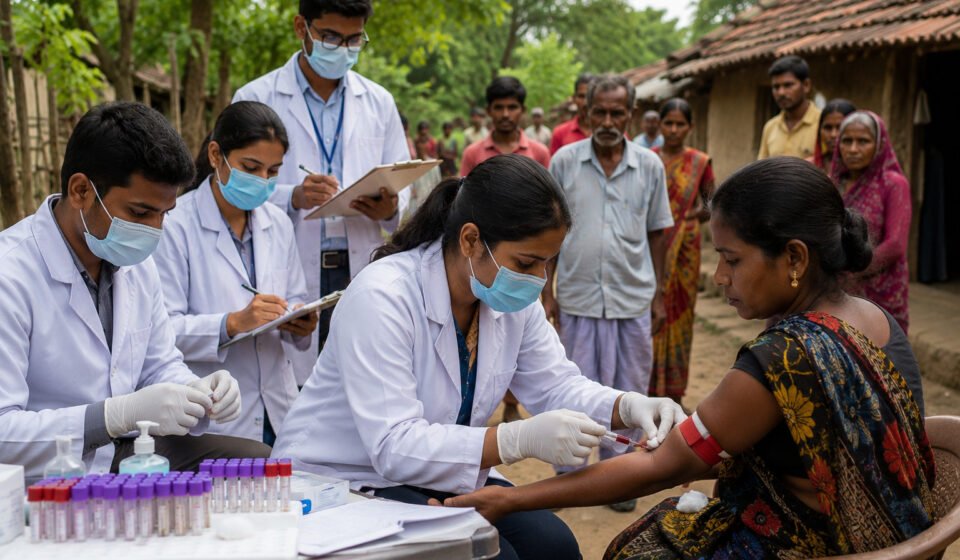
As part of the ongoing research, the ICMR team is collecting blood samples from residents across multiple villages and conducting detailed laboratory investigations to understand how the human immune system responds to malaria parasites in asymptomatic individuals.
Another major focus of the study is “mixed malaria,” a condition in which a patient is simultaneously infected by two different species of the Plasmodium parasite. Scientists are trying to determine whether dual infections lead to more severe disease, influence treatment outcomes or require revised medical protocols.
The research extends beyond human subjects to include a comprehensive study of mosquito vectors responsible for spreading the disease. ICMR scientists are collecting mosquito samples from different villages in Potka for detailed laboratory analysis.
Environmental factors are also being closely examined. Researchers are analysing local water bodies, forest cover, humidity levels, rainfall patterns, temperature and other geographical conditions to understand how the surrounding ecosystem contributes to the persistence of malaria in the region. Experts believe that a better understanding of these environmental factors will help develop more targeted and effective vector-control strategies.
According to a member of the ICMR research team, the findings from the Potka study could have far-reaching implications beyond East Singhbhum. He said the research is expected to provide valuable scientific evidence that can be used to strengthen the National Malaria Elimination Programme and reshape malaria control policies across India. Any new scientific discoveries emerging from the study will be incorporated into national strategies for surveillance, diagnosis and treatment.
District Civil Surgeon Dr. Sahir Pal said the research marks a significant step towards understanding the changing nature of malaria in Jharkhand. He expressed confidence that the findings would help formulate a more robust, evidence-based strategy for the prevention, early detection and effective treatment of malaria, ultimately contributing to the country’s goal of eliminating the disease.